
Boumalne Dades: The Complete Travel Guide (2026)
Last reviewed: September 2026 · key facts checked against Wikidata
Boumalne Dades Travel Guide: Everything You Need to Know (2026)
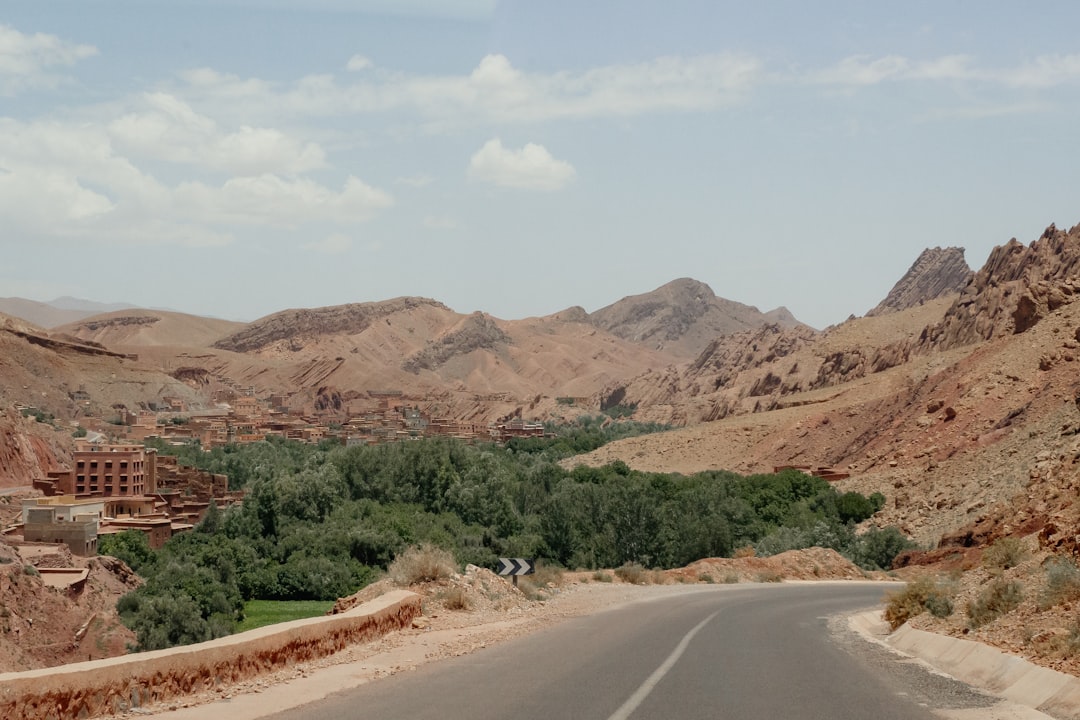
Boumalne Dades sits at 1,526 metres above sea level in Morocco’s Drâa-Tafilalet region, serving as the main gateway town to the spectacular Dadès Gorge. With a population of 12,391, this compact desert-edge town was historically a Berber trading post along the ancient caravan routes connecting the Sahara to Marrakech. The drive from Ouarzazate covers roughly 115 km of dramatic southern Moroccan landscape, making Boumalne a natural overnight stop for gorge and kasbah explorers.
Three Things Not to Miss in Boumalne Dades
- Dadès Gorge — Morocco’s most dramatic canyon, with road hairpins at 1,800 m that rival anything in the Atlas Mountains.
- Valley of Roses (Vallée des Roses) — Centifolia rose fields just 20 km away bloom spectacularly every April, producing Morocco’s most prized rose water.
- Aït Arbi Kasbahs — Twin 19th-century mud-brick fortresses above the gorge entrance, free to photograph and partially climbable.
Scroll down for our complete travel guide with tips on getting there, where to stay, costs and more.
Arriving in Boumalne Dades: Airport & Transfers
How do I get to Boumalne Dades?
The most practical route to Boumalne Dades is by CTM or Supratours bus from Marrakech, arriving in roughly 5–6 hours. I recommend booking the morning departure from Marrakech’s CTM station for around DH 90–120 — it drops you directly on the main street. Shared grands taxis from Ouarzazate cover the 115 km in about 90 minutes for DH 50–70 per seat. The honest caveat: bus schedules thin out dramatically in low season, so check current timetables at ctm.ma before committing to a tight itinerary. Flying into Ouarzazate Airport (OZZ) then continuing by taxi is the fastest option if you are coming from Europe.
Which airport is closest to Boumalne Dades?
Ouarzazate Airport (OZZ) is the closest airport, sitting approximately 115 km west of Boumalne Dades — about a 90-minute drive. In my experience, Royal Air Maroc operates the most consistent connections from Casablanca’s Mohammed V Airport (CMN), often for DH 400–800 one-way if booked 3–4 weeks out. Marrakech Menara (RAK) is the popular alternative at roughly 280 km away, with far more international routes from Europe. The caveat most guides omit: OZZ flights cancel with frustrating frequency in winter crosswinds, so I always build a buffer day into any itinerary relying on that airport.
How long does the journey to Boumalne Dades take from major cities?
From Marrakech, count on 5–6 hours by bus or 4 hours by private car via the Tizi n’Tichka pass (2,260 m). From Ouarzazate it is a straightforward 90-minute drive or taxi ride along the N10. From Fes via Midelt, the route runs roughly 7–8 hours through the Ziz Valley — genuinely spectacular but long. My tip: the Marrakech–Boumalne road through Kelaat M’Gouna is one of Morocco’s most scenic drives, so allow extra time and do it by day. The trade-off is that night buses save hotel money but you miss landscapes entirely.
Do I need a car to explore Boumalne Dades properly?
Yes — a car is strongly recommended for Boumalne Dades and the surrounding gorge. The town itself is walkable in 20 minutes, but the Dadès Gorge road stretches 27 km with minimal public transport beyond the entrance. I recommend renting from Ouarzazate where agencies like Hertz and local operators offer 4WD vehicles from DH 350–600 per day. A standard saloon handles the paved gorge road fine in dry conditions, but the unpaved tracks to remote kasbahs demand clearance. What surprised me: shared taxis do run 10 km into the gorge for DH 15–20, so budget travellers can access the key viewpoints without a full rental.
Getting Around Boumalne Dades
What are the best areas to stay in Boumalne Dades?
I recommend staying either in Boumalne town centre for practicality or at a guesthouse 5–10 km inside the Dadès Gorge for atmosphere. The gorge guesthouses — concentrated around Aït Oudinar village — give you sunrise on the rock formations before day-trippers arrive, which is genuinely transformative. Town-centre riads near the main square (Place Principale) are cheaper and better connected to transport. Avoid the strip of identikit hotels along the N10 highway — they are noisy and charmless. My honest caveat: gorge accommodation books out completely during the April Rose Festival, so gorge-side stays require planning 6–8 weeks ahead during that window.
What does accommodation cost per night in Boumalne Dades?
Budget travellers find clean guesthouses in the gorge for DH 150–250 per night including breakfast. Mid-range riads in Boumalne town run DH 350–550, while the best-positioned gorge lodges — such as Auberge des Roches near Aït Oudinar — charge DH 500–800 for rooms with rock-face views. I paid DH 420 for a double at a gorge guesthouse with breakfast and the value was exceptional by any international standard. The caveat: prices quoted at the door can be 20–30% higher than rates negotiated the evening before in low season, so always ask directly and in person rather than booking by phone.
How far in advance should I book accommodation in Boumalne Dades during high season?
For June–September and the April Rose Festival in Kelaat M’Gouna (20 km away), book gorge-side accommodation 6–8 weeks ahead — the best spots hold only 6–10 rooms. For shoulder months like May and October, 2 weeks is generally sufficient. In my experience, most small auberges inside the gorge don’t appear on Booking.com, so email or WhatsApp them directly — response times are typically 24–48 hours. The hidden issue most guides skip: the Rose Festival week draws Moroccan domestic tourists in enormous numbers, filling not just Boumalne but every guesthouse within 30 km. My tip: if your dates overlap that week, book the moment you confirm travel.
Are there special or unique accommodation types in Boumalne Dades?
Boumalne Dades and the gorge offer genuinely distinctive sleep experiences. Kasbah-style guesthouses built from traditional pisé (rammed earth) are the local speciality — staying in one is structurally different from any riad in Marrakech. Bivouac camps appear deeper in the gorge for around DH 200 per person with dinner and breakfast included. What surprised me: several families in Msemrir village, 27 km into the gorge, open their homes as informal homestays for committed travellers — ask locally. The honest caveat: hot water in kasbah guesthouses is often solar-heated and unreliable after cloudy days, so morning showers beat evening ones.
Where to Stay in Boumalne Dades
What are the absolute must-sees in Boumalne Dades?
Three things anchor any visit to Boumalne Dades. First, the Dadès Gorge itself — drive or hike the 27 km to Msemrir, stopping at the famous monkey-finger rock formations at km 8. Second, the Aït Arbi Kasbahs just outside town, two crumbling 19th-century fortresses free to explore. Third, the Valley of Roses corridor through Kelaat M’Gouna (20 km west), producing rose water used in perfumes worldwide. My tip: the gorge at golden hour (6:30–8 am) is categorically different from the midday tourist-bus version — the pink light on the limestone walls is worth a 5 am wake-up. Don’t miss the Dadès River walk at the gorge base either — completely free and done in 45 minutes.
What can I experience for free in Boumalne Dades?
Boumalne Dades delivers substantial free value. The Dadès Gorge road has no entry fee — walk or drive it at no cost. The Aït Arbi Kasbahs are unguarded and free to photograph. The weekly souk (typically Tuesday) in town is free and genuinely local, selling Berber textiles, spices, and livestock. I spent a full morning at the Dadès River gorge trail (free) before any tourist buses arrived — it costs nothing and is stunning. The honest caveat: unofficial “guides” approach immediately at the gorge entrance and pressure is persistent — a firm but polite ”la shukran” (no thank you) works better than ignoring them entirely.
Which day trips are possible from Boumalne Dades?
Boumalne Dades is an ideal hub. Tinerhir and Todra Gorge sit 53 km east — Morocco’s other great canyon, accessible by grand taxi for DH 30 per seat. Kelaat M’Gouna (20 km west) is a 30-minute drive through the Rose Valley with a good Wednesday souk. Ouarzazate (115 km) is a day-trip stretch but manageable, accessing Aït Benhaddou UNESCO kasbah and the Atlas Film Studios. In my experience, combining Boumalne with a Todra Gorge day produces the most dramatic gorge comparison in Morocco — the two are geologically completely different and rarely covered in the same day by tour groups.
What local specialities should I try in Boumalne Dades?
Boumalne Dades sits in lamb and rose-water country. Order mechoui (slow-roasted whole lamb) at any town restaurant for around DH 80–120 per portion — locals eat it Friday lunchtimes. Tanjia is less common here than in Marrakech but excellent when found. Rose water appears in m’hanncha pastry and mint tea throughout the region — try it at any café. The gorge guesthouses typically serve Berber omelettes with argan oil for breakfast, which is categorically better than the tourist hotel buffet version. What surprised me: dates stuffed with almond paste, sold at the Tuesday souk for DH 20 per 100g, are the best travel snack in southern Morocco.
Boumalne Dades Highlights & Must-Sees
What makes Boumalne Dades unique compared to other Moroccan destinations?
Boumalne Dades occupies a precise geographic sweet spot that no other Moroccan town replicates. At 1,526 m elevation, it sits where the High Atlas foothills collide with pre-Saharan landscape — you get canyon drama, kasbah architecture, and rose cultivation within a 30 km radius. Unlike Merzouga (pure dune tourism) or Ouarzazate (film-industry crowds), Boumalne remains genuinely functional Moroccan town. The Dadès Gorge exceeds Todra in length and variety. In my experience, the lack of a big resort hotel strip is actually the town’s greatest asset — you eat where locals eat and sleep in pisé buildings rather than concrete boxes. That authenticity is increasingly rare in Morocco’s south.
How many days should I spend in Boumalne Dades?
2 nights minimum, 3 nights ideal for Boumalne Dades. Day one: gorge drive to Msemrir and back (5–6 hours including stops). Day two: Valley of Roses and Kelaat M’Gouna day trip (3 hours return). Day three: Todra Gorge (53 km east) as a comparison excursion. If you rush through in one night — the most common mistake — you hit the gorge at midday with tour buses and miss the extraordinary morning light. My tip: base one night in the gorge at Aït Oudinar and one in Boumalne town to get both perspectives. Three days integrates naturally into a classic Marrakech–desert circuit without breaking your overall itinerary.
When is the best time to visit Boumalne Dades?
June through September delivers the most reliable conditions based on climate data — clear skies, dry gorge trails, and optimal photography light. April is spectacular for the rose bloom but the Rose Festival brings serious crowds. October is my personal preference: post-summer light, temperatures around 22–26°C in the gorge, and virtually no tour groups. Avoid January–February unless you specifically want potential snow on the upper gorge road — beautiful but the N10 can close briefly after storms. What most guides omit: August afternoons in Boumalne town itself can hit 38°C, making the gorge (naturally cooler by 5–8 degrees) the smarter afternoon base.
Are there local festivals worth attending near Boumalne Dades?
The Festival of Roses in Kelaat M’Gouna (20 km west) runs every May — typically the first or second weekend — and is Morocco’s most photogenic regional festival, with rose-petal processions, Berber music, and a market selling rose water, oil, and cosmetics. Entry to festival events is free; the surrounding souk charges nothing. In my experience, the Saturday of Rose Festival weekend is the single most atmospheric morning in the entire Drâa-Tafilalet region. The honest caveat: accommodation within 40 km fills 2 months in advance for this weekend specifically — I have met travellers sleeping in their cars because they underestimated demand. Book accommodation before you book flights.
Eating & Drinking in Boumalne Dades
How does the weather in Boumalne Dades affect outdoor activities?
At 1,526 m, Boumalne Dades experiences genuine four-season variation. Summer (June–August) offers ideal gorge hiking — warm, dry, and long daylight hours. Spring (March–May) brings the rose bloom and green valley floors but occasional flash-flood risk in the narrow gorge lower sections after rain. Autumn (September–October) gives crisp mornings perfect for photography. Winter nights drop to near 0°C and occasionally below, making the kasbah guesthouses with wood stoves essential rather than charming. My tip: the gorge walls amplify wind in winter afternoons, dropping the perceived temperature sharply — a windproof layer matters even in October. Flash floods in the lower gorge are the one genuine hazard guides understate — check with your guesthouse before hiking after rain.
How crowded does Boumalne Dades get in peak season?
The gorge entrance and first 8 km of road see heavy coach traffic from 10 am–3 pm in July–August, particularly at the monkey-finger rock formations. Boumalne town itself never feels overwhelmed — it is too functional and local. The Rose Festival week in May is the single most congested period regionally. My strategy: be at the gorge viewpoints by 7:30 am and you will have the canyon to yourself for a full 2 hours before the first coaches. Beyond km 15 toward Msemrir, tourist density drops dramatically — most day-trippers turn back at the famous hairpin bends. What surprised me: European tour groups dominate in July, while October brings predominantly French and German independent travellers.
How safe is Boumalne Dades for travellers?
Boumalne Dades is safe — petty crime is minimal and violent incidents are extremely rare. The main friction point is persistent hustling near the gorge entrance — unofficial guides approach every vehicle and on-foot traveller. This is not dangerous, just tiring. Solo women travellers report moderate street attention in the town centre, less so once inside the gorge. In my experience, evenings in Boumalne are relaxed and walkable without concern. The practical safety risk that matters: the gorge road above km 15 is narrow and unguarded in places — drive slowly and never reverse on blind hairpins. Flash floods in the gorge base (rare but sudden) are the one natural hazard worth respecting — heed local weather warnings.
Is English widely spoken in Boumalne Dades?
English is limited in Boumalne Dades — far less common than in Marrakech or Fes. French is the practical lingua franca with most guesthouse owners, restaurant staff, and shopkeepers. Basic Darija (Moroccan Arabic) phrases earn disproportionate goodwill. At gorge guesthouses catering to trekkers, English is more likely — probably 1 in 3 staff can manage basic conversation. My tip: download the Google Translate Moroccan Arabic offline pack before leaving cellular coverage — gorge guesthouses often have no data signal. The honest assessment: language barriers here are real but navigable with patience, pointing, and a few French numbers for prices. This is part of what keeps Boumalne authentically off the beaten tourist path.
Practical Tips for Boumalne Dades
What is the daily budget for travelling in Boumalne Dades?
Budget travellers manage on DH 250–350 per day covering a dorm or basic room, three meals, and shared taxi transport. Mid-range independent travellers — my typical mode — spend DH 500–750 per day with a gorge guesthouse room, full board, and private taxi for the gorge. Add a rental car and the daily figure rises to DH 900–1,100. Food is genuinely cheap: a full tagine lunch at a local restaurant runs DH 50–70. The hidden cost most guides skip: guide fees for deeper gorge hikes run DH 200–350 per day and are worth every dirham for the routes above Msemrir — attempting those tracks alone without local knowledge is the one genuine planning mistake I see repeatedly.
How does public transport work in and around Boumalne Dades?
Public transport from Boumalne Dades is functional but infrequent. CTM buses run once daily toward Marrakech (westbound) and Errachidia (eastbound) — confirm current schedule at the CTM office on Avenue Mohammed V. Grands taxis (shared long-distance taxis) depart from the main square toward Ouarzazate (DH 50–70), Kelaat M’Gouna (DH 20), and Tinerhir (DH 30) throughout the morning. Inside the gorge, a local minibus covers the first 10 km to Aït Oudinar for DH 10–15 but runs only 2–3 times daily. My honest assessment: public transport covers the essentials but not on your schedule — anyone wanting gorge flexibility beyond the first viewpoints genuinely needs a car or negotiated private taxi.
Which apps do you recommend for visiting Boumalne Dades?
Four apps genuinely earn their place. Maps.me with offline Morocco maps is essential — the gorge road and upper tracks are mapped accurately and Google Maps lags badly beyond the main road. WhatsApp is how virtually every guesthouse in the gorge communicates bookings and directions — download it before arrival. Google Translate with offline Moroccan Arabic and French packs covers language gaps. XE Currency gives live DH exchange rates — useful since ATM availability in Boumalne is limited to 2 machines on the main street, which occasionally run dry on weekends. My tip: screenshot your guesthouse’s GPS coordinates before entering the gorge — mobile signal disappears completely above km 12 on most Moroccan networks.
Boumalne Dades at a Glance
| Population | 12,391 |
|---|---|
| Currency | Moroccan dirham (DH) |
| Official language | Arabic, Standard Moroccan Tamazight |
| Time zone | UTC+01:00 |
Source: Wikidata, retrieved September 2026.
Morocco › Boumalne Dades
More Destinations in Morocco
Essential Resources for Planning Your Trip to Boumalne Dades
- 14 Day Crown of Morocco | Visit Boumalne Dades … — official visitor information, passes & events
- Wikipedia: Boumalne Dades — history, geography & background
- Wikivoyage: Boumalne Dades — community travel guide & practical tips
- Dadès Valley travel – Lonely Planet | Morocco, Africa — expert itineraries & travel inspiration
- THE 15 BEST Things to Do in Boumalne Dades (2026) — hotels, restaurants & traveller reviews
- Boumalne Dades to Marrakesh Airport Transfer | Daytrip — how to get around
- Numbeo: Cost of Living in Boumalne Dades — current prices & cost comparison
- Timeanddate: Boumalne Dades Weather & Climate — forecasts & climate statistics
More Perspectives on Boumalne Dades
- What to do in the Dades Valley – Morocco Travel Guide
- What to do in Boumalne Dades vs Ouarzazate?
- Too much for one day? – Boumalne Dades Message Board
Boumalne Dades Travel Videos
Watch these videos for a visual preview before your trip:
- 18 Hidden Wonders of Morocco: Ultimate Travel Guide! #MoroccoTravel #HiddenWonders #AdventureTravel
- Nomad Boy Speaks 5 Languages in the Stunning Boumalne Dades Valley
- Tour Merzouga – Boumalne Dades
Boumalne Dades Travel Discussions on Reddit
Real traveller experiences and community advice:
- 9 Day Morocco Road Trip Itinerary Suggestions : r/travel
- Travelling between Draa Valley and Dades Gorge
- Morocco private tour for Soloblack travel
Data Sources
This page was compiled using data from Wikipedia, Wikidata, Open-Meteo (climate), Numbeo (cost of living) and REST Countries. Information is updated regularly.