
Chefchaouen: The Complete Travel Guide (2026)
Last reviewed: September 2026 · key facts checked against Wikidata
Chefchaouen Travel Guide: Everything You Need to Know (2026)
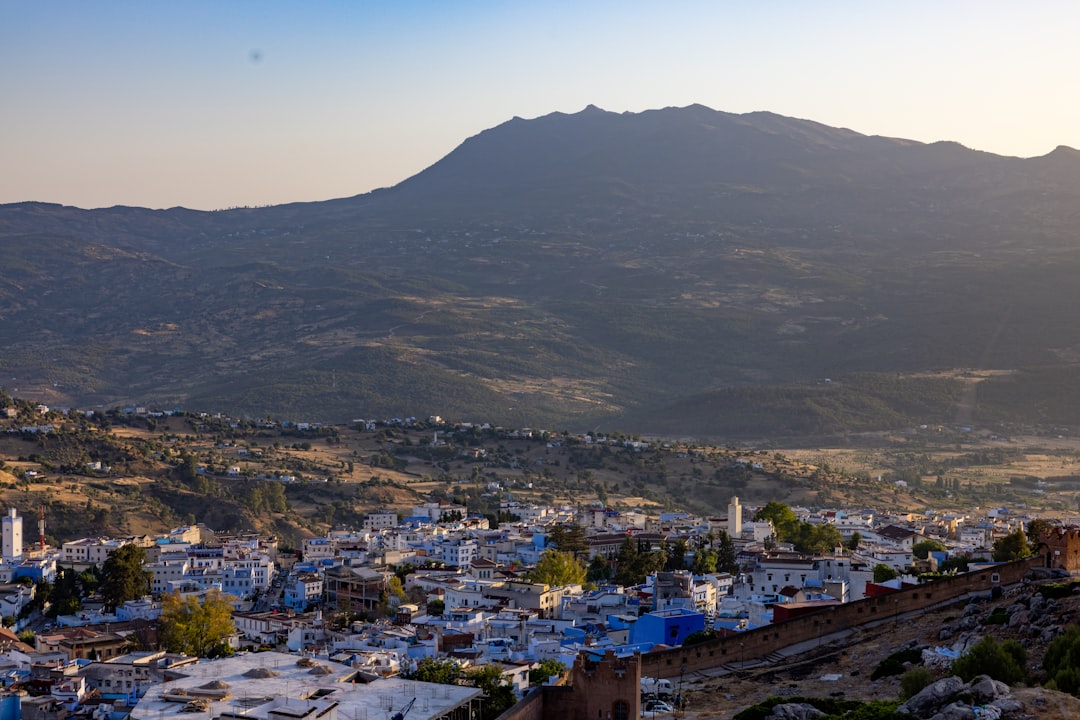
Chefchaouen sits at 564 metres above sea level in Morocco’s Rif Mountains, a city of 46,168 residents whose medina is famously painted in dozens of shades of blue. Founded in 1471 by Moulay Ali ben Rachid, it served for centuries as a refuge closed to non-Muslims — a history that shaped its deeply distinct character. Today it draws photographers and slow travellers from across the world, yet its steep, labyrinthine streets still feel genuinely lived-in.
Three Things Not to Miss in Chefchaouen
- Plaza Uta el-Hammam — The medina’s central square, anchored by a 15th-century kasbah, is the unmissable social heart of Chefchaouen.
- Ras el-Maa Waterfall — A natural cascade just 10 minutes’ walk from the medina where locals do laundry beside cold mountain water.
- Spanish Mosque Viewpoint — A 20-minute hike above town rewards you with the definitive panoramic photograph of Chefchaouen’s blue rooftops.
Scroll down for our complete travel guide with tips on getting there, where to stay, costs and more.
How to Reach Chefchaouen
How do I get to Chefchaouen?
The easiest route is bus or shared taxi from Tetouan or Fes. CTM and Supratours buses connect Chefchaouen to Fes in roughly 4 hours and to Chefchaouen from Tangier in about 3 hours, costing DH 60–100 per leg. In my experience, the CTM station in Chefchaouen sits just outside the medina walls — straightforward to navigate on arrival. My tip: book CTM tickets online 24 hours ahead, because seats sell out on Friday evenings. The honest caveat most guides skip: the mountain road from Tetouan involves sharp switchbacks, and if you are prone to motion sickness, sit on the left side of the bus and bring medication.
Which airport is closest to Chefchaouen?
Tangier Ibn Battouta Airport (TNG) is the most practical gateway, approximately 120 km from Chefchaouen. Tetouan Sania Ramel Airport (TTU) is closer at roughly 65 km but handles very few international routes, so it is mainly useful if you connect via Casablanca. What surprised me: most travellers instinctively fly into Casablanca’s Mohammed V Airport (CMN), which is actually 340 km away — a long onward journey. I recommend landing at TNG, taking a DH 15 petit taxi into Tangier city, then catching a CTM bus directly to Chefchaouen. Total transfer time from TNG landing to medina is realistically 3.5 hours.
How long does the journey to Chefchaouen take from major Moroccan cities?
Journey times depend heavily on your departure point. From Tangier it is roughly 3 hours by bus; from Fes, expect 4 hours; from Casablanca, plan for at least 6.5 hours including a connection. I recommend breaking the Casablanca trip with an overnight in Fes rather than grinding through in one day. Shared grand taxis from Tetouan cover the 65 km mountain road in about 90 minutes for roughly DH 40 per seat — faster but bumpier than the bus. The trade-off nobody warns you about: Google Maps consistently underestimates these times because it ignores mountain road speed limits and the frequent livestock crossings on the approach to Chefchaouen.
Do I need a rental car to explore Chefchaouen?
No — a car is actively a disadvantage inside Chefchaouen itself. The medina is entirely pedestrian, and parking outside its walls is scarce and chaotic. In my experience, everything worth seeing in the blue city is within a 20-minute walk on foot. Where a car becomes useful is if you plan day trips into the Talassemtane National Park or want to reach the Akchour Waterfalls without relying on shared taxis. If that is your plan, rent from Fes or Tangier before arriving — local rental options in Chefchaouen are limited and more expensive. For a pure medina stay of 3–4 days, skip the car entirely.
Chefchaouen Public Transport Explained
What are the best areas to stay in Chefchaouen?
Stay inside the medina — full stop. The atmospheric riads and guesthouses in the blue-painted quarter around Rue Targhi and the streets near Plaza Uta el-Hammam put you within steps of every highlight. I recommend the northern medina pocket near Bab Souk for a slightly quieter sleep while still being central. The Ain Tissimane neighbourhood near the waterfall is genuinely charming and 5 minutes less crowded than the photogenic core. The honest trade-off: medina guesthouses require you to carry luggage on foot through narrow lanes — arrive light. The Ville Nouvelle district below has cheaper hotels but zero atmosphere, and I would only consider it if you are driving.
What does accommodation cost per night in Chefchaouen?
Decent medina guesthouses start at DH 250–350 per night for a double room with breakfast. Mid-range riads with a terrace view run DH 500–800. Boutique design riads at the top end — places like Dar Echchaouen or Riad Baraka — charge DH 900–1,400. Budget travellers will find hostel dorm beds from DH 100–150 per night in the medina. What surprised me: many guesthouses include a generous Moroccan breakfast of msemen, amlou, and mint tea — factor that into your value calculation. My tip: prices quoted by guesthouses to walk-in guests are often 20–30% higher than the same room on Booking.com, so always compare before accepting a verbal price.
How far in advance should I book accommodation in Chefchaouen during high season?
Book at least 6–8 weeks ahead for visits in July and August, and 3–4 weeks for the shoulder months of June and September. The medina has a limited stock of quality guesthouses — probably fewer than 80 atmospheric riads in the entire old city — so they fill faster than the hotel counts suggest. In my experience, the best-positioned riads near Plaza Uta el-Hammam are booked solid by April for summer. The caveat: Chefchaouen sees heavy domestic Moroccan tourism on long weekends, particularly around Eid holidays — those dates sell out even faster than European summer peak. Always confirm your booking directly by WhatsApp, as some small guesthouses have unreliable Booking.com calendar syncing.
Are there special or unique accommodation types in Chefchaouen?
Traditional Moroccan riads are the signature stay — courtyard-centred houses with a fountain, zellige tilework, and rooftop terraces that frame the blue medina against the Rif Mountains. Several guesthouses occupy historic 15th-century structures with original cedar ceilings, which is genuinely rare. My tip: look for riads with a functioning hammam on-site — a private hammam session costs around DH 80–120 and is one of the most memorable experiences in town. What most guides miss: a handful of small eco-lodges and mountain gîtes operate in the hills just above Chefchaouen, within 3–4 km of the medina, offering forest views and silence that the medina cannot provide — worth considering for a night or two if you prefer nature over atmosphere.
Neighbourhoods of Chefchaouen
What are the must-sees in Chefchaouen?
Three experiences are non-negotiable. First, the Kasbah Museum on Plaza Uta el-Hammam — entry costs DH 10 and its Andalusian garden is one of the most serene spots in the city. Second, the hike to the Spanish Mosque ruins above town: a 20-minute climb that rewards you with the iconic panoramic shot over the blue rooftops, best at sunrise when tour groups are absent. Third, the Ras el-Maa spring and waterfall at the medina’s eastern edge, where the Rif Mountains deliver cold, clean water year-round. Beyond sights, the act of getting lost in the Rue Sidi Abdelhamid alley network at dusk — when the blue walls turn violet in the fading light — is something I still consider unmissable.
What can I experience for free in Chefchaouen?
Wandering the medina lanes costs nothing and is genuinely the main event. The Spanish Mosque viewpoint hike is free — no entry fee, no guide needed, just follow the path from Bab el-Ansar uphill for 20 minutes. The Ras el-Maa waterfall and the laundering scene beside it are freely accessible. Friday prayers at the Grand Mosque on Plaza Uta el-Hammam offer a free glimpse of local spiritual life from the square perimeter — do not enter the mosque as a non-Muslim. My tip: the nightly gathering in Plaza Uta el-Hammam after 8pm, when locals play music and children run between café tables, is a completely free, completely authentic spectacle that beats any paid cultural show in Morocco.
Which day trips from Chefchaouen do you recommend?
Akchour Waterfalls in Talassemtane National Park is the top day trip — grand taxis from Chefchaouen’s taxi rank cover the 28 km in about 45 minutes for DH 20–25 per seat. The lower waterfall is a 2-hour round-trip walk; reaching the upper God’s Bridge natural arch adds another 2 hours. Bring water and solid shoes. Tetouan, a UNESCO-listed medina and Morocco’s most undervisited imperial city, is 65 km away — 90 minutes by grand taxi for roughly DH 40. My honest warning: the popular tour to Meknes and Volubilis marketed from Chefchaouen means a 10-hour round-trip — an exhausting day for just a few hours on-site. I recommend staying overnight in Fes instead.
What are the local specialities I should try in Chefchaouen?
Chefchaouen sits in the Rif Mountains, so the food leans heavily on goat cheese (jben), honey, and hearty mountain tagines. Order the lamb tagine with prunes and almonds at least once — a standard clay-pot portion costs DH 60–80 at local restaurants around Place el-Haouta. Bissara (broad bean soup with cumin and olive oil) is the breakfast staple and costs DH 5–8 a bowl from street stalls near Bab el-Ansar. The region produces excellent argan oil and wild-flower honey — both worth buying from cooperative stalls rather than medina tourist shops. My tip: try harcha (semolina flatbread) with fresh jben for breakfast — it is hyper-local and costs under DH 15 complete.
What to See in Chefchaouen
What makes Chefchaouen unique compared to other Moroccan cities?
The blue paint is the obvious answer, but the deeper uniqueness is Chefchaouen’s Andalusian-Moorish hybrid character — the city was founded partly by Moorish refugees expelled from Spain in 1492, and that heritage shows in its arched doorways, tiled fountains, and Spanish-inflected dialect. At 564 metres altitude, temperatures are genuinely cooler than Fes or Marrakech by 5–8°C in summer — a significant practical advantage. What surprised me most: unlike Marrakech or Fes, the medina here is small enough to learn in a single afternoon — no GPS needed after day one. The trade-off: that same compactness means it is also one of Morocco’s most Instagram-saturated destinations, and the photogenic alleyways around Rue Targhi can feel genuinely overcrowded between 10am and 4pm in peak season.
How many days are worthwhile in Chefchaouen?
2 full days cover the medina thoroughly; 3–4 days is my genuine recommendation if you add the Akchour day trip and want unhurried mornings. I have met travellers who stayed a week and did not regret it — the slow pace, mountain air, and café culture reward lingering. The honest caveat: after 4 days, the medina’s repetition becomes noticeable because the core sightseeing is genuinely compact. If you plan more than 4 nights, structure your extra time around hikes into Talassemtane National Park or a day in Tetouan, otherwise Chefchaouen’s charms — real as they are — begin to feel exhausted. Do not cut it to a single overnight stay; the magic is in mornings before 8am when the lanes are empty.
When is the best time to visit Chefchaouen?
June, July, and September are the optimal months based on climate data — warm and largely dry, with the mountain air keeping temperatures tolerable. In my experience, late September is the single best week: summer crowds thin, the light is golden, and temperatures hover around 25°C during the day. April and May are beautiful for wildflowers in the surrounding hills but bring brief afternoon showers. Avoid August if you dislike crowds — Moroccan domestic tourism peaks then and the medina’s narrow lanes can feel genuinely claustrophobic between noon and 5pm. January and February are cold at altitude — expect 5–8°C at night — but the medina is almost empty, which has its own austere appeal for photographers.
Are there local festivals worth attending in Chefchaouen?
The Chefchaouen International Andalusian Music Festival — typically held in July — brings classical Andalusian and Moroccan musical traditions to open-air stages around Plaza Uta el-Hammam. Tickets are low-cost or free for many sessions. In my experience, even stumbling across rehearsals in the medina during festival week is a highlight. Mawlid an-Nabi (the Prophet’s birthday) sees the medina fill with processions and communal food — the date shifts annually per the Islamic calendar, so check ahead for 2026. Ramadan is worth understanding: restaurants close during daylight hours and the city’s rhythm shifts completely, but the iftar (sunset meal) atmosphere in the main square is one of the most communal scenes I have witnessed anywhere in Morocco.
Chefchaouen Food Scene
How does the weather affect activities in Chefchaouen throughout the year?
At 564 metres, Chefchaouen’s weather diverges meaningfully from Morocco’s lowland cities. Summer days reach 30–33°C but mornings and evenings stay pleasant, making dawn hikes to the Spanish Mosque genuinely comfortable. Winter brings cold nights — regularly below 5°C — and occasional snow above the city, which makes the blue medina look extraordinary but closes some mountain trails. The Akchour Waterfall trail is best from April through October; the path becomes slippery and partially flooded in winter. My tip: pack a light layer even in summer — the medina’s narrow shaded alleys stay cool, and evenings cool quickly above 500 metres. Afternoon thunderstorms are possible in October and November but rarely last more than an hour.
How crowded does Chefchaouen get in peak season?
Peak crowding hits hardest in July and August, specifically between 10am and 4pm when day-trippers arrive from Tangier and Tetouan on organised excursions. The photogenic staircase on Rue Sidi Salem — the one with the flower pots — can have a literal queue of photographers. In my experience, the solution is simple: be out by 7:30am. Before 8am in summer, you will have entire alleyways to yourself. What surprised me: Spanish and French school holiday weeks in late July and August bring a surge of European visitors that rivals Moroccan domestic tourism in volume. Long Moroccan public holiday weekends — particularly around Throne Day on July 30 — trigger near-total medina saturation, so avoid those specific dates if crowds bother you.
How safe is Chefchaouen for travellers?
Chefchaouen is one of Morocco’s safest cities for tourists. Violent crime is extremely rare, and the compact medina is easy to navigate without feeling exposed. The honest warning that most guides omit: persistent hustlers operate near the main bus drop-off and around Plaza Uta el-Hammam offering to be guides, sell hash, or lead you to carpet shops — they are not dangerous but are relentlessly persistent. A firm, calm refusal works every time. Solo female travellers report Chefchaouen as notably more relaxed than Fes or Marrakech in terms of street harassment, though harassment still occurs. My tip: the Rif Mountains region historically has cannabis cultivation — you will be approached. Possession is illegal in Morocco regardless of local tolerance and carries real legal risk.
Is English widely spoken in Chefchaouen?
English is spoken adequately in tourist-facing contexts — guesthouses, riad receptions, and restaurants near Plaza Uta el-Hammam all manage comfortably in English. Younger Moroccans under 30 in the hospitality sector frequently speak English, French, and Spanish simultaneously. However, outside the medina tourist core — at the market stalls, the local café on Rue Seffarine, or the grand taxi rank — French or Darija (Moroccan Arabic) will serve you far better. My tip: learning five phrases in Darija — hello (labas), thank you (shukran), how much (besh-hal), too expensive (ghali bezaf), and goodbye (bslama) — generates disproportionate goodwill and noticeably better prices at souks. Spanish is surprisingly useful here given the city’s proximity to Tetouan and its Andalusian heritage.
Local Know-How for Chefchaouen
What is the daily budget for visiting Chefchaouen?
A realistic budget traveller spending in Chefchaouen runs DH 250–350 per day covering a hostel dorm bed (DH 120), three meals from local restaurants (DH 80–100), a museum entry (DH 10), and café stops. A mid-range traveller in a medina riad with breakfast, restaurant dinners, and a day-trip grand taxi should budget DH 600–900 per day. In my experience, Chefchaouen is noticeably cheaper than Marrakech for equivalent quality — a tagine that costs DH 120 in Jemaa el-Fna costs DH 65 here. The hidden cost most guides omit: riad cancellation policies are strict — some charge 100% for cancellations within 48 hours, so factor in travel insurance or non-refundable accommodation risk.
How does public transport work in and around Chefchaouen?
Inside Chefchaouen itself there is no public transport — the medina is pedestrian-only and the Ville Nouvelle is compact enough to walk in 15 minutes. For intercity travel, CTM is the premium bus operator with reserved seats and reliable schedules; buy tickets at the CTM office near Bab el-Ain or online. Supratours also serves the Tangier–Chefchaouen–Fes corridor. Grand taxis — shared Mercedes sedans taking up to 6 passengers — are the local alternative, faster but less comfortable, departing when full from the grand taxi rank on Avenue Hassan II. My honest assessment: the public transport network connecting Chefchaouen to the rest of Morocco is functional but not frequent — missing the last CTM departure to Fes (often around 3pm) means an unplanned overnight.
Which apps do you recommend for visiting Chefchaouen?
Maps.me or OsmAnd with downloaded offline maps are essential — the medina’s lanes are too narrow and irregular for Google Maps to render accurately, and mobile data cuts out in some inner alleyways. WhatsApp is how every riad, taxi driver, and local guide communicates — have it installed before arrival and save your guesthouse’s number immediately. Google Translate with the Arabic camera function helps decipher menus and shop signs. For transport bookings, the CTM app or their website handles Chefchaouen bus reservations cleanly. My tip: download XE Currency for quick DH conversion — bargaining happens fast and mental arithmetic in a foreign currency under pressure leads to overpaying. Polarsteps or a simple notes app to log guesthouse recommendations from fellow travellers is worth more than any curated list.
Chefchaouen at a Glance
| Population | 46,168 |
|---|---|
| Currency | Moroccan dirham (DH) |
| Official language | Arabic, Standard Moroccan Tamazight |
| Time zone | UTC+01:00 |
Source: Wikidata, retrieved September 2026.
Morocco › Chefchaouen
More Destinations in Morocco
Essential Resources for Planning Your Trip to Chefchaouen
- Should I visit Chefchaouen’s Blue City after a Sahara tour? — official visitor information, passes & events
- Wikipedia: Chefchaouen — history, geography & background
- Wikivoyage: Chefchaouen — community travel guide & practical tips
- Chefchaouen — Lonely Planet — expert itineraries & travel inspiration
- Chefchaouen — TripAdvisor — hotels, restaurants & traveller reviews
- Should I visit Chefchaouen’s Blue City after a Sahara tour? — how to get around
- Numbeo: Cost of Living in Chefchaouen — current prices & cost comparison
- Timeanddate: Chefchaouen Weather & Climate — forecasts & climate statistics
More Perspectives on Chefchaouen
Chefchaouen Travel Videos
Watch these videos for a visual preview before your trip:
- CHEFCHAOUEN Morocco | Ultimate Chefchaouen Travel Guide Vlog 2024
- CHEFCHAOUEN, MOROCCO | BEST Things To Do In & Around The Blue City Of Chefchaouen
- Chefchaouen Travel Guide: Where to Go, See & Explore
Data Sources
This page was compiled using data from Wikipedia, Wikidata, Open-Meteo (climate), Numbeo (cost of living) and REST Countries. Information is updated regularly.
Chefchaouen Travel Discussions on Reddit
Real traveller experiences and community advice: