
Jaén: The Complete Travel Guide (2026)
Jaén Travel Guide: Everything You Need to Know (2026)
Jaén is a Andalusian city of roughly 108,000 inhabitants perched at 574 metres above sea level in southern Spain, founded as the Roman settlement of Aurgi over 2,000 years ago. It sits at the heart of the world’s largest olive oil producing region — Jaén province alone generates nearly 20% of global olive oil output. Despite holding one of Spain’s most spectacular Renaissance cathedrals, it remains one of the least-visited provincial capitals in Andalusia, making it a genuine off-the-beaten-track gem.
Top 3 Highlights at a Glance
- Jaén Cathedral — One of Spain’s finest Renaissance cathedrals, housing the Holy Face relic venerated since the 16th century.
- Castillo de Santa Catalina — 13th-century Moorish castle crowning a 1,000-metre hill with panoramic views over 66 million olive trees.
- Baños Árabes — The largest intact Moorish bathhouse in Spain, dating from the 11th century and hiding beneath a Renaissance palace.
Scroll down for our complete travel guide with tips on getting there, where to stay, costs and more.
Arrival & Airport
How do I get to Jaén?
Fly into Granada Airport (GRX), then take a direct bus — Jaén has no commercial airport of its own. In my experience, the ALSA bus from Granada bus station to Jaén’s central bus station takes around 1 hour 45 minutes and costs roughly €8–10. Alternatively, you can fly into Málaga Airport (AGP), which has more international connections, then take a bus or train to Granada and connect onward. I recommend Granada as your hub if you plan a wider Andalusia trip. What most guides omit: the road from Granada is mountain-heavy, so expect winding stretches — not ideal if you suffer from motion sickness on coaches.
Which airport is closest to Jaén?
Granada Airport (GRX) is the closest, approximately 85 km away — about a 1-hour drive. Málaga Airport (AGP) is roughly 175 km and offers far more international routes, including budget carriers like Ryanair and EasyJet. In my experience, most travellers flying from the UK or northern Europe will find Málaga far more practical. My tip: book Málaga and factor in a 2.5-hour direct ALSA bus journey to Jaén costing around €12–15. The honest caveat: Granada Airport has limited direct international routes, often requiring a connection through Madrid or Barcelona.
How long does the journey to Jaén take from major hubs?
From Madrid by bus, the journey is approximately 4 hours 30 minutes with ALSA, costing around €20–28. From Seville, it’s roughly 3 hours by bus. There is no direct train to Jaén — the city’s rail connection is a branch line requiring a change at Espeluy station, making trains slower and less convenient than buses. What surprised me: despite being an Andalusian capital, Jaén is genuinely isolated by rail infrastructure, a fact that keeps tourist numbers low. I recommend booking ALSA buses at least 48 hours ahead on peak summer weekends to guarantee a seat.
Do I need a car in Jaén?
No — for the city itself you absolutely do not need a car. The historic centre is compact and walkable, with the cathedral, castle, and Arab baths all within 1.5 km of each other. However, if you plan to explore the surrounding olive oil countryside, the Sierra Mágina Natural Park, or the UNESCO World Heritage towns of Baeza and Úbeda, a rental car becomes genuinely useful. My tip: rent a car for 2–3 days mid-trip rather than the whole stay. The honest warning: parking in Jaén’s old town on narrow medieval streets is a nightmare — use the Calle Virgen de la Capilla underground car park instead.
City Transport
What are the best areas to stay in Jaén?
Stay in the Centro Histórico — specifically the blocks between the cathedral and the Baños Árabes on Calle Almendros Aguilar. This puts you within 10 minutes’ walk of every major sight. The neighbourhood around Plaza de la Constitución is lively in the evenings with tapas bars. I recommend avoiding hotels near the bus station on Avenida de Madrid, which is functional but characterless and a 20-minute walk from the historic core. What most guides omit: Jaén’s nightlife concentrates in the Barrio de La Magdalena, just north of the cathedral — staying here means you’re central without being on top of the tourist crowds.
What does accommodation cost per night in Jaén?
A clean, well-located 3-star hotel in the historic centre costs €55–80 per night. The iconic Parador de Jaén, a 4-star state-run hotel built into the Castillo de Santa Catalina at 1,000 metres altitude, runs €110–160 per night and is worth every euro for one or two nights. Budget guesthouses (hostales) around the centre start at €30–45 for a double room. In my experience, Jaén offers exceptional value compared to Granada or Seville for equivalent quality. The honest caveat: room sizes in older hostales can be genuinely small — always check photos before booking on Booking.com.
How far in advance should I book accommodation in Jaén during high season?
Book 4–6 weeks ahead for July and August, especially for the Parador de Jaén, which fills quickly despite its higher price point. For shoulder months like May, June, and September, booking 1–2 weeks ahead is usually sufficient. What surprised me: Jaén doesn’t suffer from the extreme booking pressure of Granada or Córdoba, so last-minute options do exist outside peak summer. My tip: the biggest local crunch happens during Semana Santa (Easter week) and the Feria de San Lucas in October — for those dates, book at least 2 months ahead or accommodation disappears entirely.
Are there special or unique accommodation types in Jaén?
Yes — the Parador de Jaén inside the Castillo de Santa Catalina is one of the most dramatic hotel settings in Spain, offering rooms inside a restored 13th-century Moorish fortress at 1,000 metres above the city. Waking up to sunrise over an endless sea of olive groves from that altitude is genuinely unforgettable. In my experience, it’s the single best reason to spend a night in Jaén even if you’re not a castle enthusiast. For a more local experience, a handful of casas rurales in the nearby Sierra Mágina offer agritourism stays on working olive farms for around €60–90 per night.
Accommodation & Neighbourhoods
What are the must-sees in Jaén?
Three sights are non-negotiable. First, Jaén Cathedral — a UNESCO-listed Renaissance masterpiece completed in 1802, housing the Santa Faz relic (Holy Face of Christ). Entry costs €8. Second, the Castillo de Santa Catalina — take the 15-minute drive or the steep 2 km footpath from the city; entry is €3.50. Third, the Baños Árabes (Arab Baths) inside the Villardompardo Palace — free entry on Sundays and just €4 otherwise, containing the largest intact Moorish bathhouse in Spain. My tip: combine the castle visit at sunset for the best light over the olive groves, then descend for dinner in the Barrio de La Magdalena.
What can I experience for free in Jaén?
Quite a lot, genuinely. The Arab Baths are free on Sunday mornings. Walking the Paseo de la Estación, Jaén’s tree-lined main boulevard, costs nothing and shows you daily local life. The Barrio de San Juan medieval street network is free to wander and largely tourist-free. In my experience, simply sitting in Plaza de Santa María in front of the cathedral at dusk — when locals gather and the facade catches the last golden light — is the defining Jaén moment and costs zero. The Museo Provincial de Jaén on Plaza de Pombo is free for EU citizens and just €1.50 for non-EU visitors.
Which day trips from Jaén are most worthwhile?
The UNESCO World Heritage Renaissance towns of Baeza (48 km, about 50 minutes by bus) and Úbeda (57 km, roughly 1 hour) are the obvious answer — and genuinely among Spain’s most beautiful small cities. Both are reachable by ALSA bus for under €5 each way. Further afield, the Cazorla Natural Park — Europe’s largest protected area at 214,000 hectares — is 85 km from Jaén and requires a car or organised tour. My tip: do Baeza and Úbeda in a single day by bus — they’re only 9 km apart and share a bus connection. What most guides omit: Alcalá la Real, just 60 km southwest, has an extraordinary fortified hilltop abbey that sees almost no foreign tourists.
What local specialities should I try in Jaén?
Jaén’s cuisine revolves obsessively and brilliantly around olive oil — the province produces the world’s largest volume, primarily Picual variety, with a bold, peppery finish. Order pipirrana jaenera (a cold tomato, tuna, and egg salad drenched in local oil) and andrajos (a rustic stew with rabbit and flatbread dumplings). Espetos de morcilla (black pudding skewers) are a local tapa. In my experience, the tapa culture here is extraordinary — most bars still serve free tapas with every drink ordered, a tradition that has largely disappeared in Seville and Granada. My tip: the Mercado de Abastos on Calle Arquitecto Berges is the best place to taste local olives and oils directly from producers.
Highlights & Must-Sees
What makes Jaén unique compared to other Andalusian cities?
Three things set Jaén apart from every other Andalusian destination. First, its free tapa culture is still intact — order a €2 beer and receive a genuine hot dish of food, no charge. Second, the olive oil heritage is unparalleled globally — this isn’t marketing, it’s fact: the province produces roughly 500,000 tonnes per year, more than all of Greece. Third, Jaén receives a fraction of the tourist numbers that flood Granada (3+ million annually) or Seville, meaning you can stand in front of a magnificent Renaissance cathedral courtyard entirely alone. In my experience, this is one of the last major Andalusian cities that feels authentically Spanish rather than staged for tourism.
How many days are worthwhile in Jaén?
2 full days covers the city’s core sights comfortably. A 3rd day allows for a day trip to Baeza and Úbeda by bus. If you add Cazorla Natural Park, budget 4–5 days total. In my experience, the city itself — cathedral, castle, Arab baths, and evening tapas circuit — can be genuinely exhausted in 48 hours, but the surrounding province rewards longer exploration. My honest caveat: Jaén is best as part of a wider Andalusia itinerary rather than a standalone destination. Pair it with Granada (1 hour away) and the Renaissance towns for a 5-day circuit that covers extraordinary ground with minimal repetition.
When is the best time to visit Jaén?
April, May, September, and October are the optimal months for Jaén. Spring brings wildflower-covered hillsides and comfortable temperatures around 18–22°C. Summer (June–August) is technically the main tourist season but Jaén sits in one of Spain’s hottest inland zones — temperatures regularly hit 40°C in July and August, which makes sightseeing genuinely punishing between noon and 5pm. In my experience, a September visit gives you warm evenings, empty streets, and the beginning of the olive harvest season. The honest warning: avoid August unless you adapt your schedule entirely to early morning and evening activity — midday heat in Jaén is not a mild inconvenience.
Are there local festivals in Jaén worth attending?
Yes — two festivals are worth planning around. Semana Santa (Easter week) in Jaén is one of Andalusia’s most intense and least-touristified — processions through narrow medieval streets with 100+ brotherhood floats over 7 nights. The emotional atmosphere is raw and authentic compared to the commercialised version in Seville. In my experience, the Good Friday procession through Calle Maestra at midnight is genuinely spine-tingling. The Feria de San Lucas in mid-October — Jaén’s main city fair, running since 1463 — is a week of flamenco, horses, and all-night casetas (pavilions). Locals attend almost exclusively; foreign tourists are virtually absent.
Food & Drink
How does the weather in Jaén affect activities?
Jaén’s continental Mediterranean climate means extreme contrasts. Summers are fierce — July averages 36°C with peaks of 42°C recorded — making outdoor castle walks or hiking genuinely dangerous without planning. Winters are mild by northern European standards (8–12°C) but the castle hill gets cold and sometimes foggy. Spring and autumn offer ideal conditions for walking the Sierra Mágina trails or cycling olive grove routes. My practical tip: in summer, schedule the Castillo de Santa Catalina for before 9am or after 6pm to avoid heat exhaustion on the exposed hilltop. The city’s covered Mercado de Abastos is a good midday refuge in any season.
How crowded does Jaén get in peak season?
Frankly, not very — and that’s its greatest asset. Even in August, Jaén’s cathedral sees perhaps 200–300 visitors on a busy day, compared to the 6,000+ daily at Granada’s Alhambra. The Arab Baths sometimes require a short queue on summer Saturday mornings but never more than 15–20 minutes. In my experience, you can walk into most Jaén attractions with zero pre-booking on any day of the year except during Semana Santa. The honest caveat: low crowds mean some restaurants and bars close for August holidays as locals leave the city, so dining options actually shrink slightly in peak summer — check opening hours before heading out.
How safe is Jaén?
Jaén is one of Spain’s safer provincial capitals — petty crime is low and violent crime is extremely rare by European standards. The historic centre is safe at all hours, including late evenings when the tapa circuit is active. In my experience, walking alone at night in areas like Plaza de Santa María or Calle Bernabé Soriano feels entirely comfortable. The one honest caveat: the area around the bus and train stations on Avenida de Madrid can feel slightly edgy after midnight, not dangerous but not pleasant — take a taxi back to your hotel from that zone late at night. Standard precautions against pickpocketing apply at the Sunday market on Paseo de la Estación.
Is English widely spoken in Jaén?
Less than in Seville, Granada, or Barcelona — and that’s part of the charm. In hotels and the Parador, English is reliable. At the cathedral and castle ticket offices, basic English is available. However, in local tapas bars, markets, and neighbourhood restaurants, you will need basic Spanish phrases — menus are rarely translated. In my experience, locals in Jaén are extraordinarily warm and patient with language-struggling tourists, and a smartphone translation app bridges most gaps. My tip: learn the words aceite (olive oil), tapa, cuenta (bill), and cerveza — those 4 words get you surprisingly far through a Jaén evening.
Practical Tips
What is the daily budget for visiting Jaén?
A realistic mid-range daily budget is €65–90 per person, covering a €60–80 hotel room (split between two people = €30–40 per head), €15–20 for meals (exploiting the free tapa culture aggressively), €10–15 for entrance fees, and €5–10 for transport. A genuine budget traveller staying in a €35 hostal and eating exclusively at tapa bars can live on €45 per day. What most guides omit: Jaén’s free-tapa culture means you can eat a filling dinner of 3–4 dishes plus drinks for €8–12 per person — a saving of €20–30 compared to Granada for equivalent food quality and quantity.
How does public transport work within Jaén?
The city itself is small enough that you’ll rarely need public transport — the historic centre is walkable in 25 minutes end-to-end. The urban bus network (Transportes Urbanos de Jaén) covers the city with 12 routes for €1.10 per journey. The castle is served by a city bus (Line 11) that saves the steep 2 km uphill walk — check the timetable at the tourist office on Calle Maestra. For regional travel, ALSA buses from the central bus station on Plaza de Coca de la Piñera connect to Granada, Córdoba, Seville, and Madrid efficiently. In my experience, the bus station is well-organised and easy to navigate even without Spanish.
Which apps do you recommend for visiting Jaén?
Five apps will cover everything you need. ALSA (official app) for booking intercity buses with seat selection — essential for Granada and Madrid routes. Google Maps works excellently for Jaén navigation, including the castle footpath. DeepL outperforms Google Translate for Spanish — critical in local tapa bars where menus don’t exist in English. Booking.com for accommodation given Jaén’s limited but good hotel stock. Spain’s official tourism app (España) has surprisingly detailed offline content for Jaén’s monuments. My tip: download offline Google Maps for the Sierra Mágina area before leaving the city — mobile signal drops in the mountain zones around Cambil and Huelma villages.
More Destinations in Europe
Explore our complete travel guides for more Europe destinations: Île de Ré Travel Guide (2026), Île Sainte-Marguerite Travel Guide (2026), Rome Travel Guide (2026), Zamora Travel Guide (2026), Côte dAzur Travel Guide (2026).
Useful Resources for Planning Your Trip to Jaén
- Wikipedia: Jaén — history, geography and background
- Lonely Planet: Jaén — itineraries and travel inspiration
- TripAdvisor: Jaén — hotels, restaurants and traveller reviews
🎥 Jaén Travel Videos

Jaén, Spain: Capturing the Essence of Andalusian Charm
Spain Speaks
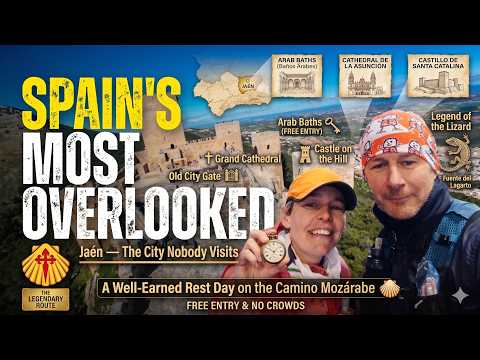
Jaén — The Spanish City Nobody Visits
Trails & Adventures

Jaen’s Culture: Food, History, & Architecture of Spain’s …
WanderLearn with Francis Tapon
You are currently viewing a placeholder content from Vimeo. To access the actual content, click the button below. Please note that doing so will share data with third-party providers.
More InformationYou are currently viewing a placeholder content from YouTube. To access the actual content, click the button below. Please note that doing so will share data with third-party providers.
More InformationYou need to load content from reCAPTCHA to submit the form. Please note that doing so will share data with third-party providers.
More InformationYou are currently viewing a placeholder content from GetYourGuide. To access the actual content, click the button below. Please note that doing so will share data with third-party providers.
More Information