
Milos: The Complete Travel Guide (2026)
Last reviewed: October 2026 · key facts checked against Wikidata
Milos Weather by Month: When to Go
| Month | Day | Night | Sea | Rain days | Rain mm | Wind km/h | Good for |
|---|---|---|---|---|---|---|---|
| Jan | 13° | 10° | 17° | 11 | 71 | 36 | – |
| Feb | 14° | 10° | 16° | 7 | 43 | 34 | – |
| Mar | 15° | 11° | 17° | 7 | 36 | 33 | Hike |
| Apr | 18° | 13° | 17° | 4 | 18 | 29 | Hike |
| May | 22° | 16° | 19° | 3 | 11 | 27 | Hike |
| Jun | 27° | 21° | 23° | 1 | 3 | 26 | Swim |
| Jul | 29° | 24° | 25° | 1 | 2 | 30 | Swim |
| Aug | 28° | 24° | 26° | 1 | 4 | 30 | Swim |
| Sep | 26° | 21° | 25° | 2 | 9 | 29 | Swim |
| Oct | 22° | 18° | 23° | 3 | 18 | 28 | SwimHike |
| Nov | 19° | 15° | 21° | 7 | 43 | 31 | Hike |
| Dec | 15° | 12° | 19° | 11 | 73 | 33 | – |
Sources: ERA5 reanalysis via Open-Meteo, 2016–2025 (10-year average) for air temperature, rain and wind (average daily maximum); Open-Meteo Marine API, 2023–2025 for sea surface temperature. A rain day has at least 1 mm. Area averages; individual years vary.
Milos Travel Guide: Everything You Need to Know (2026)
Milos is a volcanic island in the southwestern Cyclades, sitting at roughly 748 m at its highest point and covering about 160 km² in the Aegean Sea. The island is internationally known as the find-site of the Venus de Milo statue, discovered in 1820 and now housed in the Louvre. With over 70 named beaches carved from colourful volcanic rock, Milos draws growing international attention while remaining less congested than Santorini or Mykonos.
Three Things Not to Miss in Milos
- Sarakiniko Beach — Lunar-white pumice formations drop into electric-blue water — unlike any beach landscape in the Cyclades.
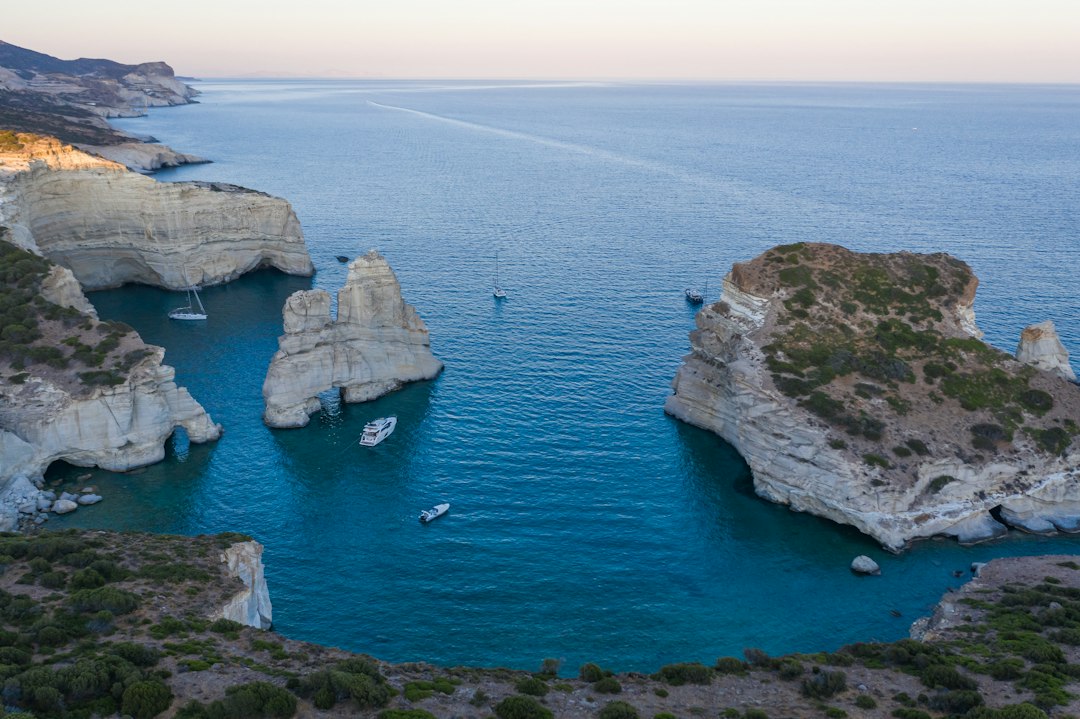
- Kleftiko Sea Caves — Boat-only sea caves with pirate history, best reached on a 4-6 hour sailing excursion from Adamas port.
- Plaka Village — The hilltop capital at roughly 200 m offers panoramic Aegean sunsets from the Kastro ruins above whitewashed lanes.
Scroll down for our complete travel guide with tips on getting there, where to stay, costs and more.
Ferries & Flights to Milos
How do I get to Milos — by flight or ferry?
Flying is fastest; ferry is the budget option with more scheduling flexibility. Milos National Airport (MLO) receives seasonal flights, primarily from Athens (ATH), with the flight taking about 45 minutes. Ferry services depart from Piraeus port in Athens and take roughly 5–7 hours on conventional ferries or about 3.5 hours on high-speed catamarans. Worth knowing: flights to MLO are operated mainly by Sky Express and Olympic Air and sell out weeks ahead in July–August. If you miss a flight window, the overnight ferry from Piraeus is a practical fallback — check ANEK Lines or SeaJets for current schedules and prices.
Which airport or port is the best starting point for Milos?
Adamas port is the main arrival hub and the best starting point for exploring Milos. All ferries dock here, and it is the island’s commercial centre with car-rental offices, ATMs, and tavernas within walking distance. Milos National Airport (MLO) is located roughly 3 km from Adamas, making taxi transfer easy at an approximate cost of €8–12. Worth knowing: flying into MLO cuts travel time dramatically, but the airport has limited infrastructure — no left-luggage facility and a single small terminal — so do not rely on long layovers there. Adamas gives you more flexibility to organise onward island transport immediately on arrival.
How long does the ferry crossing to Milos take?
The crossing time depends on the vessel type. From Piraeus, conventional ferry services take 5–7 hours, while high-speed catamarans operated by companies such as SeaJets cover the route in approximately 3.5 hours. From Santorini a connecting ferry takes roughly 2–3 hours, and from Sifnos about 1 hour. Worth knowing: catamarans are significantly more expensive than conventional ferries and are cancelled more frequently in strong winds — a real risk in the Cyclades, particularly from October onward. We recommend booking conventional ferries for shoulder-season travel and checking openseas.gr or ferryscanner.com for live schedule data before committing to any itinerary.
What does a flight or ferry to Milos cost?
Costs vary considerably by season and booking lead time. A one-way flight from Athens (ATH) to Milos (MLO) typically ranges from €40–€120 on Sky Express or Olympic Air, with peak summer fares at the higher end. A conventional ferry from Piraeus costs approximately €25–€45 for a deck or airline-style seat, while high-speed catamaran tickets run €50–€90 one way. Worth knowing: ferry prices are regulated but vary by cabin class — a reclining seat is perfectly comfortable for an overnight crossing, while a private cabin adds €30–€60 to the base fare. Always verify current fares on ferryscanner.com or directly with operators, as fuel surcharges apply in 2026.
Are overnight ferries to Milos worth it?
Yes, for travellers arriving from Athens/Piraeus, the overnight ferry is genuinely worth considering. Departures from Piraeus in the late evening arrive in Adamas early morning, saving a night’s accommodation cost. A reclining-seat ticket runs approximately €25–€45; a private cabin costs roughly €70–€110 total. Worth knowing: overnight ferries do not operate every day to Milos — the schedule is thinner than on major routes like Mykonos. Confirm sailing days well in advance on openseas.gr, and note that the passenger lounge can be noisy. Travelling in a private or semi-private cabin dramatically improves sleep quality and is worth the premium if you plan to be active the next morning exploring Sarakiniko or Kleftiko.
Moving Around Milos
Do I need a rental car or scooter on Milos?
Yes — a rental car or scooter is strongly recommended on Milos. The island spans about 160 km² and the public bus network is limited to a handful of main routes. A compact rental car costs approximately €40–€70 per day in July–August and €25–€45 in shoulder season; scooters run €20–€35 per day. Rental offices cluster around Adamas port. Worth knowing: the road to several top beaches — including Tsigrado and Firopotamos — involves rough tracks that standard small cars handle poorly; book a compact SUV or enquire specifically about road conditions before choosing a vehicle. Book at least 4–6 weeks ahead in summer to guarantee availability.
Are there buses between towns on Milos?
Yes, but service is limited. The KTEL Milos bus network connects Adamas with Plaka, Tripiti, Pollonia, and a few beaches on a timetable that runs roughly every 1–2 hours during peak season. A single fare costs approximately €1.80–€2.50. Worth knowing: bus frequency drops sharply outside July–August, and evening services are sparse island-wide. The network does not reach key beaches like Sarakiniko, Kleftiko (boat-only), or Firopotamos at all. For anything beyond the main villages, public transport alone is insufficient. We recommend using buses only as a supplement to a hired vehicle or organised boat tour, not as your primary transport strategy on Milos.
What does a rental car cost on Milos — and where do I hire one?
Rental car prices on Milos range from approximately €25–€45 per day in May, June, or September–October, rising to €50–€75 per day in July–August. Most rental companies are based at Adamas port, including local operators such as Milos Rent a Car and international franchises. Compact SUVs, which handle rough beach tracks better than city cars, typically cost €10–€15 more per day than a standard compact. Worth knowing: fuel on the island is priced above mainland levels — budget an extra €15–€25 per day for petrol if you plan to cover the island thoroughly. Book online at least 3–4 weeks ahead in peak season; walk-in availability in August is unreliable.
Which parts of Milos are accessible by public transport?
The KTEL Milos bus serves the corridor between Adamas, Plaka, Tripiti, and Pollonia with reasonable frequency in summer. These routes cover the island’s capital and main villages comfortably. Worth knowing: the most photographed sites — Sarakiniko Beach, Kleftiko caves, and the coloured fishermen’s houses at Klima — are not served by scheduled buses. Sarakiniko is reachable by taxi (approximately €10–€15 from Adamas) or bike, while Kleftiko is accessible only by organised boat excursion. Travellers relying entirely on public transport will miss a significant portion of what makes Milos distinctive. A combination of buses for village visits and boat tours for coastal sites is the most viable public-transport-only strategy.
Can I cycle around Milos?
Cycling on Milos is possible but demanding and not recommended as a primary transport mode. The island’s hilly volcanic terrain and summer heat — regularly reaching 30–36°C in July–August — make extended cycling exhausting. E-bike rentals are available in Adamas for approximately €25–€40 per day and make short rides to Sarakiniko (about 4 km from Adamas) or Tripiti manageable. Worth knowing: roads connecting the south of the island are steep and carry fast-moving tourist traffic in summer, creating a real safety issue on a conventional bicycle. Cycling works well for short village-to-village exploration in May, June, or October when temperatures are cooler and traffic is lighter. Rental shops are concentrated near Adamas port.
Choosing a Base on Milos
Which town on Milos should I base myself in?
Adamas is the practical base for most travellers — it’s the ferry hub, has the widest range of accommodation, restaurants, and car-rental offices, and sits roughly 5 km from the capital Plaka. For atmosphere and sunset views, Plaka itself is more romantic but quieter with fewer dining options after 22:00. Pollonia in the north suits divers and those wanting a low-key village feel, and also serves as the embarkation point for the short 10-minute ferry to Kimolos. Worth knowing: staying in Adamas gives maximum logistical flexibility, but noise from the port and tavernas can be noticeable at night. If you prioritise quiet, choose a hotel on the hillside above Plaka and drive down to Adamas for ferries and supplies.
What does accommodation cost per night on Milos?
Accommodation on Milos spans a wide range. A clean double room in a mid-range guesthouse or studio in Adamas runs approximately €70–€120 per night in shoulder season and €120–€200 in July–August. Boutique hotels and cave-style properties near Plaka command €180–€350 in peak season. Budget options — shared dorms or very basic rooms — start around €35–€50 but are scarce on the island. Worth knowing: Milos has no large hotel chains, so most properties are family-run and standards vary more than on Mykonos or Rhodes. Booking via Booking.com or directly with the property often reveals identical prices, but direct contact sometimes unlocks free airport pickup — worth asking explicitly when enquiring.
Which area of Milos suits which travel style?
Adamas suits first-time visitors, families, and those prioritising convenience — ferry access, supermarkets, and the widest restaurant choice are all within walking distance. Plaka and Tripiti appeal to couples and culture-focused travellers drawn to the hilltop Kastro ruins, the Catacombs of Milos (a 1st–5th century AD Christian site), and atmospheric lanes. Pollonia is the top choice for divers — the water around the northeastern coast is clear and rich in volcanic geology, and dive centres operate from the village. Worth knowing: beach-lovers should not anchor themselves in a single base; the island’s best beaches — Sarakiniko, Firopotamos, Papafragas — are distributed around the coast and require a vehicle regardless of where you stay.
How far in advance should I book accommodation on Milos?
Book at least 2–3 months ahead for July and August travel on Milos; the island’s accommodation stock is small relative to demand and desirable properties in Plaka and Adamas routinely sell out by May. For shoulder-season travel in May, June, or September, 4–6 weeks of lead time is usually sufficient. Worth knowing: Milos has seen a sharp increase in visitor numbers since 2019, and the supply of quality accommodation has not kept pace. Last-minute searches in August regularly turn up only overpriced or poorly located options. Unlike Santorini or Mykonos, there is no large resort hotel that holds rooms in bulk — every property is small, which means once it’s full, there is genuinely nothing comparable nearby.
Are there good apartments or villas with sea views on Milos?
Yes — sea-view apartments and villas are available and represent excellent value compared to Santorini or Ios. Self-catering studios with caldera or sea views near Plaka and on the cliffs above Adamas start at roughly €120–€180 per night in peak season. Villas sleeping 4–6 guests with private pools and sea views are listed on Airbnb and local platforms for approximately €250–€500 per night in July–August. Worth knowing: the most scenic view positions are on the hillside above Adamas harbour and at the edge of Plaka — properties facing west here catch the full sunset over the bay. Verify pool heating availability if visiting before June or after September, as unheated pools at 748 m altitude equivalents can be cold at night even in early summer.
When to Come to Milos
When is the best time to visit Milos?
May, June, September, and October offer the best balance of weather, beach conditions, and manageable crowds on Milos. June and September deliver warm sea temperatures — typically 23–26°C — without the August crush. May is excellent for hiking and photography when the landscape is still green. October remains mild and is outstanding for boat tours to Kleftiko. Worth knowing: July and August are peak season with the highest prices and strong meltemi winds that can cancel boat excursions for 2–3 consecutive days — a real frustration if Kleftiko is a priority. November is listed in the verified best-travel months for mild weather, but ferry frequencies drop sharply and several restaurants and guesthouses close for winter.
What is the weather on Milos like throughout the year?
Milos has a classic Mediterranean climate. Summers (June–August) are hot and dry with temperatures regularly reaching 30–35°C; winters (December–February) are mild but wet, with averages around 12–15°C. Spring (April–May) brings pleasant temperatures of 18–24°C and occasional short showers. The meltemi — a strong northerly wind — dominates July and August, providing cooling relief but disrupting boat excursions to Kleftiko on the island’s south coast. Worth knowing: the island’s volcanic rock landscape amplifies heat, and beaches like Sarakiniko can become uncomfortably scorching underfoot by midday in August — visit before 10:00 or after 17:00. Sea swimming is reliably warm from mid-June through early October.
When does Milos get overcrowded?
Milos is at its most congested in July and August, particularly around the 15 August Greek national holiday weekend when domestic tourism peaks sharply. Sarakiniko Beach can hold hundreds of visitors simultaneously at midday in August, significantly reducing the lunar-landscape atmosphere. Adamas port becomes chaotic on days when multiple ferries arrive within hours of each other. Worth knowing: compared to Santorini (roughly 2 million annual visitors) Milos is still far less overrun, but its small road network and limited parking near popular beaches mean congestion feels acute. Arriving at Sarakiniko before 09:00 or after 17:00 largely sidesteps the crowds even in August. The last two weeks of June and first two weeks of September offer near-peak conditions with noticeably fewer visitors.
Is there a worthwhile shoulder season on Milos?
Absolutely — May, June, and September are the most rewarding months for most travellers on Milos. Accommodation prices in September are typically 20–35% lower than August peaks, sea temperatures remain above 24°C, and boat tours to Kleftiko operate with better reliability due to calmer winds. May is ideal for hiking the Milos Trail Network (over 100 km of marked paths) when the island is green and wildflowers bloom across the volcanic hillsides. Worth knowing: some beach tavernas and smaller guesthouses open only from June 1 and close by October 15, so shoulder-season visitors have slightly fewer dining options. Early May can also see some ferry cancellations due to unsettled Aegean weather — build flexibility into your schedule.
When does the beach and watersports season on Milos begin?
The beach season on Milos effectively starts in mid-May, when sea temperatures reach approximately 20–21°C — comfortable for swimming for most visitors. Watersports operators and boat-tour companies in Adamas typically begin full daily schedules from June 1. Diving centres in Pollonia often open from May 1, as visibility in the volcanic waters is excellent in spring. Worth knowing: the famous boat tour to Kleftiko is weather-dependent and cancelled most often in July–August due to meltemi winds — counterintuitively, June and September offer more reliable departure days. By October, most watersports operators have closed for the season, though swimming remains possible in calm coves. Kayak and stand-up paddleboard rentals at Sarakiniko typically operate June through September only.
Costs on Milos
What does a daily budget cost on Milos?
A realistic mid-range daily budget on Milos is approximately €100–€150 per person, covering a double room (split two ways), one sit-down taverna meal, snacks, ferry or bus transport, and a coffee. Budget travellers sharing a basic studio and eating gyros and supermarket picnics can manage on €55–€75 per day. A comfortable daily spend including a boat tour, restaurant dinner, and a mid-range hotel runs €160–€220 per person. Worth knowing: boat excursions to Kleftiko cost approximately €40–€60 per person and represent the single biggest discretionary expense on the island — factor this into a multi-day budget if you plan to do 2–3 tours. Prices in Adamas tavernas run lower than equivalent restaurants in Plaka, which charges a view premium.
Is Milos more expensive than the Greek mainland?
Yes — Milos is noticeably more expensive than the Greek mainland for accommodation and some groceries, because nearly all goods are shipped in by ferry. A taverna meal that costs €12–€15 in Athens typically costs €16–€22 for an equivalent dish in Milos. Supermarket staples run 10–20% above Athens prices. Accommodation is also pricier: a mid-range double that costs €60–€80 in Athens runs €100–€150 on Milos in shoulder season. Worth knowing: Milos is considerably cheaper than Mykonos and roughly comparable to Paros for accommodation and dining. Petrol on the island costs more than on the mainland — factor this in if driving extensively. Self-catering in a studio with kitchen access is the most effective way to reduce daily costs.
What expenses on Milos are unavoidable?
Four costs are genuinely unavoidable on Milos. First, ferry or flight to the island — budget €25–€120 each way depending on route and vessel type. Second, local transport — a rental car at €30–€70 per day is practically essential unless you limit yourself to Adamas and Plaka. Third, drinking water — tap water on Milos is brackish and not recommended for drinking; bottled water at approximately €0.80–€1.50 per 1.5 L adds up over a week. Fourth, port taxes and tourist levies — Greece applies a small nightly accommodation levy (approximately €0.50–€4.00 per room per night depending on star rating) that is sometimes excluded from listed prices. Worth knowing: fuel costs for a rental car covering the main beaches can easily reach €20–€30 per day.
What does food cost on Milos — local versus tourist prices?
A sit-down taverna meal (main course + carafe of house wine + water) in a tourist-facing restaurant costs approximately €20–€30 per person. At a local-oriented kafeneion or smaller taverna in Tripiti or Pollonia, the same meal runs €13–€18. A gyros pita from a snack bar in Adamas costs approximately €3–€4. A Greek salad averages €7–€9 island-wide. Worth knowing: the seafood restaurants along Adamas harbour apply a significant view-and-location premium — grilled fresh fish is typically priced by the kilogram at €45–€65/kg, which makes a fish dinner for two an expensive occasion. We recommend reserving the harbour tavernas for one special evening and eating at inland villages on other nights to manage food costs across a week-long stay.
What are the best beaches on Milos?
Sarakiniko is the signature beach — white pumice formations and turquoise water, roughly 4 km northeast of Adamas. Firopotamos is a sheltered fishing-village cove ideal for calm swimming. Tsigrado requires descending a wooden ladder through a cliff crack, rewarding visitors with a narrow pristine bay; a 4WD or high-clearance vehicle is advised to reach the car park. Papafragas consists of three narrow sea-canyon inlets with natural tunnel access. Kleftiko is accessible only by boat — the most dramatic sea-cave landscape on the island. Worth knowing: Paleochori Beach in the south has naturally warm shallow water heated by volcanic vents beneath the seabed — a genuinely unusual experience. We recommend arriving at Sarakiniko before 09:30 in July–August to secure a spot before tour-group buses arrive.
Beaches, Coves & Highlights of Milos
What are the top sights on Milos beyond the beaches?
The Catacombs of Milos near Tripiti are among the most significant early Christian burial sites in Greece, with over 2,000 tombs carved into volcanic rock dating from the 1st–5th century AD — entry costs approximately €6. The Mining Museum of Milos in Adamas documents the island’s rich industrial history in obsidian and bentonite extraction. Plaka’s Kastro ruins offer the best panoramic views on the island. The ancient theatre of Milos at Tripiti dates to the Hellenistic period and is where a plaster cast marks the Venus de Milo’s original find spot. Worth knowing: Kimolos island is reachable by a 10-minute ferry from Pollonia for approximately €3–€5 and makes an excellent half-day excursion to a near-deserted Cycladic island with dramatically fewer visitors than Milos itself.
What watersports activities are available on Milos?
Milos offers a strong range of water-based activities. Scuba diving is a highlight — the volcanic seabed features unusual formations, and operators including Milos Diving Center in Pollonia run certified PADI courses and guided dives from approximately €50–€70 per dive. Sea kayaking tours along the northern coastline operate from Adamas and Sarakiniko, typically 3–5 hours for €40–€60 per person. Sailing and boat excursions to Kleftiko and the sea caves cost approximately €40–€65 per person on a shared vessel. Stand-up paddleboard rental at Sarakiniko runs roughly €15–€20 per hour. Worth knowing: the meltemi wind in July–August makes kayaking and paddleboarding on the exposed south and west coasts genuinely dangerous — always check with operators about conditions before booking.
What is the culinary highlight of Milos?
Pitarakia — small fried or baked pies filled with local fresh cheese and herbs — are the signature snack of Milos and found in bakeries across Adamas and Plaka for approximately €1.50–€2.50 each. The island’s volcanic soil produces distinctive capers and Milos thyme honey, both worth buying directly from local producers. Fresh seafood — particularly grilled octopus and sea bream — is abundant given the island’s fishing tradition. Worth knowing: Lazarakia (sweet dough cookies flavoured with local herbs) are a traditional Milos confection sold in specialist bakeries. For a full sit-down meal showcasing island produce, tavernas in Tripiti and Pollonia tend to source more locally and charge less than the tourist-facing restaurants along the Adamas seafront.
Which parts of Milos are still off the beaten track?
The northeast coast between Pollonia and Pachena Bay sees a fraction of the visitors that cluster around Sarakiniko and Adamas. The village of Zefyria — the island’s former medieval capital, largely abandoned — receives very few tourists despite its ruined church and atmospheric setting. The Milos Trail Network, with over 100 km of marked hiking paths, is almost entirely uncrowded even in August. Kimolos, just 10 minutes by ferry from Pollonia (approximately €3–€5), remains genuinely quiet with virtually no tourist infrastructure. Worth knowing: compared to Santorini, even Milos’s busiest spots feel manageable — but if you want total solitude on the island itself, target the western cape around Agios Konstantinos accessible only by rough track or boat.
How many days do I need on Milos?
5–7 days is the ideal stay on Milos to cover the main beaches, at least one boat excursion, the key cultural sights, and a day trip to Kimolos. A 3-day visit is feasible and covers the essentials — Sarakiniko, Plaka, Kleftiko by boat — but feels rushed. Ten days suits travellers who want to hike sections of the 100+ km trail network, dive repeatedly with Milos Diving Center, or use the island as a base for ferrying to neighbouring islands like Sifnos (approximately 1 hour) or Folegandros (approximately 1.5 hours). Worth knowing: unlike Santorini, which many visitors overestimate needing more than 3 days for, Milos genuinely rewards longer stays because its coastline and inland landscape are varied enough to sustain daily discovery across a full week.
Milos at a Glance
| Currency | EUR (€) |
|---|---|
| Official language | Greek |
| Time zone | UTC+02:00 |
Source: Wikidata, retrieved October 2026.
Greece › Milos
More Destinations in South Aegean Region
More Destinations in Greece
Essential Resources for Planning Your Trip to Milos
- Things to know before visiting Milos, Greece – peachandsalty — official visitor information
- Wikivoyage: Milos — community travel guide & practical tips
- Wikipedia: Milos — history, geography & background
- Milos, Greece: Everything You Need to Know — how to get there and around
- Milos Mining Museum | Greece | Attractions — itineraries & inspiration
Data Sources
Key facts on this page (population, currency, language, time zone) come from Wikidata, climate figures from Open-Meteo. The retrieval date is shown next to the facts table.