
Symi: The Complete Travel Guide (2026)
Last reviewed: October 2026 · key facts checked against Wikidata
Symi Weather by Month: When to Go
| Month | Day | Night | Sea | Rain days | Rain mm | Wind km/h | Good for |
|---|---|---|---|---|---|---|---|
| Jan | 15° | 12° | 19° | 15 | 188 | 30 | – |
| Feb | 15° | 13° | 18° | 10 | 80 | 29 | – |
| Mar | 16° | 13° | 18° | 8 | 68 | 28 | – |
| Apr | 19° | 16° | 18° | 4 | 33 | 25 | Hike |
| May | 22° | 19° | 20° | 4 | 15 | 24 | Hike |
| Jun | 26° | 22° | 24° | 1 | 4 | 24 | Swim |
| Jul | 29° | 25° | 27° | 0 | 4 | 26 | Swim |
| Aug | 29° | 26° | 28° | 0 | 1 | 23 | Swim |
| Sep | 27° | 24° | 27° | 1 | 8 | 24 | Swim |
| Oct | 24° | 21° | 25° | 4 | 40 | 22 | SwimHike |
| Nov | 20° | 18° | 23° | 10 | 129 | 24 | – |
| Dec | 17° | 14° | 21° | 14 | 231 | 28 | – |
Sources: ERA5 reanalysis via Open-Meteo, 2016–2025 (10-year average) for air temperature, rain and wind (average daily maximum); Open-Meteo Marine API, 2023–2025 for sea surface temperature. A rain day has at least 1 mm. Area averages; individual years vary.
Symi Travel Guide: Everything You Need to Know (2026)
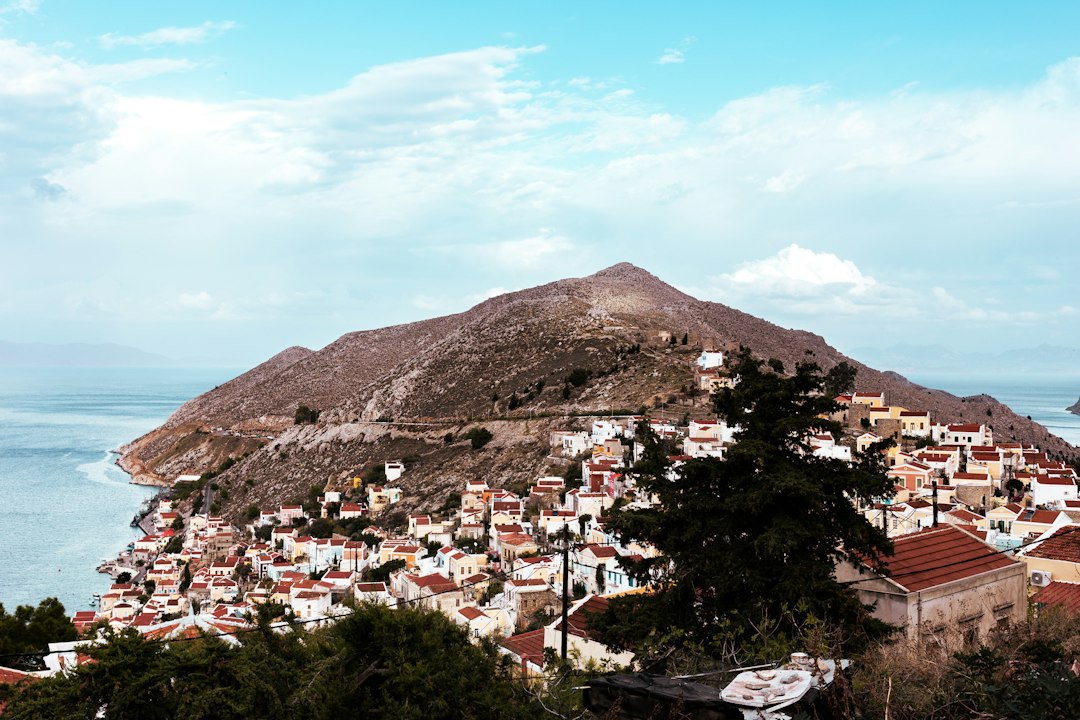
Symi is a small Greek island of 2,590 residents in the Dodecanese, sitting just 41 km north of Rhodes and administratively part of the Rhodes regional unit. The island is famous for its neoclassical harbour architecture — rows of ochre and terracotta mansions rising steeply above Gialos harbour — built during a prosperous 19th-century sponge-diving era. Symi Town’s upper quarter, Ano Symi, perches at roughly 180 metres above sea level and is reached by the 500-step Kali Strata staircase.
Three Things Not to Miss in Symi
- Gialos Harbour and the Kali Strata — A photogenic arc of neoclassical mansions above a working harbour, connected by a 500-step staircase dating to the sponge-diving boom.
- Panormitis Monastery — A grand 18th-century monastery dedicated to Archangel Michael, reachable by ferry or a scenic mountain road on Symi’s southern tip.
- Agia Marina and Nanou Bay — Turquoise coves accessible only by boat taxi, offering some of the clearest water in the Dodecanese without road access or crowds.
Scroll down for our complete travel guide with tips on getting there, where to stay, costs and more.
Getting to Symi: Ferry or Flight
How do I reach Symi — by flight or ferry?
Symi has no airport, so ferry from Rhodes is the only practical option. High-speed catamarans operated by Dodekanisos Seaways cover the 41 km crossing in roughly 50–60 minutes; conventional ferries take around 2 hours. Day-trip boats also depart daily from Mandraki Harbour in Rhodes Town during summer. Worth knowing: there is no bridge or roll-on/roll-off vehicle ferry for private cars, so most visitors arrive as foot passengers. Flights into Rhodes International Airport (RHO) are the standard air entry point, after which you connect by ferry.
Which port is the best starting point for Symi?
Gialos — Symi’s main harbour — is where all ferries dock and is effectively the island’s single hub. It combines the waterfront tavernas, boat-taxi kiosks, and the base of the Kali Strata staircase leading to Ano Symi. Arriving at Gialos puts you immediately within walking distance of accommodation, restaurants, and onward water-taxi connections to beaches. Worth knowing: the small dock can feel congested when the Rhodes day-trip boats arrive mid-morning (roughly 10:00–11:00), so scheduling ferry travel outside that window makes disembarkation smoother.
How long does the ferry crossing to Symi take?
The fast catamaran from Rhodes (Mandraki Harbour) to Gialos takes approximately 50–60 minutes. Conventional ferry services take roughly 2 hours. Dodekanisos Seaways operates the primary scheduled route; check their timetable directly for 2026 departures, as schedules are seasonal and frequency drops sharply outside June–October. Worth knowing: crossings in the Meltemi wind season (July–August) can be choppy, and the smaller catamaran is more affected by swell than a larger ferry, so travellers prone to seasickness should choose conventional vessels or bring medication.
What does a ferry ticket to Symi cost?
Fast catamaran tickets from Rhodes to Symi cost approximately €15–€22 one way for foot passengers; conventional ferry fares run roughly €10–€15. Day-trip excursion boats from Rhodes often bundle the crossing with a stop at Panormitis Monastery for about €25–€35 per person — verify current pricing on Dodekanisos Seaways or through Rhodes harbour kiosks. Worth knowing: booking online in advance during July and August is strongly recommended, as high-speed departures sell out; walk-up tickets are more reliable on slower vessels, but those offer fewer daily crossings.
Are overnight ferries to Symi worth it?
Overnight ferries are not a realistic option for Symi specifically. The island is a short crossing from Rhodes — at most 2 hours — making an overnight sailing unnecessary. Long-haul Dodecanese routes operated by Blue Star Ferries connect Athens (Piraeus) to Rhodes, taking roughly 14–18 hours, and Symi can be added as an intermediate stop on some itineraries. Worth knowing: if you are coming from Athens, sailing overnight to Rhodes and then catching a morning fast cat to Symi the next day is more comfortable than attempting a continuous connection; budget an extra night in Rhodes Town as a buffer.
Getting Around Symi
Do I need a rental car or scooter on Symi?
A rental car is largely unnecessary and impractical on Symi. The road network is limited, the island is small, and the main town is best explored on foot. Scooters and quad bikes are available for hire in Gialos for roughly €20–€35 per day (verify with local operators), useful for reaching Panormitis Monastery or the village of Pedhi. The majority of the best beaches are accessible only by water taxi. Worth knowing: roads outside Gialos are narrow, steep and poorly signposted; inexperienced riders should avoid scooters and use the boat-taxi network instead.
Are there buses between towns on Symi?
Public bus service on Symi is minimal. A single bus route connects Gialos harbour with Ano Symi (the upper town) and occasionally Pedhi beach — fares are typically under €2. Schedules are infrequent and not designed for tourist convenience. The primary local transport between beaches and the harbour is the water-taxi (caique) network, which operates on demand from Gialos waterfront during daylight hours in season. Worth knowing: for reaching remote coves like Nanou or Agios Georgios Dysalonas, water taxis are the only option; agree the price before boarding, as fares vary by distance.
What does a rental car cost on Symi — and where do I hire one?
Standard four-wheel rental cars are not widely available on Symi due to the island’s small road network. The practical hire option is a scooter or ATV, available from agencies along the Gialos waterfront, costing approximately €20–€35 per day depending on vehicle type and season — confirm rates directly with operators in 2026. A valid driving licence is required; EU licence holders are covered. Worth knowing: the island has a single main paved road beyond the harbour area, and much of it is shared with pedestrians and donkeys near Ano Symi, so hiring a vehicle primarily makes sense for the southern route to Panormitis.
Which parts of Symi are accessible by public transport?
Gialos, Ano Symi, and Pedhi are the only areas with any road-based access. The limited bus connects these three points. All other significant destinations — including Nanou Bay, Agios Nikolaos, Marathounda, and Panormitis — are reached by water taxi or private hire boat from Gialos harbour. Worth knowing: even Panormitis Monastery, Symi’s most visited inland attraction, is reachable either by the mountain road (scooter or tour van) or by the scheduled excursion ferry that often operates on a Gialos–Panormitis route in summer — check with Dodekanisos Seaways or local agencies for the 2026 timetable.
Can I cycle around Symi?
Cycling around Symi is not recommended as a primary transport mode. The terrain is extremely hilly — Ano Symi alone sits at roughly 180 metres above the harbour — and roads outside the waterfront are steep and narrow. There is no formal bike-share scheme. On-foot exploration within Gialos and along the Kali Strata is the standard approach. Worth knowing: the island is better suited to hiking; the trail network connecting Gialos to Ano Symi and beyond to monasteries and scenic viewpoints is the attraction in itself. Walking poles are useful on the stone-paved Kali Strata, which has approximately 500 steps.
Where to Stay on Symi
Which town on Symi should I base myself in?
Gialos — the main harbour — is the best base for first-time visitors. It offers the widest range of accommodation, direct ferry access, waterfront restaurants, and the boat-taxi kiosks for beach excursions. Ano Symi, the upper town reachable via the Kali Strata, is quieter and better for those wanting authentic village atmosphere away from day-tripper crowds. Pedhi, a small bay a 15-minute walk east of Gialos, suits travellers prioritising a beach-adjacent base. Worth knowing: Gialos gets noticeably crowded when the Rhodes day-trip boats dock; staying in Ano Symi and descending for evening meals avoids the worst of the midday rush.
What does accommodation cost per night on Symi?
Budget guesthouses in Gialos start at roughly €60–€80 per night for a double room in shoulder season. Mid-range boutique hotels and renovated neoclassical properties average €100–€160 per night in July–August. High-end waterfront options or villa rentals can exceed €250 per night at peak. Verified local pricing should be cross-checked on Booking.com or directly with properties for 2026, as Symi’s small inventory means prices shift sharply with demand. Worth knowing: the island has far fewer rooms than Rhodes, so budget options book out early; flexible travellers visiting in May or October will find noticeably lower rates.
Which area of Symi suits which travel style?
Gialos waterfront suits those who want convenience — ferries, restaurants, shopping, and boat taxis within metres. Ano Symi appeals to cultural travellers and hikers drawn to the neoclassical architecture, Byzantine churches, and panoramic views over the harbour. Pedhi Bay is ideal for families or those prioritising a calm, swimmable beach within walking distance of the main town. Panormitis in the far south appeals to visitors interested in religious heritage and complete isolation. Worth knowing: Symi is a genuinely small island (population 2,590), so no area is more than roughly 10 km from the harbour — travel style differences are more about atmosphere than distance.
How far in advance should I book accommodation on Symi?
Book at least 3–4 months ahead for July and August travel. Symi’s total accommodation stock is small, and the island’s popularity among discerning travellers visiting from Rhodes (41 km away) and European charter tourists means quality rooms at mid-range prices disappear quickly. Shoulder-season visitors in May, June, September, or October can typically book 4–6 weeks in advance without issue. Worth knowing: many Symi properties are small family-run guesthouses that do not list on major platforms — checking the Symi Tourism official resources or contacting hotels directly can uncover availability that appears sold out online.
Are there good apartments or villas with sea views on Symi?
Yes — Symi’s hillside neoclassical mansions make it one of the most scenic villa destinations in the Dodecanese. Renovated captains’ houses in Ano Symi and the hillside above Gialos frequently offer terraces with direct harbour views. Self-catering apartments are available via Airbnb and local rental agencies, with sea-view studios starting at roughly €90–€130 per night in peak season. Worth knowing: properties with panoramic views are typically accessed by many steps (Symi has no lifts on most hillside streets), which can be impractical for travellers with mobility limitations or heavy luggage — confirm access specifics before booking.
Best Time to Visit Symi
When is the best time to visit Symi?
June, September, and October offer the best balance of warm weather, manageable crowds, and lower prices. July and August are the warmest months but also bring the highest number of day-trippers from Rhodes. Climate analysis confirms the best travel months as June through October. May is pleasant and quiet but some boat services and businesses have not yet reached full operating hours. Worth knowing: the Meltemi wind blows strongly across the Aegean in July–August, which can disrupt water-taxi services to exposed coves and make sea crossings from Rhodes uncomfortable — factor this into itinerary planning if beach-hopping is a priority.
What is the weather like on Symi throughout the year?
Symi has a classic eastern Mediterranean climate: hot and dry summers, mild winters, and minimal rainfall from May through September. Summers regularly reach 32–35°C in July and August; spring and autumn temperatures sit comfortably between 18–26°C. Winters (December–February) are mild by northern European standards but can bring rain and rough seas that limit ferry connections. Worth knowing: the island’s mountainous topography means Ano Symi and interior trails can feel several degrees cooler than the waterfront in summer — a useful escape from midday heat. Verified monthly temperature data for 2026 should be checked via Open-Meteo or the Hellenic National Meteorological Service.
When does Symi get overcrowded?
The most intense crowding occurs on Gialos waterfront between 10:00 and 15:00 in July and August, when day-trip excursion boats from Rhodes deliver large passenger groups simultaneously. The harbour cafés, the base of the Kali Strata, and the souvenir strip become noticeably congested. Overnight visitors who descend to the waterfront after 17:00 — when most day-trippers have departed — experience a completely different, quieter atmosphere. Worth knowing: compared with Rhodes Town (population roughly 50,000) or Kos, Symi’s overall visitor pressure is moderate, but the small physical footprint of Gialos amplifies the impact; the upper town and inland trails remain uncrowded even on peak days.
Is there a worthwhile shoulder season on Symi?
May and October are genuinely rewarding shoulder months. Temperatures in May sit around 20–24°C, ideal for hiking the Kali Strata and coastal trails without summer heat. October offers sea temperatures still warm enough for swimming (around 23–24°C typically in the eastern Aegean) with far fewer visitors. Ferry frequency from Rhodes is reduced but services still run. Worth knowing: some smaller tavernas and boat-taxi operators close after mid-October, so the choice of open restaurants narrows. June represents the best overall compromise — summer warmth, full services, and crowds that are elevated but not yet at July–August peak.
When does the beach and watersports season begin on Symi?
Swimming and water-taxi services to beaches begin reliably from late May, with full operation by early June. Sea temperatures in the eastern Aegean around Symi reach comfortable swimming levels (around 22°C) by late May and peak near 27–28°C in August. Watersports equipment hire — kayaks and snorkelling gear — is available at accessible beaches like Pedhi and Nos from June onwards. Worth knowing: Symi has no large-scale watersports centres of the type found on Rhodes or Kos; the offer is intentionally low-key. Divers should contact specialist operators on Rhodes for dive excursions to the marine sites around Symi’s coastline.
What Symi Costs
What does a daily budget cost on Symi?
A realistic mid-range daily budget is €80–€120 per person, covering a double-room share, two meals at local tavernas, one water-taxi excursion, and drinks. Budget travellers staying in guesthouses and eating at simple family tavernas can manage €50–€65 per day excluding accommodation. A day of boat-taxi trips to multiple coves, lunch on the water, and dinner at a harbour restaurant can push spending to €150+. Worth knowing: Symi does not have supermarkets equivalent to those on Rhodes Town — groceries are available but more expensive due to ferry freight costs, so self-catering savings are lower than on larger islands.
Is Symi more expensive than the Greek mainland?
Yes — Symi is noticeably more expensive than comparable mainland destinations and slightly above average for the Dodecanese. The island’s isolation, small scale, and upmarket reputation push prices higher. A taverna main course runs approximately €14–€22 compared with €10–€15 in Athens neighbourhoods like Monastiraki. Accommodation is similarly elevated relative to mainland equivalents. Worth knowing: the premium is partly structural — everything on the island arrives by ferry from Rhodes, adding transport costs — and partly a reflection of Symi’s positioning as a boutique, low-volume destination. Visitors accustomed to budget Greek island travel on Lesbos or Ikaria will find Symi significantly pricier.
What expenses on Symi are unavoidable?
The ferry crossing from Rhodes (approximately €15–€22 each way) is unavoidable. Water-taxi fares to most beaches — typically €8–€20 per person round trip depending on distance — are effectively mandatory if you want to reach the best coves. Dining out is largely unavoidable as self-catering options are limited. Worth knowing: the Kali Strata staircase to Ano Symi is free, as are most coastal walking trails; Symi’s best sightseeing is therefore walkable at no cost. Entry to Panormitis Monastery is free, though a donation is customary. Budget ferry-dependent travellers should factor in potential weather delays adding unplanned accommodation nights.
What does food cost on Symi — local versus tourist prices?
A meal at a waterfront tourist taverna in Gialos costs approximately €18–€28 per main course. Moving up to Ano Symi or eating at family-run spots slightly off the harbour drops prices to roughly €12–€18 per main. Fresh grilled fish is priced by weight — expect €60–€90 per kg for sea bream or sea bass. A Greek coffee at a harbour café runs about €2.50–€3.50. Worth knowing: the price gap between “local” and “tourist” restaurants on Symi is smaller than on larger islands because the island’s population itself (just 2,590 residents) depends on the same small number of establishments — there is no hidden local-only neighbourhood with dramatically lower prices.
What are the best beaches on Symi?
Nanou Bay is widely considered Symi’s most beautiful beach — a pebble cove with turquoise water accessible only by water taxi from Gialos (approximately 20 minutes, roughly €12–€16 round trip). Agia Marina offers calm, clear water in an enclosed bay. Pedhi is the closest sandy option to the main town, a 15-minute walk or short taxi ride from Gialos. Marathounda on the west coast is larger and quieter. Worth knowing: nearly all of Symi’s best beaches are pebble or rock, not sand — water shoes are strongly recommended. Beach towel facilities and sunbeds are available at Pedhi but sparse or absent at remoter coves.
Beaches & Experiences on Symi
What are the top sights on Symi beyond the beaches?
Panormitis Monastery — an 18th-century fortified monastery at the island’s southern tip — is the primary cultural landmark, drawing pilgrims and day-trippers alike. The Kali Strata (500 neoclassical steps) connecting Gialos to Ano Symi is itself a sight, lined with mansions in varying states of restoration. The Symi Museum in Ano Symi documents local history including the 1945 Italian surrender signed on the island. Worth knowing: the Dodecanese was the last Greek territory liberated at the end of World War II, and Symi holds specific historical significance as the formal surrender location — a detail that adds context to the island beyond its scenic harbour.
What watersports activities are available on Symi?
Watersports on Symi are low-key by design. Snorkelling is excellent throughout the island’s clear coves — equipment hire is available at Pedhi beach. Kayak rental is offered by a small number of operators during peak season. Boat hire (self-drive dinghies) allows independent exploration of the coastline. Scuba diving excursions are organised from Rhodes rather than Symi itself, with dive operators in Rhodes Town running trips to the Symi marine area. Worth knowing: there are no jet-ski rentals or banana boats on Symi — the island has deliberately maintained a quieter character compared with Rhodes or Kos, which suits snorkellers and open-water swimmers but disappoints those seeking high-energy watersports.
What is the culinary highlight of Symi?
Symi shrimps (Symian garides) are the island’s signature dish — tiny, intensely flavoured deep-water shrimps unique to the local waters, typically served grilled or in pasta. They appear on virtually every waterfront menu and are a genuinely distinctive product not easily found elsewhere in the Dodecanese. Expect to pay approximately €14–€20 for a portion. Beyond shrimps, freshly grilled octopus dried on harbour railings and local honey produced from Symi’s thyme-covered hills are worth seeking out. Worth knowing: Symi’s small size means most fish on menus arrives fresh daily from local fishermen — a significant quality advantage over the frozen produce common on more touristic islands.
Which parts of Symi are still off the beaten track?
The western coast trail network — linking Gialos to coves such as Agios Georgios Dysalonas and Agios Emilianos — sees very few visitors despite being walkable from the main town (allow 2–3 hours on foot). Nimborio, a small bay north of Gialos reachable on foot in roughly 30 minutes, retains a quiet, local character. The ruins of the medieval Kastro above Ano Symi are frequently bypassed by visitors who stop at the Kali Strata and go no further. Worth knowing: Symi’s hiking trail map is available from the Symi municipality office near the harbour; some trails are partially marked but benefit from a downloaded offline map via Maps.me or Komoot before departing Gialos.
How many days do I need on Symi?
2–3 nights is the minimum to go beyond a day trip and experience Symi’s beaches, Ano Symi, and Panormitis. A 4–5 day stay allows a relaxed pace covering the main hiking trails, multiple beach coves by water taxi, and an evening meal culture that reveals itself only after the day-trippers leave. Compared with Rhodes (which warrants 5–7 days for its medieval city, beaches, and villages) or Kos (3–5 days), Symi is intentionally compact. Worth knowing: many visitors make the mistake of treating Symi as a day trip from Rhodes and feeling it is “just a harbour.” Staying overnight fundamentally changes the experience — the island after 17:00 belongs entirely to its 2,590 residents and overnight guests.
Symi at a Glance
| Population | 2,590 |
|---|---|
| Currency | EUR (€) |
| Official language | Greek |
| Time zone | UTC+02:00 |
Source: Wikidata, retrieved October 2026.
Greece › Symi
More Destinations in South Aegean Region
More Destinations in Greece
Essential Resources for Planning Your Trip to Symi
- Symi Seeks €3 Visitor Levy to Offset Impact of Summer … — official visitor information
- Wikivoyage: Symi — community travel guide & practical tips
- Wikipedia: Symi — history, geography & background
- How to Get to Simi Island? – Bilet.com — how to get there and around
- Moni Taxiarhou Mihail Panormiti | Greece | Attractions — itineraries & inspiration
Data Sources
Key facts on this page (population, currency, language, time zone) come from Wikidata, climate figures from Open-Meteo. The retrieval date is shown next to the facts table.