
Nafpaktos: The Complete Travel Guide (2026)
Last reviewed: September 2026 · key facts checked against Wikidata
Nafpaktos Travel Guide: Everything You Need to Know (2026)
Nafpaktos is a coastal town of 12,950 residents perched at just 15 metres above sea level on the northern shore of the Gulf of Corinth, roughly 230 km west of Athens. It earned its place in world history as the site of the 1571 Battle of Lepanto, one of the largest naval engagements ever fought, and its Venetian harbour remains one of the most photogenic in all of Greece. The town pairs a remarkably intact medieval castle with a buzzing waterfront café culture that most travellers driving between Athens and Patras simply speed past.
Three Things Not to Miss in Nafpaktos
- Venetian Harbour and Fortress — A perfectly circular 15th-century harbour enclosed by twin towers — one of Greece’s most intact Venetian port complexes.
- Nafpaktos Castle (Kastro) — Five concentric defensive walls climbing the hillside above town, offering panoramic Gulf of Corinth views from 150 metres up.
- Battle of Lepanto Monument — A striking seafront sculpture commemorating the 1571 naval battle where Cervantes, author of Don Quixote, was wounded.
Scroll down for our complete travel guide with tips on getting there, where to stay, costs and more.
How to Reach Nafpaktos
How do I get to Nafpaktos?
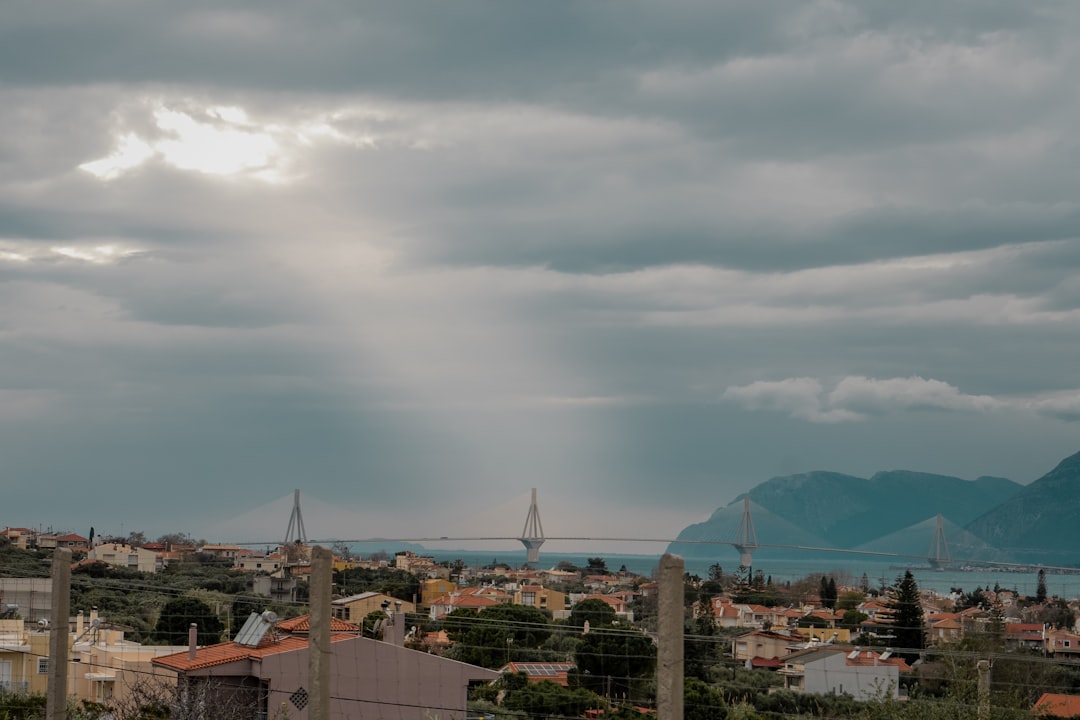
The easiest approach is by car or intercity bus from Patras (45 minutes, roughly 80 km west) or from Athens (3 hours, approximately 230 km via the Rio–Antirrion Bridge). In my experience, the KTEL bus from Athens Kifissos terminal runs 3–4 times daily and costs around €18–22 one way, dropping you at Nafpaktos town centre. The bridge itself — the longest cable-stayed bridge in the world at 2,252 metres — is a spectacle in its own right, though the €13.70 toll for cars catches many first-timers off guard. I recommend the bus if you plan to stay put; rent a car only if you intend to explore the wider Aetolia-Acarnania region.
Which airport is closest to Nafpaktos?
Patras has no commercial airport, so your realistic options are Araxos Airport (GPA), about 85 km southwest (primarily seasonal charters), or Athens International Eleftherios Venizelos (ATH), 230 km east. In my experience, flying into ATH gives you far more flight options and is the sensible default for international travellers. From ATH, take the express bus to Kifissos terminal then a direct KTEL coach to Nafpaktos — total transfer time is around 4 hours and costs under €25. The caveat: GPA only operates seasonally and has almost no low-cost connections beyond a handful of UK and German charter routes in summer.
How long does the journey to Nafpaktos take from Athens?
By car, expect 2.5 to 3 hours from central Athens under normal traffic conditions, crossing the Rio–Antirrion Bridge — budget the €13.70 toll. By KTEL bus from Kifissos terminal, the journey runs 3 to 3.5 hours. My tip: leave Athens before 8:00 to avoid the notorious Kifissias Avenue morning gridlock, which can add 45 minutes before you even reach the motorway. What surprised me is how dramatically the landscape changes after Korinthos — the Gulf of Corinth coastline is genuinely beautiful and makes the drive feel shorter than it is. Avoid Friday-afternoon departures from Athens in July and August; the motorway backs up badly near Korinthos.
Do I need a car in Nafpaktos?
No — Nafpaktos town itself is entirely walkable for a 2–3 day stay. The harbour, castle, old town, and main beaches are all within 1.5 km of each other. In my experience, visitors who arrive by bus and stay centrally near Psani Beach or the Venetian port never feel car-deprived. However, if you want to reach the mountain villages of Nafpaktia — places like Ano Chora or the Vardousia foothills — a rental car becomes essential. The honest trade-off: renting locally through agencies on Athinon Street costs around €35–50 per day, which is only worthwhile if you plan at least 2 full day-excursions outside town.
Nafpaktos Public Transport Explained
What are the best areas to stay in Nafpaktos?
I recommend staying within 300 metres of the Venetian harbour for the most atmospheric experience. The narrow streets of the Old Town (Palaia Poli) behind the port put you steps from the best tavernas and the castle trail. Psani Beach area, about 500 metres east of the old port, suits families and those wanting a quieter, slightly more modern strip with easier parking. Avoid booking accommodation on the western bypass road — it saves nothing in walking distance but strips you of the evening atmosphere along the waterfront. My tip: rooms above the Bourtzi tower level on the castle slope offer staggering views but involve steep nightly climbs — fine for the energetic, exhausting after a long dinner.
What does accommodation cost per night in Nafpaktos?
Expect to pay €55–85 per night for a solid mid-range double room in peak summer (July–August). A seafront studio apartment in the old harbour area runs €70–110. Budget guesthouses on the upper castle streets start around €40. In my experience, the value-to-atmosphere ratio at Nafpaktos is genuinely strong compared to overpriced island destinations — €75 here buys a balcony view that would cost €200+ on Santorini. The honest caveat: the upper budget bracket (€100+) doesn’t yet offer truly luxury finishes — this is a charming, authentic Greek town, not a boutique-hotel destination. Book directly with guesthouses to avoid the 15–18% OTA markup.
How far in advance should I book accommodation in Nafpaktos during high season?
Book 6–8 weeks ahead for July and August, especially for harbour-view rooms. Nafpaktos draws heavy domestic Greek tourism in summer — Athenians treat it as a long-weekend escape — and the best Old Town guesthouses fill completely. In my experience, mid-June and September bookings need only 2–3 weeks notice. What surprised me: Greek Orthodox Easter week is equally competitive as August — the town hosts large crowds for the holiday and fills faster than most foreigners expect. My tip: if you’re flexible, search for Sunday–Thursday stays; weekend premium pricing in summer can inflate room rates by 20–30% even in this modest-sized town.
Are there special or unique accommodation types in Nafpaktos?
Yes — castle-side stone guesthouses built into the Venetian fortification walls are the standout option. A handful of traditional arhontika (manor-style stone houses) within the Kastro perimeter offer rooms with exposed medieval stonework and private terraces overlooking the Gulf. In my experience, these are among the most characterful sleeps in mainland Greece and cost no more than €80–95 per night. Some owners rent entire ground-floor units as self-catering apartments, ideal for a 3-night stay. The trade-off: access roads are steep and uneven cobblestone — completely impractical if you have heavy luggage or mobility limitations. Always confirm whether the property has vehicle access before booking.
Neighbourhoods of Nafpaktos
What are the must-see sights in Nafpaktos?
Three sights are non-negotiable. First, the Venetian Harbour (Limani) — the circular fortified port with twin medieval towers is the town’s visual centrepiece and genuinely rivals anything in the Adriatic. Second, Nafpaktos Castle (Kastro) — five concentric walls climbing to 150 metres, with the upper battlements offering a panoramic sweep across the Gulf of Corinth to the Peloponnese. Third, the Battle of Lepanto Monument on the seafront esplanade, honouring the 1571 clash where Miguel de Cervantes lost the use of his left hand. In my experience, the castle walk takes 90 minutes at a relaxed pace and is completely free. The harbour cafés at sunset are reason enough to extend your stay by a night.
What can I experience for free in Nafpaktos?
Quite a lot — Nafpaktos Castle has no entry fee and is open daily. The seafront promenade and Venetian harbour are entirely free to walk, photograph, and enjoy. Psani Beach and the smaller Gribovo Beach are free public beaches. The War Museum of Nafpaktos has periods of free admission and charges only €2 at other times. In my experience, you can spend a genuinely rich full day in Nafpaktos spending nothing beyond food and coffee. My tip: the castle pine forest above the upper walls is an underused shaded walking area — locals use it for evening strolls but tourists rarely push past the first gate.
Which day trips are possible from Nafpaktos?
Delphi is the headline day trip — 95 km northeast via a mountain road, roughly 1.5 hours by car — and the combination of the Oracle site with Nafpaktos harbour makes for one of mainland Greece’s best 2-day pairings. Messolonghi, famous as the place where Lord Byron died in 1824, is just 35 km west and takes 40 minutes. Patras (80 km, 45 minutes) offers the impressive Achaia Clauss winery and a vibrant city lunch scene. In my experience, the mountain drive toward Lidoriki and the Mornos reservoir — only 40 km north — is one of the most underrated scenic routes in central Greece and almost entirely tourist-free.
What are the local specialities to eat in Nafpaktos?
The Gulf of Corinth defines the menu here. Fresh grilled cuttlefish (soupies) and red mullet (barbounia) pulled from local boats are the non-negotiable orders. Tsipouro — the Greek pomace spirit — is the drink of choice at every harbour-side kafeneio and typically served free alongside a small meze. In my experience, the best-value seafood is found at the tavernas east of the Bourtzi tower rather than directly on the tourist-facing harbour promenade, where prices jump 30–40% for identical fish. My tip: ask for the daily catch price by kilo before ordering — a 400g red mullet should cost around €12–16 depending on season, and any taverna quoting much higher is playing the tourist rate.
What to See in Nafpaktos
What makes Nafpaktos unique compared to other Greek destinations?
The collision of world-history significance with a completely un-touristified Greek town atmosphere. Nafpaktos was the site of the 1571 Battle of Lepanto — arguably the battle that halted Ottoman westward naval expansion — yet you can stand on that harbour for free, with a coffee in hand, surrounded by locals rather than tour groups. What surprised me: Cervantes referenced Lepanto as the greatest event of his lifetime, and a statue on the esplanade marks this connection, yet most visitors have never heard of it. The Venetian harbour architecture here rivals Heraklion or Koroni but with a fraction of the crowds. Nafpaktos is proof that mainland Greece consistently outperforms the islands on history-to-tourist-density ratio.
How many days are worthwhile to spend in Nafpaktos?
2 full days covers the town thoroughly; 3 days is the sweet spot if you add one day trip. Day 1: harbour, castle walk, seafront dinner. Day 2: Psani Beach morning, War Museum, evening tsipouro at a kafeneio. Day 3: day trip to Delphi or Messolonghi. In my experience, travellers who give it only a half-day stop between Patras and Athens consistently regret not staying overnight — the evening light on the harbour towers is one of those genuinely memorable Greek moments. The honest caveat: Nafpaktos is not an action-packed destination for travellers needing constant stimulation — it rewards slow, curious travellers far more than itinerary-driven ones.
When is the best time to visit Nafpaktos?
June and August are the climatically optimal months, with warm, stable weather and the Gulf water at its clearest for swimming. My personal preference is early June — the town is animate but not packed, tavernas are fully open, and you avoid the domestic Greek August rush. September is the hidden gem month: water still warm (24–25°C), crowds thinned, and prices 10–15% lower than August peak. Avoid July and August weekends if you dislike crowds — Athenians flood the town on Friday nights and it becomes a genuinely different, louder experience. October still offers pleasant weather for castle walks and day trips, though several smaller guesthouses close after mid-October.
Are there local festivals in Nafpaktos worth attending?
Yes — the Naval Battle of Lepanto Re-enactment held each October (nearest weekend to October 7th, the battle’s anniversary) is the standout event. Boats recreate the 1571 fleet formations in the harbour, with costumed participants and evening festivities on the promenade. In my experience, it draws a passionate but manageable crowd — nothing like the chaos of major island festivals — and adds genuine historical drama to what is already a striking location. Greek Orthodox Easter brings large processions through the old town streets, and the Carnival (Apokries) in February–March is celebrated locally with parades. My tip: book accommodation 10–12 weeks ahead for the October Lepanto weekend — it sells out faster than any summer weekend.
Nafpaktos Food Scene
How does the weather affect activities in Nafpaktos?
Summer heat (30–35°C in July–August) pushes all serious walking — especially the castle climb — to before 10:00 or after 18:00. Midday beach time is the natural rhythm. In my experience, the pine forest above the castle provides genuine shade and makes the upper walls walkable even in July if you start early. Winter (December–February) is mild at 15m elevation — frost is essentially unknown — but many tavernas and guesthouses reduce hours or close. Spring (March–May) brings the town alive for Easter and is genuinely lovely for walking, though the Gulf is too cold for swimming below May. The Mornos River valley north of town can receive heavy rain in winter, making some mountain roads temporarily impassable.
How crowded does Nafpaktos get in peak season?
Crowded by Greek mainland standards, but nowhere near island levels. August weekends pack the Venetian harbour promenade and Psani Beach to full capacity — finding a harbour-view restaurant table after 21:00 without a reservation is genuinely difficult. Weekdays in August are manageable. In my experience, the town handles its domestic tourism surge better than comparable spots like Nafplio or Galaxidi because the castle and old town streets absorb pedestrian flow without feeling oppressive. The honest trade-off: August noise levels in the Old Town rise noticeably on Friday and Saturday nights — choose a room facing the castle hillside rather than the harbour strip if you need sleep before midnight.
How safe is Nafpaktos?
Nafpaktos is very safe — petty crime is minimal and violent crime essentially unheard of in a town of 12,950 people. In my experience, the main risks are entirely practical: the castle cobblestones are genuinely treacherous when wet — I watched two tourists twist ankles on the upper approach path in light rain. Wear proper footwear. The harbour road has fast-moving traffic where the promenade narrows near the western tower — locals treat the pedestrian zone boundary as advisory rather than mandatory. Standard Mediterranean common sense applies: don’t leave valuables in rental cars. The Gulf swimming areas have no lifeguards at most public beaches, so assess sea conditions yourself, particularly at Gribovo where current can be deceptive.
Is English widely spoken in Nafpaktos?
English is functional but not universal in Nafpaktos. Harbour-area restaurants, most guesthouses, and younger locals (under 40) communicate confidently in English. In my experience, the further you move from the tourist waterfront — into local kafeneions, the market street, or the KTEL bus station — the more useful a few Greek phrases become. Learning ’parakalo’ (please), ‘efharisto’ (thank you), and ’poso kani’ (how much?) genuinely improves interactions and is warmly received. The honest caveat: museum signage at the War Museum is primarily Greek with minimal English translation — this is an area where the town lags behind more internationally-targeted destinations. Google Translate’s camera function bridges the gap effectively.
Local Know-How for Nafpaktos
What is the daily budget for visiting Nafpaktos?
A realistic mid-range daily budget is €80–120 per person, covering accommodation (€55–75 for half a double room), 2 restaurant meals (€20–30), coffees and tsipouro (€8–12), and incidentals. Budget travellers sharing a guesthouse room and eating at non-harbour tavernas can manage €50–60 per day. In my experience, food costs are where Nafpaktos genuinely rewards you — a full grilled fish dinner with salad, bread, and a carafe of house wine runs €18–25 per person at a non-promenade taverna. The hidden cost most miss: the €13.70 Rio–Antirrion Bridge toll if arriving by car — it’s a fixed cost regardless of direction and adds up over multiple crossings.
How does public transport work in and around Nafpaktos?
KTEL Aitoloakarnanias buses connect Nafpaktos to Patras (€5.50, 45 minutes, roughly 6 departures daily) and to Athens Kifissos (€18–22, 3–3.5 hours, 3–4 departures daily). Within Nafpaktos itself, there is no urban bus network — the town is compact enough that walking covers everything relevant. In my experience, the KTEL station is located on the main coastal road about 400 metres west of the harbour, which is manageable on foot with a single bag. The caveat: Sunday bus frequency drops significantly — 2 departures to Athens rather than 4 — so plan returns carefully. Taxis are available but must be called; there is no rank system and no Uber coverage in this town.
Which apps do you recommend for visiting Nafpaktos?
Google Maps is essential and works reliably throughout the area — download the offline Aetolia-Acarnania map before arriving in case of patchy signal on the castle climb. KTEL Dytikis Elladas app (or their website) handles bus schedules and occasional online ticketing for the Athens route. Google Translate camera mode is indispensable at the War Museum where Greek-only signage dominates. Windy.com is my go-to for Gulf swimming conditions — the Corinth Gulf can generate surprising afternoon chop. In my experience, TripAdvisor is less useful here than in major cities; instead, ask your guesthouse owner directly for that week’s best-performing taverna — in a town of 12,950, word travels fast and recommendations are current.
Nafpaktos at a Glance
| Population | 12,950 |
|---|---|
| Currency | EUR (€) |
| Official language | Greek |
| Time zone | UTC+02:00 |
Source: Wikidata, retrieved September 2026.
Greece › Nafpaktos
More Destinations in Greece
Essential Resources for Planning Your Trip to Nafpaktos
- Wikipedia: Nafpaktos — history, geography & background
- Wikivoyage: Nafpaktos — community travel guide & practical tips
- Fethiye Mosque | Greece | Attractions — expert itineraries & travel inspiration
- THE 15 BEST Things to Do in Naupactus (2026) — hotels, restaurants & traveller reviews
- Athens Airport to Nafpaktos Private Transfer – Daytrip — how to get around
- Numbeo: Cost of Living in Nafpaktos — current prices & cost comparison
- Timeanddate: Nafpaktos Weather & Climate — forecasts & climate statistics
More Perspectives on Nafpaktos
- Nafpaktos Greece: Travel Guide 2026
- Nafpaktos, Greece
- NAFPAKTOS Travel Guide 2026: Local Food, Coastal Walks …
Nafpaktos Travel Videos
Watch these videos for a visual preview before your trip:
- 🇬🇷 Nafpaktos Greece | Exotic beaches | Top attractions and places | Aetolia travel guide
- Nafpaktos Travel Guide 🇬🇷 | Castle, Museums & Authentic Greek Wine
- Discover Nafpaktos: The Ultimate Travel Guide to Greece’s Hidden Gem!
Nafpaktos Travel Discussions on Reddit
Real traveller experiences and community advice:
- Greece Itinerary : r/travel
- 1 night in Nafpaktos or 1 more in Nafplio/Epidavros?
- 3 week Greece trip – help me pick the right island for my …
Data Sources
This page was compiled using data from Wikipedia, Wikidata, Open-Meteo (climate), Numbeo (cost of living) and REST Countries. Information is updated regularly.