
Nafplio: The Complete Travel Guide (2026)
Last reviewed: September 2026 · key facts checked against Wikidata
Nafplio Travel Guide: Everything You Need to Know (2026)
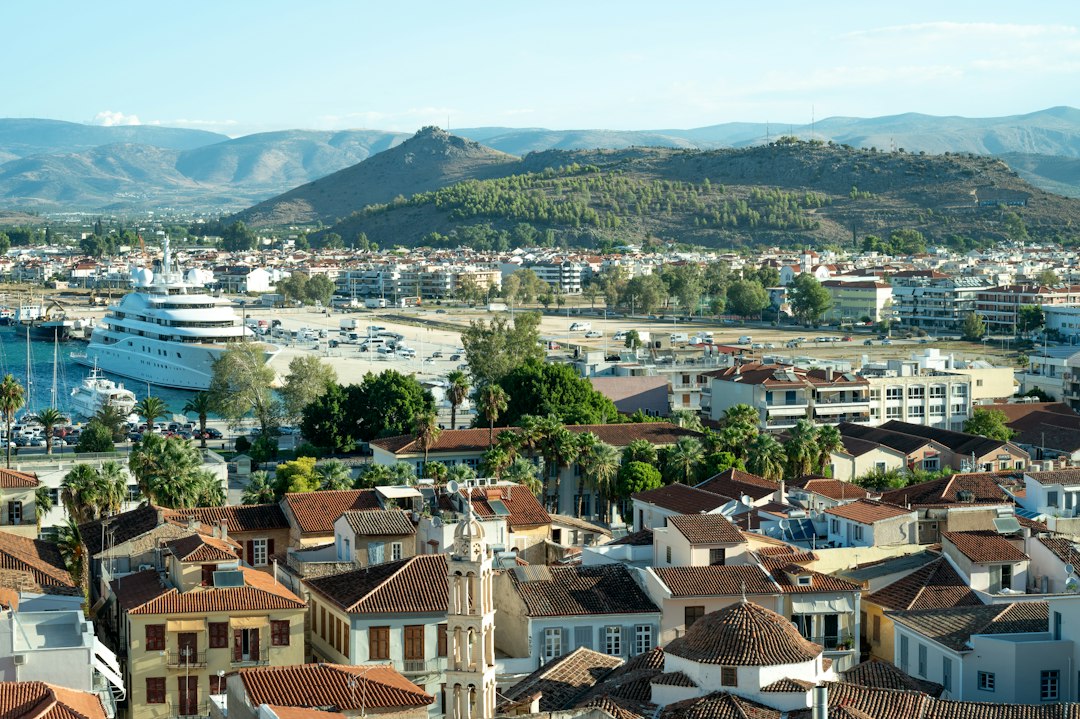
Nafplio sits at just 6 metres above sea level on the northeastern Peloponnese coast, home to 14,532 residents and widely considered Greece’s most romantic city — it served as the country’s first capital after independence in 1821. Boasting three Venetian fortresses, a perfectly preserved old town of neoclassical mansions, and a harbour flanked by bougainvillea, it packs more architectural drama into fewer square kilometres than almost anywhere else in Greece.
Three Things Not to Miss in Nafplio
- Palamidi Fortress — Climb 999 steps to this 1714 Venetian citadel for a panorama stretching across the entire Argolic Gulf.
- Bourtzi Castle — A 15th-century Venetian sea fortress sitting alone on a tiny island, reachable by a 5-minute boat taxi from the harbour.
- Syntagma Square Old Town — Greece’s first constitutional square, ringed by neoclassical buildings and home to a converted Venetian mosque turned museum.
Scroll down for our complete travel guide with tips on getting there, where to stay, costs and more.
Getting to Nafplio from the Airport
How do I get to Nafplio from Athens or other major hubs?
Take the KTEL bus from Athens — it’s the fastest independent option. Buses depart from Athens Kifissos Bus Terminal A roughly every 2 hours, and the journey takes 2 hours 15 minutes costing around €15 one way. In my experience, the morning 7:30 departure is least crowded. By car from Athens it’s 140 km via the E94 motorway, taking about 1 hour 45 minutes in normal traffic. My warning: avoid driving on Friday afternoons in summer — the motorway to the Peloponnese backs up badly. There is no direct train to Nafplio itself, so buses or private cars are your only realistic options.
Which airport is closest to Nafplio?
Athens Eleftherios Venizelos Airport (ATH) is your gateway, located 160 km from Nafplio. No regional airport serves the town directly. From ATH, I recommend taking the metro to Kifissos Bus Terminal A — allow 1 hour for that metro-plus-taxi combination — then catching the KTEL Argolida bus onward. The full door-to-door journey from landing to Nafplio takes around 3 hours 30 minutes in good conditions. What surprised me: many travellers waste money on private transfers costing €120–€150, when the bus-and-taxi combination costs under €25 total. Book the KTEL leg online at ktel-argolis.gr to guarantee a seat in peak season.
How long does the journey to Nafplio take from Athens?
By KTEL bus it’s 2 hours 15 minutes; by car via the E94 it’s 1 hour 45 minutes without traffic. My tip: if you’re renting a car, leave Athens before 8:00 to beat the suburban sprawl. The honest caveat most guides omit — the Kifissos Bus Terminal A in Athens is located in a gritty, unglamorous district, so budget €12–€15 for a taxi from central Athens to the terminal rather than wrestling with luggage on public transport. From Corinth the trip is only 50 km, making it an easy onward leg if you’re touring the Peloponnese.
Do I need a rental car to enjoy Nafplio?
No — the old town is entirely walkable and compact. Everything within Nafplio’s historic centre sits within a 1.5 km radius, and parking inside the old town is near-impossible in summer. In my experience, a car becomes useful only for day trips to Mycenae (25 km), Epidaurus (30 km), or the beaches beyond Tolo. Rentals from local agencies on Bouboulinas Street start at around €35/day including basic insurance. The hidden caveat: fuel on the Peloponnese costs roughly €1.90/litre in 2026, and parking fees at Nafplio’s harbour lot run €3–€5 per day — factor that in.
Moving Around Nafplio
What are the best areas to stay in Nafplio?
Stay inside the Old Town (Palea Poli) — without question. Its pedestrianised lanes, Venetian architecture, and proximity to every sight make it the obvious base. Syntagma Square and the surrounding streets offer the most atmospheric hotels, though noise from restaurants carries until midnight in peak season. My tip: rooms on Staikopoulos Street tend to be quieter while remaining central. Budget travellers can find decent guesthouses in the Prónoia neighbourhood, a 10-minute walk uphill from the waterfront, at 20–30% lower rates than old-town equivalents. Avoid booking on the main harbour promenade — lorries and tourist boats make mornings loud.
What does accommodation cost per night in Nafplio?
Expect to pay €80–€120/night for a solid mid-range guesthouse or boutique hotel in the old town during shoulder season. In peak July–August, the same rooms jump to €150–€220/night. Budget dorm beds — rare here — run €25–€35. What surprised me: Nafplio charges a premium over most Peloponnese towns because of its reputation and limited accommodation stock inside the historic walls. A genuinely romantic stay with a sea view at a place like Latini Hotel or similar boutique options costs €140–€180 in June. Self-catering apartments in Prónoia bring costs down to €65–€90/night for two people.
How far in advance should I book accommodation in Nafplio during high season?
Book 3–4 months ahead for July and August — non-negotiable. Nafplio has a disproportionately small accommodation stock relative to its popularity: the old town has fewer than 40 proper hotels. In my experience, weekend availability in June disappears within 6–8 weeks of the date, driven heavily by Athenians escaping for long weekends. The honest warning: last-minute apps will show you availability on outlying roads or in Tolo (8 km away) passed off as ‘Nafplio’ — always filter by exact location. For October travel, 4–6 weeks ahead is usually sufficient, but prices are 15–25% lower than peak.
Are there special or unique accommodation types in Nafplio?
Yes — restored Venetian mansion guesthouses are Nafplio’s signature stay. Properties like those found along Ypsilantou Street feature stone arches, original wood-beam ceilings, and interior courtyards that no modern hotel can replicate. Some offer fewer than 6 rooms, giving an almost private-villa feel. My tip: look for guesthouses built into the hillside below Akronafplia fortress — the thick medieval stone walls keep rooms dramatically cool in summer without air-conditioning running all night. A handful of cave-style rooms carved directly into the Akronafplia cliff face exist and fetch around €180–€250/night, but they book out by January for summer dates.
Choosing a Neighbourhood in Nafplio
What are the absolute must-sees in Nafplio?
Three things I would never skip: Palamidi Fortress (built 1711–1714, 216 metres above sea level, 999 steps or a €5 taxi ride up), Bourtzi Castle on its harbour islet (boat taxi €5 return, 5-minute crossing), and the Archaeological Museum on Syntagma Square (housed in a 1713 Venetian arsenal, entry €6, superb Bronze Age collection). Beyond those, the Arvanitia promenade walking path around the base of Akronafplia is free, takes 45 minutes, and delivers cliff-top sea views most visitors miss entirely. What surprised me: the Palamidi interior is largely empty — the views justify it, but don’t expect elaborate exhibitions inside.
What can I experience for free in Nafplio?
Quite a bit, honestly. The Arvanitia coastal path — a 2 km clifftop loop under Akronafplia — costs nothing and beats most paid viewpoints. Syntagma Square itself, with its layered architectural history, is free to simply wander. The Catholic Church of the Transfiguration on Potamianou Street, one of Greece’s oldest Catholic churches, has free entry and stunning interior stonework. Every Sunday morning, a small street market operates near the Kapodistrias Monument selling local produce and ceramics. My tip: the view of Bourtzi from the harbour promenade at sunset is genuinely world-class — and costs nothing but time. Budget €0 for a full morning of meaningful sightseeing here.
Which day trips from Nafplio are most worthwhile?
Mycenae at 25 km is the non-negotiable day trip — the Bronze Age citadel (entry €12) genuinely changed how I understand ancient Greece. Epidaurus ancient theatre at 30 km is second priority, especially if you time it with the Epidaurus Festival (July–August, tickets €15–€50) to watch a Greek drama performed where it was written. Nemea wine region (35 km) produces excellent Agiorgitiko red wine; winery visits with tastings run €10–€15. The honest caveat: without a car, day-trip taxis cost €60–€80 return to Mycenae. KTEL buses serve Mycenae but only twice daily, so check timetables at ktel-argolis.gr before committing.
What local specialities should I eat in Nafplio?
The Argolida region produces some of Greece’s finest produce. Bitter orange spoon sweet (nerantzi) from Nafplio is sold in every deli and makes an extraordinary souvenir. Grilled fresh octopus at any harbour taverna — the Argolic Gulf supplies it daily. Amygdalota (almond paste sweets shaped like pears) are the signature local confection, sold at €8–€12 per 250g box at pastry shops on Staikopoulos Street. For a proper meal, order lamb with hilopites (local egg pasta) — it appears on almost every traditional menu for around €13–€16. My tip: the covered Municipal Market near the bus station sells local honey, olives, and wine at prices far below the tourist-facing old-town delis.
Top Sights in Nafplio
What makes Nafplio genuinely unique compared to other Greek towns?
Nafplio is the only Greek city that served as Greece’s first national capital (1823–1834), and that political heritage saturates its architecture and street names in a way you feel immediately. Unlike most Greek old towns which are either ancient or Ottoman, Nafplio is distinctly Venetian-Frankish-neoclassical — a layered European aesthetic that feels more Dalmatian than Aegean. The 14,532 permanent residents give it a genuine local life that Santorini or Mykonos entirely lost. In my experience: you can eat in a restaurant where the table next to you is occupied by a Nafpliot family having Sunday lunch — not another tourist. That authenticity is increasingly rare in Greek tourism.
How many days should I spend in Nafplio?
3 full days minimum to do it justice without rushing. Day 1: old town exploration, Syntagma Square, Archaeological Museum, evening harbour walk. Day 2: Palamidi in the morning (go before 9:00 to beat heat and crowds), Bourtzi by boat in the afternoon. Day 3: day trip to Mycenae or Epidaurus. If you have a 4th day, combine a drive through the Nemea wine valley with a swim at Karathona beach (3 km from town, free, far less crowded than Arvanitia). The honest warning: many visitors try Nafplio as a single day trip from Athens and leave frustrated — the town rewards slowing down, and one rushed day genuinely does it a disservice.
When is the best time to visit Nafplio?
June and October are the optimal months based on actual climate data. June brings long sunny days, warm sea temperatures, and crowds that haven’t yet reached August’s saturation point. October is my personal favourite — the light turns golden, restaurants are still open, the sea stays warm enough to swim, and hotel prices drop 20–30%. July and August are brutally hot and very crowded with Athenian weekenders. The surprise: March and April are underrated — the Peloponnese blooms with wildflowers, Palamidi is uncrowded, and temperatures sit at a comfortable 17–20°C for walking. Christmas week also draws a loyal crowd of Greek visitors for a surprisingly festive atmosphere.
What local festivals in Nafplio are worth attending?
The Nafplio Festival (July–August) stages classical music and theatrical performances inside Palamidi Fortress — watching opera in a 300-year-old citadel at dusk is genuinely extraordinary. Tickets run €20–€40; book via the festival’s official site at least 3 weeks in advance. Apokries (Greek Carnival, February–March) is celebrated with particular energy here — the town organises costumed parades through the old town lanes that feel nothing like commercialised carnival elsewhere. The Epidaurus Festival (30 km away, July–August) is technically a day trip but pairs perfectly with a Nafplio base. My tip: the Nafplio Festival evening events mean Palamidi’s daytime entry crowds thin as staff prepare for performances — arrive at 14:00 for near-empty ramparts.
Where to Eat in Nafplio
How does Nafplio’s weather affect what activities I can do?
Summer heat above 32°C in July–August makes midday sightseeing genuinely punishing — the 999 steps to Palamidi become dangerous without water and a hat. I structure hot-weather visits around the 6:00–10:00 morning window for fortress climbing, then lunch and a rest, then the promenade from 18:00 onward. Spring and autumn allow all-day outdoor activity comfortably. Winter (December–February) rarely drops below 8°C but brings occasional rain that makes the cobblestone streets slippery. The Argolic Gulf is swimmable from late May through October — water temperatures range from 21°C in May to 26°C in August. Bourtzi boat taxis don’t run in rough weather, which affects plans between November and March.
How crowded does Nafplio get in peak season?
August weekends are genuinely overwhelming — the old town’s narrow lanes, designed for perhaps 2,000 pedestrians, absorb 10,000+ day-trippers on peak Saturdays. The harbour promenade becomes shoulder-to-shoulder by 11:00. In my experience: book a table at any harbour restaurant for dinner 24 hours ahead in August or accept waiting 45 minutes. Palamidi queues at the ticket booth reach 20–30 minutes at 10:00–12:00. The practical solution: arrive at Palamidi at 8:00 when it opens, return to town by 11:00, and spend midday in quieter spots like Arvanitia beach (a 10-minute walk from the old town) which day-trippers rarely reach. June crowds are manageable; October crowds are minimal.
How safe is Nafplio for travellers?
Nafplio is exceptionally safe — one of the safest towns in Greece. Petty crime is rare; I have never felt uncomfortable here at any hour. The 14,532-person community is tight-knit and tourism-oriented, meaning locals actively protect visitors from bad experiences. The one genuine risk is traffic on the main coastal road (25th Martiou Street) — cars drive fast and pavements are narrow, so cross with care. Late-night bar noise in the old town can create minor friction between revellers and sleeping residents, but nothing approaching danger. Health: the nearest hospital is in Argos, 13 km away — for serious medical needs, Athens (140 km) is the proper destination. Keep travel insurance with medical evacuation cover.
Is English widely spoken in Nafplio?
Yes — to a degree that genuinely surprises first-timers. Because Nafplio attracts educated Greek domestic tourists and a cosmopolitan international crowd, restaurant staff, hotel receptionists, and most shop owners in the old town speak functional-to-fluent English. In my experience: I have never needed Greek to navigate a single practical situation in Nafplio’s tourist zone. The exception — and the honest caveat — is the Municipal Market, local kafeneions (traditional coffee shops), and the KTEL bus station, where older staff may speak only Greek. Download Google Translate with Greek offline pack as backup; knowing three phrases (kalimera/good morning, efharisto/thank you, parakalo/please) opens doors disproportionate to the effort.
Before You Go to Nafplio
What is the daily budget for travelling in Nafplio?
Budget traveller: €70–€90/day (hostel/guesthouse, street food and one sit-down meal, key sights). Mid-range: €130–€180/day (boutique old-town hotel, two restaurant meals, entry fees, boat to Bourtzi). Comfortable splurge: €220–€300/day (Venetian mansion hotel, fine dining on the harbour, private day-trip taxi to Mycenae). Entry fees across a full visit — Palamidi (€8), Bourtzi boat (€5), Archaeological Museum (€6), Mycenae day trip (€12) — total around €31 for all four. Food is the biggest variable: a harbour-front restaurant dinner for two costs €50–€70 with wine; the same meal two streets back costs €30–€40. My tip: eat lunch at the tavernas on Staikopoulos Street for authentic quality at genuinely local prices.
How does public transport work within and around Nafplio?
Within Nafplio’s old town, public transport is irrelevant — everything is walkable within 15 minutes on foot. For regional connections, KTEL Argolida buses operate from the small station on Syngrou Street, with services to Athens (every 2 hours, €15), Argos (every 30–60 minutes, €2), and Mycenae (twice daily, €4). Taxis are widely available; a ride to Karathona beach costs €8, to Tolo €12. There are no trams, metro, or city buses within Nafplio itself. The Bourtzi boat taxi (€5 return) operates from the main quay roughly 10:00–18:00 in season. My warning: the KTEL timetable changes seasonally — always verify at ktel-argolis.gr the day before travel rather than relying on third-party apps.
Which apps do you recommend for visiting Nafplio?
Google Maps works accurately throughout Nafplio and the wider Argolida region — download the offline Peloponnese map before arrival. ktel-argolis.gr (browser-based, not an app) is essential for bus timetables. Windy matters if you plan Bourtzi boat visits — rough sea conditions cancel crossings. TripAdvisor is useful specifically for checking which harbour restaurants are tourist traps versus genuine quality. For language: Google Translate with Greek offline download. My tip: the Visit Greece official app has surprisingly good heritage site information for Mycenae and Epidaurus. One app I actively avoid recommending for Nafplio: Airbnb — the platform lists properties misrepresenting their distance from the old town; always verify coordinates on Google Maps before booking.
Nafplio at a Glance
| Population | 14,532 |
|---|---|
| Currency | EUR (€) |
| Official language | Greek |
| Time zone | UTC+02:00 |
Source: Wikidata, retrieved September 2026.
Greece › Nafplio
More Destinations in Peloponnese
More Destinations in Greece
Essential Resources for Planning Your Trip to Nafplio
- travel-directions — official visitor information, passes & events
- Wikipedia: Nafplio — history, geography & background
- Wikivoyage: Nafplio — community travel guide & practical tips
- The 7 best things to do in Nafplio, Greece — expert itineraries & travel inspiration
- THE 15 BEST Things to Do in Nafplio (2026) — hotels, restaurants & traveller reviews
- Getting to Nafplio – How to Reach Greece’s Original Capital — how to get around
- Numbeo: Cost of Living in Nafplio — current prices & cost comparison
- Timeanddate: Nafplio Weather & Climate — forecasts & climate statistics
More Perspectives on Nafplio
Nafplio Travel Videos
Watch these videos for a visual preview before your trip:
- The Don’ts of Visiting Nafplio, Greece
- Peloponnese, Greece: Nafplio – Rick Steves’ Europe Travel Guide – Travel Bite
- Day Trip from Athens to Mycenae, Nafplio and Epidaurus
Nafplio Travel Discussions on Reddit
Real traveller experiences and community advice:
- Heading to Nafplio : r/GreeceTravel
- Exploring Peloponnese – Nafplio a good base?
- Is Nafplio touristy? : r/GreeceTravel
Data Sources
This page was compiled using data from Wikipedia, Wikidata, Open-Meteo (climate), Numbeo (cost of living) and REST Countries. Information is updated regularly.