
Formentera: The Complete Travel Guide (2026)
Last reviewed: October 2026 · key facts checked against Wikidata
Formentera Weather by Month: When to Go
| Month | Day | Night | Sea | Rain days | Rain mm | Wind km/h | Good for |
|---|---|---|---|---|---|---|---|
| Jan | 16° | 11° | 16° | 5 | 41 | 24 | Hike |
| Feb | 16° | 11° | 15° | 5 | 27 | 22 | Hike |
| Mar | 18° | 12° | 15° | 8 | 43 | 25 | Hike |
| Apr | 20° | 13° | 17° | 6 | 40 | 23 | Hike |
| May | 23° | 16° | 20° | 5 | 24 | 20 | Hike |
| Jun | 28° | 20° | 24° | 3 | 11 | 18 | Swim |
| Jul | 31° | 23° | 27° | 1 | 6 | 18 | Swim |
| Aug | 31° | 24° | 28° | 3 | 19 | 18 | Swim |
| Sep | 28° | 22° | 27° | 8 | 79 | 19 | Swim |
| Oct | 24° | 19° | 23° | 7 | 56 | 19 | SwimHike |
| Nov | 19° | 15° | 20° | 7 | 51 | 23 | Hike |
| Dec | 17° | 12° | 17° | 6 | 34 | 22 | Hike |
Sources: ERA5 reanalysis via Open-Meteo, 2016–2025 (10-year average) for air temperature, rain and wind (average daily maximum); Open-Meteo Marine API, 2023–2025 for sea surface temperature. A rain day has at least 1 mm. Area averages; individual years vary.
Formentera Travel Guide: Everything You Need to Know (2026)
Formentera is Spain’s smallest inhabited Balearic Island, home to just 11,418 permanent residents and sitting only 6 km south of Ibiza across the Es Freus strait. First formally settled by the Romans, it stretches barely 20 km from end to end yet contains some of the most transparent turquoise water in the entire Mediterranean. What surprised me most: this island consistently tops European rankings for water clarity, with visibility reaching up to 50 metres in its protected Posidonia seagrass beds.
Top 3 Highlights at a Glance
- Ses Illetes Beach — A double-sided sandbar with 50-metre underwater visibility, regularly ranked Europe’s number-one beach.
- La Mola Lighthouse — A 19th-century lighthouse at 192 metres altitude offering 360-degree views across the entire island.
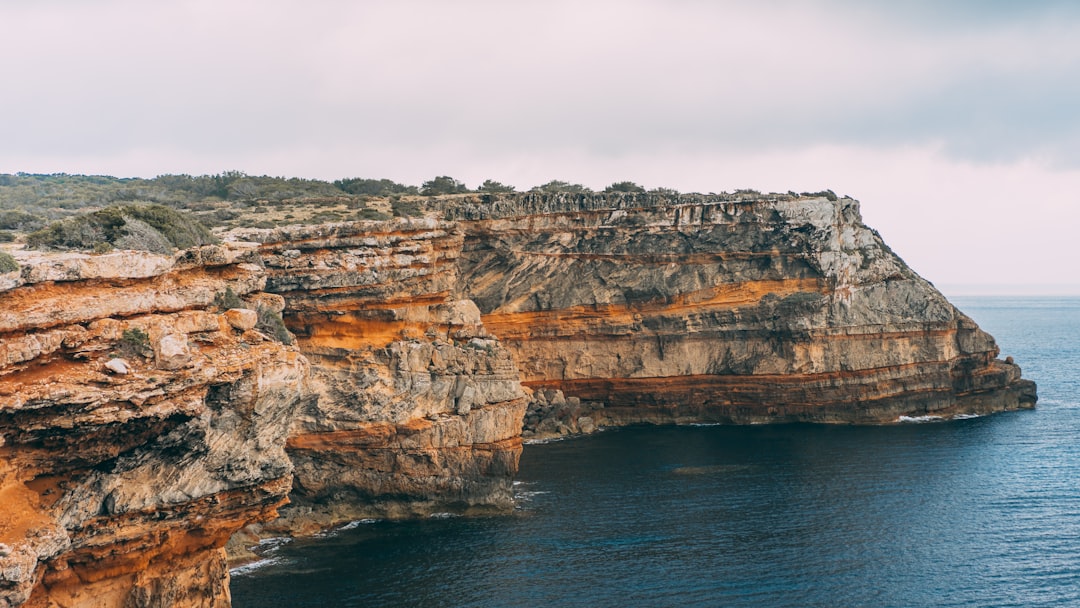
- Es Caló de Sant Agustí — A tiny fishing harbour of only a dozen wooden boats, unchanged since the 1970s — the island’s most photogenic village.
Scroll down for our complete travel guide with tips on getting there, where to stay, costs and more.
Arrival & Airport
How do I get to Formentera?
You cannot fly directly to Formentera — all arrivals go via ferry from Ibiza. I recommend flying into Ibiza Airport (IBZ), which receives direct flights from most major European cities. From IBZ, take a taxi or bus Line 10 to Ibiza Port (roughly 15 minutes, €15 by taxi), then board a high-speed ferry to Formentera’s main port, La Savina. Baleàlia and Trasmapi operate these crossings. The caveat most guides skip: IBZ gets severely congested in July and August, so budget 90 minutes from landing to boarding your ferry, not 45.
Which airport is closest to Formentera?
Ibiza Airport (IBZ) is the only practical gateway — it sits approximately 30 km from La Savina ferry terminal when you factor in the sea crossing. There is no airport on Formentera itself, and none ever planned. Palma de Mallorca Airport (PMI) is technically the nearest Balearic hub at scale, but requires an additional ferry or flight hop, adding 3-4 hours. My tip: book IBZ flights arriving before 2 PM so you catch afternoon ferries and arrive on Formentera with daylight to spare — evening arrivals in La Savina are chaotic in peak season.
How long does the journey to Formentera take in total?
From landing at IBZ to stepping off in La Savina, budget a minimum of 2 hours in low season and 3 hours in July–August. The ferry crossing itself takes 35 minutes on fast catamarans (Trasmapi, Baleàlia) or up to 60 minutes on slower car ferries. What most itineraries ignore: the queue to buy ferry tickets at Ibiza Port can add 40 minutes on summer weekends. I strongly recommend pre-booking your crossing online at balearia.com — tickets run €20–€28 one-way per person and you skip the queue entirely.
Do I need a car on Formentera?
No — but a bicycle or scooter is far more practical than a car. Formentera is only 20 km long, and its flat central plain is purpose-built for cycling. The island actively discourages private cars: between June 24 and September 15 you need a special permit (Vehicle Access Regulation) to bring a car by ferry, and permits are capped. I rented a scooter from Moto Rent La Savina for €35 per day and covered every corner effortlessly. Honest warning: e-bikes are popular but the island’s crosswinds near La Mola plateau can make cycling exhausting in the afternoon.
City Transport
What are the best areas to stay in Formentera?
Sant Francesc Xavier (the capital) suits travellers who want a lively base with restaurants and shops within walking distance — it’s the only real town with a permanent service infrastructure. Es Pujols is the most tourist-dense resort, good for nightlife access and beach proximity but loud until midnight. For quieter stays, I recommend El Pilar de la Mola in the east or the scattered rural fincas near Sant Ferran de Ses Roques. The caveat: staying in the north near Ses Illetes means you’re far from the island’s only supermarket cluster in Sant Francesc, so stock up before sundown.
What does accommodation cost on Formentera per night?
Formentera is the most expensive island in the Balearics per square metre of accommodation. In peak July–August, a decent double room in a 3-star hotel in Es Pujols costs €180–€280 per night. Rural agroturismo fincas near Sant Ferran run €150–€220. Budget options are genuinely scarce — hostels are essentially non-existent. Shoulder season (May, October) drops rates to €90–€140. What guides rarely mention: many hotels require a minimum 5-night stay in August, which can trap short-trip travellers into expensive packages. Always check minimum stay policies before booking.
How far in advance should I book accommodation in Formentera during high season?
Book at least 4–5 months ahead for July and August — I am not exaggerating. Formentera has a deliberately capped hotel bed count due to environmental regulations, meaning demand consistently outstrips supply. When I visited in mid-August, properties near Ses Illetes had been sold out since February. For shoulder season (May, June, September), 6–8 weeks ahead is usually sufficient. My tip: set a Google Alert for your preferred property and check cancellation rates in April — last-minute drops do occasionally appear when EU travel plans shift, but don’t count on it for summer.
Are there special or unique accommodation types on Formentera?
Yes — agroturismo fincas are Formentera’s standout accommodation category and genuinely unique in the Balearics. These are restored farmhouses with whitewashed walls, private pools, and almond groves, typically hosting fewer than 10 rooms. Can Marxando near Sant Ferran is one of the most-loved examples. A handful of eco-lodges near La Mola run entirely on solar power. The island also has luxury glamping at Gecko Beach Club-adjacent plots, which combines beachfront camping with boutique service at around €120 per night. Avoid generic apartment complexes in Es Pujols — they are overpriced and noisy for what you get.
Accommodation & Neighbourhoods
What are the must-sees on Formentera?
Three experiences are non-negotiable. First, Ses Illetes beach — a 2 km sandbar where the water hits 29°C in August and visibility extends 50 metres into the Posidonia seagrass. Second, the La Mola Lighthouse (Far de la Mola) at the island’s eastern cliff edge, 192 metres above sea level and the inspiration Jules Verne cited for Journey to the Centre of the Earth. Third, the prehistoric megalithic tomb Ca Na Costa near Es Pujols, dating to 2000 BC — one of the best-preserved Bronze Age monuments in the entire Mediterranean and almost always crowd-free.
What can I experience for free on Formentera?
Most of Formentera’s best assets cost nothing. Every beach is free and publicly accessible — Spanish law guarantees this even in front of exclusive beach clubs. The Green Route (Ruta Verde) cycling path runs 14 km across the island at zero cost. Ca Na Costa megalithic monument has no entry fee. The Wednesday and Sunday artisan market at El Pilar de la Mola is free to browse and one of the most authentic craft markets in the Balearics. What most visitors miss: sunrise at Cap de Barbaria lighthouse (the southernmost point) is completely free and entirely deserted before 8 AM — a genuinely magical experience with zero crowds.
Which day trips are possible from Formentera?
Ibiza Town (Eivissa) is the obvious day trip — ferries run every 30–60 minutes and the crossing takes 35 minutes. The UNESCO-listed Dalt Vila citadel in Ibiza Town alone justifies the trip. A local boat tour to the Es Vedrà sea stack off Ibiza’s southwest coast takes roughly 4 hours round-trip from La Savina and costs around €60 per person. The honest caveat: Formentera itself is small enough that you exhaust its highlights in 3 days, so Ibiza day trips naturally become part of any longer stay. Do not attempt a day trip to Mallorca — it’s a 2-hour ferry each way and too rushed.
What are the local food specialities of Formentera?
Formentera’s signature dish is bullit de peix, a two-course fisherman’s stew where the broth is served first with rice, then the whole fish arrives separately. The local sobrasada (cured pork sausage with paprika) is sharper and more peppery than the Mallorcan version. Flaó, a mint-and-anise cheesecake of Moorish origin, appears on every local menu. My tip: eat at Es Moli de Sal in Es Pujols for authentic bullit de peix at around €22 per person for the full two-course version. Avoid beach club menus for these dishes — they charge €35+ for inferior versions aimed purely at tourists.
Highlights & Must-Sees
What makes Formentera unique compared to other Balearic islands?
Formentera is the only Balearic island with zero mass-market hotel chains, a vehicle access cap enforced by law, and a Posidonia seagrass meadow awarded UNESCO World Heritage status as part of the Ibiza-Formentera marine ecosystem. It has no golf courses, no casinos, and no airport — a deliberate policy. What surprised me most: the island’s permanent population of just 11,418 people means the human-to-beach ratio is still extraordinary even in peak season. It has stayed intentionally small while Ibiza exploded, making it arguably the last unspoiled Mediterranean island within easy reach of a major European hub.
How many days are worthwhile to spend on Formentera?
4 to 6 days is my honest recommendation. In 3 days you hit the main beaches and La Mola, but feel rushed. By day 5, you’ve cycled every route, snorkelled Ses Illetes at sunrise, visited Ca Na Costa, eaten bullit de peix twice, and caught the El Pilar market — which is the complete Formentera experience. Beyond 7 days, the island’s small size becomes a constraint unless you’re genuinely here to decompress. I spent 5 days and left feeling I’d seen everything without rushing. Combine with 2–3 days in Ibiza for a well-rounded Balearic trip totalling one week.
When is the best time to visit Formentera?
June and September are the sweet spots — verified best travel months are May through November. June gives you water warm enough to swim (24°C sea temperature), beach clubs open, and crowds roughly 40% lower than August. September is my personal favourite: sea temperature peaks at 27°C, the crowds thin dramatically after September 1, and prices drop by 25–35%. July and August deliver perfect weather but bring Ibiza spillover crowds that double the island’s population. May and October are ideal for cyclists and hikers — fewer beach crowds but the water below 22°C feels cold to most. November through April, most restaurants and hotels close entirely.
What local festivals are worth attending on Formentera?
Sant Ferran Patron Festival (mid-May) is the most authentic local celebration — three days of folk dancing (ball pagès), live music, and free communal meals in the village square. The El Pilar de la Mola Hippie Market runs every Wednesday and Sunday from May to October and dates to the 1970s artist community that settled there. Sant Jaume Festival on July 25 in La Savina includes traditional boat races across the harbour. What most guides miss: the Festes de la Terra in early August across all Balearic islands includes Formentera events focused on environmental awareness — genuinely engaging and attended mainly by locals, not tourists.
Food & Drink
How does the weather affect activities on Formentera?
The tramuntana wind from the north is the single biggest weather variable on Formentera — it can arrive with 30–50 km/h gusts even in July, making the north beaches choppy while the south coast remains calm. When tramuntana hits, pivot from Ses Illetes (north) to Migjorn beach on the south coast, which stays sheltered. Cycling near La Mola (the elevated eastern plateau) becomes difficult in afternoon winds. Rain is statistically rare June–August (under 5 mm monthly average), but September can bring sudden storms. My tip: check the AEMET Spain weather app each morning — the island is small enough that knowing wind direction entirely determines your beach choice.
How crowded does Formentera get in peak season?
August is genuinely intense — the ferry from Ibiza runs at near-full capacity every 30 minutes, and Ses Illetes beach has a waiting area for sunbeds by 10 AM. The island’s vehicle cap helps, but the pedestrian and cyclist density on the main path to Ses Illetes between 11 AM and 3 PM in August rivals any urban promenade. What no guide tells you: the crowds concentrate almost entirely on the northern beaches and Es Pujols. The southern Migjorn beach (4 km long) is never more than half-full even in peak August. Arriving at any beach before 9 AM gives you an entirely different, crowd-free experience.
How safe is Formentera?
Formentera is extremely safe — petty crime rates are among the lowest in the Balearics due to the small permanent population of 11,418 and a tight-knit community. I left a bicycle unlocked outside a restaurant in Sant Francesc Xavier for 2 hours with no issue, which I would never do in Ibiza Town. The primary risks are environmental: sea urchins are abundant in rocky coves (wear water shoes), and the La Mola cliff paths have unguarded edges. Sun-related illness is genuinely dangerous in August — temperatures regularly hit 33°C. The island has one small medical centre in Sant Francesc but serious emergencies require evacuation to Ibiza.
Is English widely spoken on Formentera?
English is spoken reliably in all tourist-facing businesses — hotels, beach clubs, restaurants in Es Pujols and Sant Francesc, and ferry terminals. In my experience, staff at La Savina ferry port speak English, German, and Italian as standard. However, in local grocery shops, the post office, and the medical centre in Sant Francesc, Spanish or Catalan (specifically Ibizenco dialect) is needed. My tip: learn 5 basic Catalan phrases — even attempting gràcies and bon dia generates genuine warmth from locals. The island’s Italian visitor base is huge, so paradoxically you’ll find more Italian-language menus than English ones in some southern Migjorn restaurants.
Practical Tips
What is the daily budget for visiting Formentera?
Budget honestly for €150–€200 per person per day including mid-range accommodation, food, and transport. A realistic breakdown: €90–€140 for a room (split between two), €35–€45 for meals (one sit-down lunch, one dinner, breakfast self-catered), €15–€20 for bicycle rental, and €10–€15 for incidentals. Budget travellers sleeping in the cheapest rural rooms and eating at supermarket-assembled picnics can reach €80–€100, but this is the floor — Formentera has no hostel infrastructure. The hidden cost most underestimate: beach club minimum spends at places like Beso Beach run €30–€50 just for a sunbed, and avoiding them requires early arrival every single day.
How does public transport work on Formentera?
Formentera’s public bus network is functional but limited. Line 1 connects La Savina port to Es Pujols and Sant Francesc Xavier every 30 minutes in summer, costing €2 per ride. Line 3 reaches El Pilar de la Mola. Line 4 goes to Cap de Barbaria. That covers the main spine, but key beaches like Ses Illetes require a 25-minute walk from the nearest stop or a bicycle. Buses stop running at 10 PM, which matters for evening meals in remote restaurants. In my experience, the bus works well for airport-to-accommodation transfers but is too slow and infrequent for beach-hopping. A bicycle rental immediately transforms your mobility options for roughly the same daily cost.
Which apps do you recommend for getting around and enjoying Formentera?
Five apps I used daily on Formentera: Balearia (official app for booking and checking ferry times — essential, saves queuing), AEMET (Spain’s official weather service — critical for wind direction decisions), Wikiloc (download the Formentera Green Route GPX track before arriving — offline maps work perfectly), Google Maps (works well but download offline maps at your hotel — mobile data in rural La Mola is patchy on non-Vodafone SIMs), and TheFork for restaurant reservations — book Es Moli de Sal and Rels restaurant 3–4 days ahead or you will not get a table in peak season. Skip TripAdvisor — its Formentera listings skew heavily toward beach clubs, not authentic local restaurants.
Formentera at a Glance
| Population | 11,661 |
|---|---|
| Currency | EUR (€) |
| Official language | Spanish |
| Time zone | UTC+01:00 |
Source: Wikidata, retrieved October 2026.
Useful Resources for Planning Your Trip to Formentera
- Wikipedia: Formentera — history, geography and background
- Lonely Planet: Formentera — itineraries and travel inspiration
- TripAdvisor: Formentera — hotels, restaurants and traveller reviews
Combine Formentera With These Europe Destinations
These destinations pair well with Formentera — close enough to visit in one trip: Ibiza, Menorca, Mallorca.
🎥 Formentera Travel Videos
FORMENTERA TRAVEL GUIDE: the most beautiful beaches …
Sanne Vander
The BIG & LOCAL Formentera Travel Guide | Spain 2025
Easy Travel Dude

All tips from FORMENTERA! How to get there, beaches, tours …
Travel Tips Group
You are currently viewing a placeholder content from Vimeo. To access the actual content, click the button below. Please note that doing so will share data with third-party providers.
More InformationYou are currently viewing a placeholder content from YouTube. To access the actual content, click the button below. Please note that doing so will share data with third-party providers.
More InformationYou need to load content from reCAPTCHA to submit the form. Please note that doing so will share data with third-party providers.
More InformationYou are currently viewing a placeholder content from GetYourGuide. To access the actual content, click the button below. Please note that doing so will share data with third-party providers.
More Information