
Tenerife: The Complete Travel Guide (2026)
Last reviewed: October 2026 · key facts checked against Wikidata
Tenerife Weather by Month: When to Go
| Month | Day | Night | Sea | Rain days | Rain mm | Wind km/h | Good for |
|---|---|---|---|---|---|---|---|
| Jan | 21° | 15° | 21° | 1 | 11 | 19 | Hike |
| Feb | 21° | 15° | 20° | 2 | 14 | 19 | Hike |
| Mar | 21° | 15° | 20° | 3 | 12 | 18 | Hike |
| Apr | 22° | 16° | 21° | 3 | 13 | 17 | Hike |
| May | 23° | 17° | 21° | 2 | 5 | 16 | Hike |
| Jun | 24° | 18° | 22° | 2 | 10 | 16 | SwimHike |
| Jul | 26° | 19° | 23° | 0 | 1 | 15 | Swim |
| Aug | 27° | 21° | 24° | 0 | 2 | 15 | Swim |
| Sep | 26° | 20° | 24° | 1 | 13 | 16 | Swim |
| Oct | 26° | 20° | 24° | 2 | 6 | 16 | Swim |
| Nov | 24° | 18° | 23° | 3 | 13 | 18 | SwimHike |
| Dec | 22° | 16° | 22° | 3 | 16 | 19 | SwimHike |
Sources: ERA5 reanalysis via Open-Meteo, 2016–2025 (10-year average) for air temperature, rain and wind (average daily maximum); Open-Meteo Marine API, 2023–2025 for sea surface temperature. A rain day has at least 1 mm. Area averages; individual years vary.
Tenerife Travel Guide: Everything You Need to Know (2026)
Tenerife is Spain’s most populous island, home to 972,018 residents and sitting at just 10 metres above sea level off the African coast. The island spans 2,034 km² and hosts Mount Teide, Spain’s highest peak at 3,715 metres — a staggering contrast within a single island. First settled by the Guanche people thousands of years before Spanish conquest in 1496, Tenerife now draws over 6 million tourists annually.
Top 3 Highlights at a Glance
- Teide National Park — Spain’s highest volcano at 3,715m dominates the island — the cable car stops just 163m from the summit.
- Masca Village & Gorge — A razor-edge mountain village accessible only via a single switchback road, perched at 650m elevation.
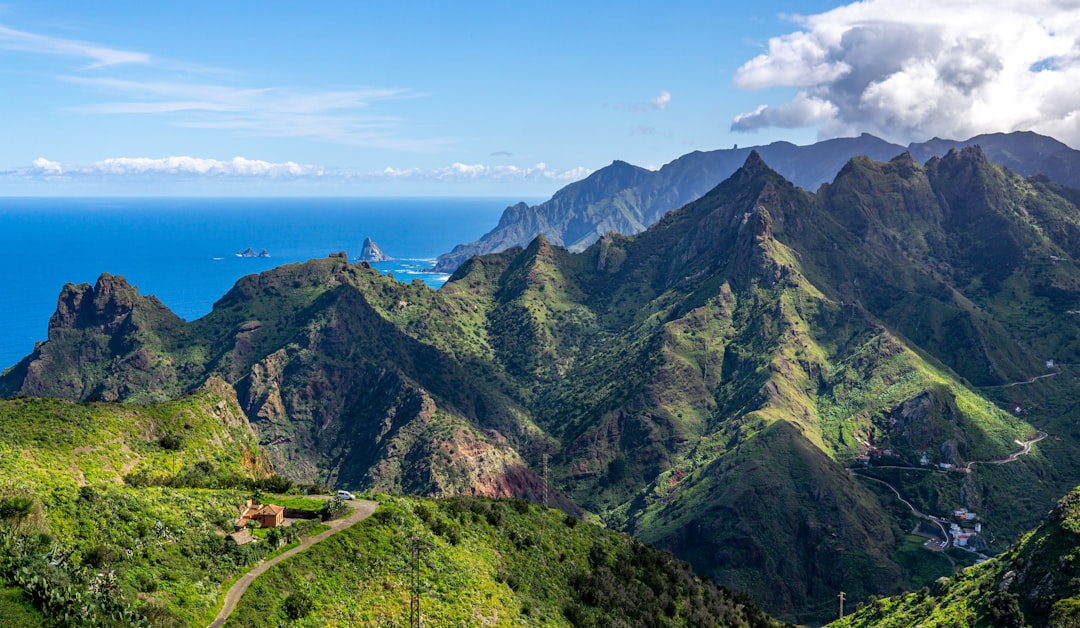
- Anaga Rural Park — Ancient laurisilva forest covering the northeast tip — a UNESCO Biosphere Reserve virtually untouched by mass tourism.
Scroll down for our complete travel guide with tips on getting there, where to stay, costs and more.
Arrival & Airport
How do I get to Tenerife?
Fly directly — Tenerife has two airports serving different parts of the island. Tenerife South Airport (TFS) in Adeje handles the majority of international charter and budget flights and is your best entry point for the resort areas. Tenerife North Airport (TFN) in La Laguna serves more domestic and inter-island routes. In my experience, TFS saves you 45 minutes of transfer time if you’re staying in the south. From the UK, direct flights run from £40 one-way on Jet2 or Ryanair in shoulder season. No ferry from mainland Spain is practical for most travellers — the crossing from Cádiz takes over 2 days.
Which airport is closest to Tenerife’s main areas?
It depends entirely on where you’re staying. Tenerife South (TFS) sits 15 km from Costa Adeje and 25 km from Los Cristianos — your airport if you’re heading to the resort south. Tenerife North (TFN) is just 8 km from Santa Cruz de Tenerife and 10 km from La Laguna — far better for the capital or the north’s rural areas. My tip: book accommodation before choosing your arrival airport. What surprised me is how many visitors fly into TFN for a cheap fare and then spend €60+ on a taxi to reach their southern hotel.
How long does the journey from the airport to Tenerife’s town centres take?
From TFS to Costa Adeje it’s roughly 20 minutes by taxi. From TFS to Santa Cruz expect 50–60 minutes via the TF-1 motorway. From TFN to Santa Cruz it’s just 15 minutes. The public bus operator TITSA runs Line 111 from TFS to Los Cristianos for around €2.20, but it takes 40 minutes with stops. In my experience, the taxi fare from TFS to Costa Adeje runs €18–22 — worth it with luggage. Honest caveat: rush hour on the TF-1 between 7–9am and 5–7pm can double your journey time heading into Santa Cruz.
Do I need a car in Tenerife?
For the south resort strip — no. Costa Adeje, Los Cristianos, and Playa de las Américas are walkable and bus-connected. For everything else — yes, absolutely. Masca, Anaga, Teide, Garachico, and the wine villages of La Orotava are either inaccessible or impractical without a car. I recommend renting for at least 3 of your days if you want to see the real island. Rental rates start from €25 per day from local agencies at TFS. Critical warning most guides skip: Tenerife’s mountain roads use sharp hairpin bends — if you’re uncomfortable with narrow switchbacks, hire a driver for the Masca route specifically.
City Transport
What are the best areas to stay in Tenerife?
Costa Adeje is the upscale resort hub — best for families, beach access, and international restaurants. Los Cristianos is more relaxed, slightly cheaper, and has the best ferry connections to La Gomera. Puerto de la Cruz in the north suits travellers wanting culture, local life, and the famous black-sand Playa Jardín. Santa Cruz de Tenerife is the capital — urban, authentic, and overlooked by tourists, which is exactly why I recommend it. La Laguna, a UNESCO World Heritage city just 9 km from the capital, is my personal favourite base: beautiful colonial architecture, student energy, and zero resort crowds.
What does accommodation cost per night in Tenerife?
Budget varies sharply by zone. In Costa Adeje, a 4-star hotel averages €120–180 per night in 2026. In La Laguna or Santa Cruz, a comfortable 3-star runs €65–95. Self-catering apartments in Los Cristianos start from €55 per night for a studio. Luxury 5-star properties like the Royal Garden Villas in Adeje command €400+. In my experience, the best value is a mid-range apartment in Puerto de la Cruz — you get character, local markets, and beach access for around €70–80 per night. Honest warning: ‘sea view’ listings in the south often mean a distant ocean glimpse from a shared rooftop.
During high season in Tenerife, how far in advance should I book?
Book 3–4 months ahead for Christmas and New Year — Tenerife is a top European winter-sun escape and the south fills completely. For July and August, book 2 months out minimum. Shoulder months like October — one of the best travel months based on climate data — only need 3–4 weeks notice. My tip: the week around Tenerife Carnival in February (one of the world’s largest, after Rio) requires booking 6 months in advance — hotels in Santa Cruz sell out entirely. What surprised me is that last-minute deals in May and November are genuinely excellent, with 4-stars dropping to €70 per night.
Are there special accommodation types worth trying in Tenerife?
Yes — skip the generic hotel chains and try a rural casa rural in the Anaga or Teno mountains. Properties like those around El Bailadero in Anaga rent for €80–110 per night and put you inside the laurel forest with zero other tourists nearby. Wine-region guesthouses in La Orotava Valley offer stunning Teide views from restored 17th-century Canarian manor houses. For luxury with purpose, the eco-lodges near Vilaflor (Spain’s highest town at 1,400m) give you cool mountain nights after hot coastal days. I recommend these for travellers on a second or third visit who already know the resort strip.
Accommodation & Neighbourhoods
What are the must-sees in Tenerife?
Teide National Park is non-negotiable — take the cable car to 3,555m (pre-book the summit permit at €10, or you stop there). La Laguna’s historic centre is a UNESCO World Heritage Site from 1999 and takes 2 hours on foot. Loro Parque in Puerto de la Cruz is genuinely world-class for animal welfare standards — entry costs €46 for adults. The Masca Gorge hike (6 km, 4 hours down to the sea) is one of Spain’s most dramatic walks. Anaga Rural Park’s trails through primeval laurisilva forest are free and utterly uncrowded. My honest ranking: Teide first, Anaga second, La Laguna third.
What can I experience for free in Tenerife?
Plenty. Anaga Rural Park trails, including the spectacular Sendero de los Sentidos near Taganana, cost nothing and beat paid attractions hands down. La Laguna’s historic centre is free to walk — the Cathedral entry is €3 but the streets are the real museum. Santa Cruz’s Auditorio de Tenerife (designed by Santiago Calatrava) is free to photograph and tour the exterior. The black-sand Playa Jardín in Puerto de la Cruz is free. All TITSA local beaches along the south coast are public. In my experience, the free Sunday morning fish market in San Miguel de Abona gives you more authentic Tenerife in 90 minutes than any paid tour.
Which day trips from Tenerife are possible?
La Gomera is the best day trip — ferry from Los Cristianos takes 35 minutes with Fred Olsen, costs €37 return, and the Garajonay National Park is a UNESCO site unlike anything on Tenerife. Gran Canaria is reachable in 80 minutes by fast ferry (€55 return) — Las Palmas deserves a full day. Within Tenerife itself, a full-day drive through Teide → La Orotava → Garachico → Masca is a superb loop of about 150 km. My warning: day trips to La Palma (2.5 hours each way by ferry) eat your entire day in transit — fly instead if you want to spend real time there.
What are the local specialities in Tenerife?
Start with papas arrugadas — small wrinkled potatoes boiled in heavily salted water, served with mojo rojo or mojo verde sauce. This costs €3–5 as a side dish and is the island’s most iconic food. Gofio (toasted grain flour) appears in soups, desserts, and even ice cream — try it at a local guachinche. Conejo en salmorejo (rabbit in marinade) is the inland staple. Tenerife’s Tacoronte-Acentejo wine region produces excellent local reds for €8–12 a bottle in supermarkets. A guachinche — a semi-legal home restaurant open only during harvest season in the north — offers a full local meal with wine for under €15 per person. Don’t miss these.
Highlights & Must-Sees
What makes Tenerife unique compared to other Canary Islands?
The sheer ecological diversity within 2,034 km² is unmatched in Europe. You can swim at a 20°C beach in the morning and stand in snow on Teide at 3,715m the same afternoon. No other Spanish island or Mediterranean destination offers this. Tenerife also hosts the world’s third-largest carnival in Santa Cruz each February — a genuine local event, not a tourist construct. The Guanche indigenous heritage, still visible in place names, mummies at the Museo de la Naturaleza y el Hombre, and oral traditions, gives Tenerife a pre-European identity that Gran Canaria or Lanzarote can’t match. In my experience, this layered identity separates serious travellers from resort-hoppers.
How many days are worthwhile in Tenerife?
7 days minimum to do the island justice. Days 1–2: settle into your base, beach, and local restaurants. Day 3: full Teide day including cable car. Day 4: La Laguna + Anaga Rural Park. Day 5: west coast loop — Garachico, Masca, Teno. Day 6: day ferry to La Gomera. Day 7: Puerto de la Cruz, Loro Parque or Orotava Valley. In my experience, the mistake most visitors make is spending 10 days in Costa Adeje without leaving the resort strip — technically on Tenerife, but not experiencing it. You could spend 14 days and still have unexplored corners in the northeast highlands around Taganana.
When is the best time to visit Tenerife?
Based on verified climate data, June, July, August, and October are the best months. July and August deliver the hottest, sunniest days — ideal for beaches — but also peak crowds in the south. October is my personal favourite: temperatures hover around 24–26°C, the sea is at its warmest (around 23°C), and the resort areas thin out noticeably. June is excellent value with summer weather minus school-holiday prices. Even January rarely drops below 18°C on the coast, which is why Tenerife is a legitimate year-round destination. Honest caveat: the northeast (Anaga) can be cloudy and damp even in summer due to trade winds — the south stays reliably sunny.
What are the local festivals in Tenerife worth attending?
Tenerife Carnival (Carnaval de Santa Cruz de Tenerife) in February is the headline event — officially one of the world’s largest, drawing over 955,063 people to the Santa Cruz streets for the main Saturday parade. The Corpus Christi flower carpets in La Orotava (June) are UNESCO-recognised and genuinely breathtaking — intricate volcanic sand and flower mosaics cover the Plaza del Ayuntamiento. Romería de San Roque in Garachico (August) is a traditional pilgrimage with ox carts and folk costumes that feels completely authentic. My tip: book accommodation 6 months ahead for Carnival week — even 3-star hotels charge 3x normal rates during that period.
Food & Drink
How does the weather in Tenerife affect activities?
The south stays consistently sunny — 320+ days of sunshine per year in Costa Adeje — making it reliable for beach activities year-round. The north (Puerto de la Cruz, Anaga) is greener but significantly cloudier due to trade-wind moisture, especially in winter. Teide hiking is best from May to October — winter snowfall above 2,000m can close the TF-21 road without warning. Watersports and whale watching off the south coast operate 12 months a year due to calm waters in the sheltered lee of the island. My honest warning: the Calima — a hot Saharan dust wind — hits occasionally in summer and drops visibility and air quality for 2–4 days at a time.
How crowded does Tenerife get in peak season?
The south resort strip — Costa Adeje and Playa de las Américas — becomes genuinely hectic in late July and August, with beach loungers fully occupied by 9am and restaurant queues forming at 7pm. Teide’s cable car sells out days in advance in August; book online at least 1 week ahead. The north and interior stay noticeably quieter even at peak. What surprised me: December and January are also extremely busy — Tenerife is Northern Europe’s winter-sun escape, and the south fills with British, German, and Scandinavian travellers. If you visit in August, base yourself in La Laguna or Puerto de la Cruz to avoid the worst crowds while still accessing the south by car in 40 minutes.
How safe is Tenerife?
Tenerife is very safe by European standards — petty theft is the primary concern, not violent crime. Playa de las Américas has a concentration of bars and clubs where pickpocketing and drink-spiking incidents occur around the Veronicas strip — avoid leaving drinks unattended there. Car break-ins at Teide trailhead car parks (particularly Cañada Blanca) are a known issue — never leave valuables visible in your rental car. Santa Cruz feels safe at all hours. In my experience, the biggest actual safety risk on Tenerife is driving: mountain roads in Teno and Anaga are narrow, steep, and unforgiving — 23 km/h average speed is realistic on some sections.
Is English widely spoken in Tenerife?
In the south resort areas — yes, almost universally. Costa Adeje, Los Cristianos, and Playa de las Américas have been British tourist strongholds for decades; menus, signage, and staff in hospitality all default to English. In Santa Cruz, La Laguna, and Puerto de la Cruz, Spanish is the primary language and English proficiency drops sharply outside hotels. In rural areas like Anaga or the wine villages, expect Spanish-only interactions. My tip: learning 5 basic Spanish phrases transforms your experience in the north and interior. What surprised me: Canarian Spanish has a distinct accent — words are clipped and ‘s’ sounds drop, making it sound closer to Cuban Spanish than Castilian.
Practical Tips
What is the daily budget for Tenerife?
Budget traveller staying in a hostel or cheap apartment: €55–70 per day including food, transport, and one paid activity. Mid-range traveller in a 3-star hotel: €120–160 per day for two people sharing, with restaurant meals and a car rental day. Luxury: €300+ per day easily in Costa Adeje’s 5-star resorts. Food is the biggest variable — eating at a guachinche in the north costs €12–15 for a full meal with wine, while a tourist-facing restaurant in Adeje charges €25–35 per main course. In my experience, the single best budget move is buying wine and local produce at a Mercadona supermarket — a bottle of Tacoronte red costs €4 and rivals what restaurants charge €25 for.
How does public transport work in Tenerife?
TITSA operates the island-wide bus network — reliable, cheap, and surprisingly comprehensive for major routes. Line 110 connects Santa Cruz to Puerto de la Cruz in 55 minutes for €3.35. Line 111 links TFS airport to Los Cristianos. The Tenerife Tram (MetroTenerife) runs between Santa Cruz and La Laguna — a 28-minute ride for €1.35 and genuinely useful. A 10-journey card (Bono Bus) costs €15 and saves around 30% on single fares. Honest limitation: rural areas, Masca, Anaga interior, and the Teno peninsula have limited or no bus access — you will need a car or taxi for those destinations. The TITSA app shows real-time departures accurately.
Which apps do you recommend for Tenerife?
TITSA app for bus timetables and route planning — essential if you’re using public transport. Tenerife BUS (iOS/Android) shows real-time stops. Komoot for hiking Anaga and Teide trails with offline maps — I trust it over Google Maps on mountain paths. Fred Olsen app for La Gomera ferry bookings. Idealista if you’re hunting for longer-stay apartments. For dining, TheFork (called ElTenedor in Spain) gives 30–50% discounts at participating restaurants including some quality local spots in Santa Cruz. Google Maps works well across the island for driving. My tip: download offline maps for the Teno and Anaga areas before you go — mobile signal drops to zero on switchback roads.
What is the daily budget for travelling in Tenerife?
A realistic mid-range daily budget for one person in 2026 runs €95–130. This covers a 3-star hotel at €70–90 (shared between two = €35–45 each), three meals at €25–35 total mixing local bars and one sit-down restaurant, €5–8 in bus fares or €12 car rental share, and one paid entrance like Teide cable car (€28) amortised over your trip. Beach days and free hiking cost nothing. Eating exclusively in tourist restaurants in Costa Adeje pushes food alone to €50+ per day. In my experience, the sharpest way to cut costs is basing yourself in La Laguna — accommodation runs €25–30 cheaper per night than equivalent quality in Adeje.
Tenerife at a Glance
| Population | 955,063 |
|---|---|
| Currency | EUR (€) |
| Official language | Spanish |
| Time zone | UTC±00:00 |
Source: Wikidata, retrieved October 2026.
Useful Resources for Planning Your Trip to Tenerife
- Wikipedia: Tenerife — history, geography and background
- Lonely Planet: Tenerife — itineraries and travel inspiration
- TripAdvisor: Tenerife — hotels, restaurants and traveller reviews
Combine Tenerife With These Europe Destinations
These destinations pair well with Tenerife — close enough to visit in one trip: La Palma, Lanzarote, Fuerteventura, Gran Canaria.
🎥 Tenerife Travel Videos

15 Tips for First-Timers Travelling to Tenerife (What I Wish I …
Carol & Max

19 Things You NEED TO KNOW Before Visiting Tenerife …
Carol & Max
TENERIFE (2026) – 25 Best Things to Do in Tenerife – 4K …
Toucan Travellers
You are currently viewing a placeholder content from Vimeo. To access the actual content, click the button below. Please note that doing so will share data with third-party providers.
More InformationYou are currently viewing a placeholder content from YouTube. To access the actual content, click the button below. Please note that doing so will share data with third-party providers.
More InformationYou need to load content from reCAPTCHA to submit the form. Please note that doing so will share data with third-party providers.
More InformationYou are currently viewing a placeholder content from GetYourGuide. To access the actual content, click the button below. Please note that doing so will share data with third-party providers.
More Information