
Capri: The Complete Travel Guide (2026)
Capri Travel Guide: Everything You Need to Know (2026)
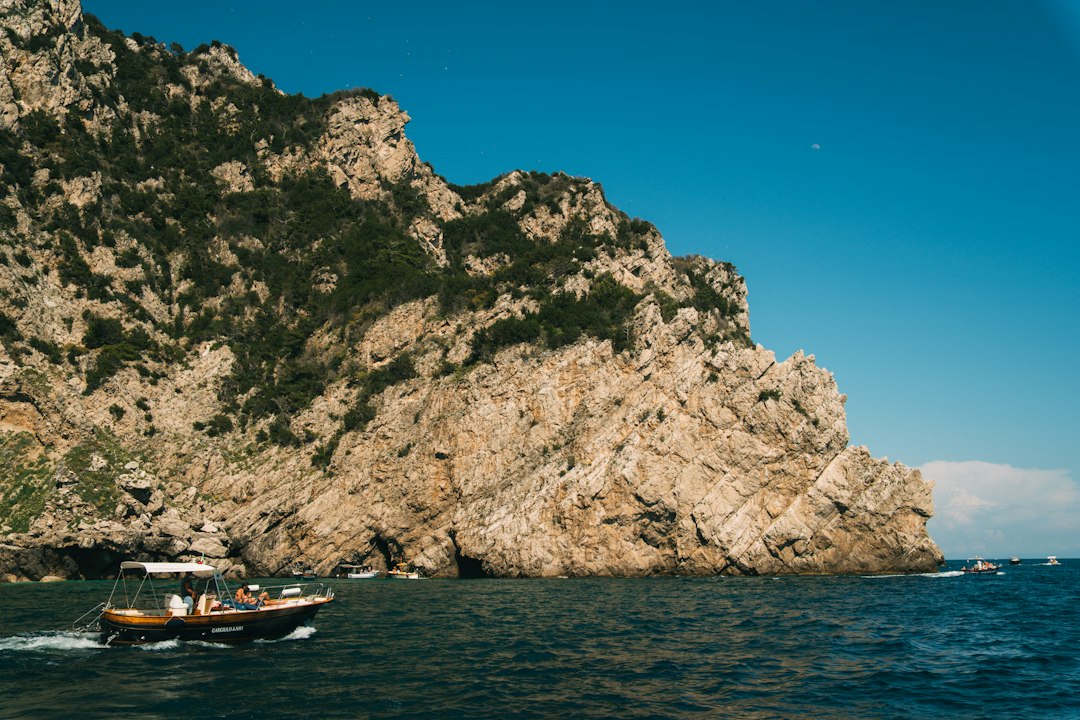
Capri sits 589 meters above sea level at its highest point and hosts a resident population of 12,903 on just 10.4 square kilometers of dramatic limestone cliffs in the Tyrrhenian Sea. The island has drawn elite visitors since the Roman Republic — Emperor Tiberius built 12 villas here around 27 AD. Today it remains one of Italy’s most iconic destinations, reachable only by boat from Naples or Sorrento.
Three Things Not to Miss in Capri
- Blue Grotto (Grotta Azzurra) — A sea cave lit by refracted sunlight that turns the water an electric cobalt blue — rowboats enter through a 1-meter opening.
- Villa Jovis — Tiberius’s 1st-century imperial palace perched 334 meters above the sea with panoramic views of the entire Bay of Naples.
- Piazzetta (Piazza Umberto I) — Capri’s legendary open-air salon where locals and celebrities have gathered for espresso since the early 20th century.
Scroll down for our complete travel guide with tips on getting there, where to stay, costs and more.
Getting to Capri from the Airport
How do I get to Capri?
Take a ferry or hydrofoil — there is no airport on Capri. In my experience, the **hydrofoil from Molo Beverello in Naples** takes **50 minutes** and costs around **€20–€22** one way, while the slower car ferry takes **80 minutes** but is cheaper at roughly **€15**. From **Sorrento**, the hydrofoil runs in just **20 minutes** for about **€22** and is my preferred route — the port is calmer and the journey spectacular. My tip: book Caremar or SNAV tickets online to guarantee your departure slot in July and August. Warning most guides skip: rough seas regularly cancel departures between November and March, stranding you on the island for an extra night.
Which airport is closest to Capri?
**Naples International Airport (NAP)**, officially Aeroporto di Napoli-Capodichino, is the closest gateway, located **roughly 45 km** from the Molo Beverello ferry terminal in Naples. In my experience, the fastest option from NAP is the **Alibus shuttle** — it runs every **30 minutes**, costs **€5**, and drops you at Piazza Garibaldi or Molo Beverello in **30–40 minutes**. From there you walk straight onto the hydrofoil to Capri. What surprised me: taxis from NAP to the port charge a fixed **€25**, which is genuinely worth splitting among 3 people when you have heavy luggage. Rome’s Fiumicino (FCO) is a technical alternative but adds **3+ hours** of travel — avoid it unless you combine Capri with a Rome stay.
How long does the journey to Capri take in total?
From Naples airport to **Capri’s Marina Grande**, budget **2 hours door-to-door** on a smooth day. The Alibus to Molo Beverello takes **35 minutes**, boarding and departure another **20 minutes**, and the hydrofoil crossing **50 minutes**. From Sorrento, the total shrinks to under **90 minutes** from the station. My tip: add a **45-minute buffer** in July and August — the Naples port gets chaotic and ticket lines at the terminal are slow. The honest caveat: if your flight lands after **7 PM**, the last hydrofoil schedule tightens significantly, so always check current **SNAV or Caremar timetables** for your exact travel date rather than relying on printed brochures.
Do I need a car on Capri?
Absolutely not — private cars are banned for tourists on Capri. I recommend arriving without one. The island runs on **a funicular, open-air taxis (convertible Jeeps), minibuses (autobus), and your feet**. The funicular from **Marina Grande to Capri town** costs **€2.20** and takes **4 minutes**. Open-air taxi rides between Capri and Anacapri cost **€15–€20** per cab, not per person. What surprised me: the island’s main footpaths — including the famous **Via Krupp** and trails to Villa Jovis — are genuinely walkable without any vehicle. The trade-off: if you have mobility issues, the steep terrain and lack of elevators in most accommodation make navigation genuinely difficult, and no rental option exists to compensate.
Moving Around Capri
What are the best areas to stay on Capri?
Stay in **Capri town** for nightlife, designer shopping, and the Piazzetta scene, or choose **Anacapri** for tranquility and lower prices. In my experience, Capri town suits first-timers who want everything walkable — **Via Camerelle** boutiques, restaurants, and the funicular are steps from most hotels. Anacapri, perched **275 meters higher**, rewards travelers who prefer silence and authentic neighborhood life; it’s where I base myself on return visits. **Marina Grande** has a handful of hotels near the port but feels transactional — good only if your ferry departs early. The caveat most guides omit: noise from late-night restaurant terraces in Capri town center is real, so request a room facing the garden or interior courtyard, not the street.
What does accommodation cost per night on Capri?
Capri is genuinely expensive — budget **€180–€320 per night** for a solid 3-star hotel in Capri town during peak season. A room at the legendary **Hotel Quisisana** runs **€700–€1,200 per night** in August. In Anacapri, guesthouses and B&Bs drop to **€90–€160** for a double room in shoulder season. My tip: apartment rentals via direct booking in Anacapri regularly come in at **€120–€180 per night** for a full unit, which is the best value on the island for couples or small groups. The honest warning: Capri has almost no budget accommodation — hostels don’t exist here, and anything under **€80** per night is almost certainly a shared-bath guesthouse well outside the center.
How far in advance should I book accommodation on Capri in high season?
Book **at least 4–6 months ahead** for July and August — full stop. In my experience, the best mid-range rooms at places like **Hotel La Palma** or **Villa Krupp** sell out by February for peak summer. The island holds fewer than 3,000 tourist beds total, and demand from Italian, German, and American visitors crushes supply every summer. My tip: if you find your preferred dates unavailable, check for cancellations in late April when travel plans shift — I’ve scored good rooms this way. The trade-off: booking too early locks you into non-refundable rates at most Capri properties, so read cancellation policies carefully before committing **4 months out**.
Are there special or unusual accommodation types on Capri?
Yes — Capri offers **converted garden villas with private terraces**, which are genuinely different from standard hotels. Properties like **Villa San Michele in Anacapri** (a historic mansion-museum) and boutique stays in traditional **caprese whitewashed villas** let you sleep inside the island’s architectural identity. Several farms near Anacapri offer agriturismo rooms with lemon grove views for **€100–€140** per night, far quieter than Capri town. What surprised me: some of the most memorable stays are in small family-run pensioni on **Via Tragara** in Capri town — the terrace views over the Faraglioni rock stacks cost nothing extra. The caveat: villas with private pools on Capri are rare and expensive, typically starting at **€500 per night** even outside peak season.
Choosing a Neighbourhood in Capri
What are the must-see sights on Capri?
Three sights are non-negotiable. First, the **Blue Grotto (Grotta Azzurra)** — the boat tour from Marina Grande takes **45 minutes** round trip and entry costs **€18** (plus **€14** for the rowboat inside). Second, **Villa Jovis**, Tiberius’s ruined imperial complex at **334 meters elevation** — admission is **€6** and the panorama alone is worth the **45-minute uphill walk** from Capri town. Third, the **Faraglioni rock stacks** viewed from **Punta Tragara** — free to see and best photographed at golden hour. My tip: walk the **Via Matromania** loop from Capri town to see all three perspectives in one half-day. The honest caveat: the Blue Grotto closes instantly in rough seas — always have a backup plan for that morning.
What can I experience for free on Capri?
Significant highlights on Capri cost nothing. The **Piazzetta (Piazza Umberto I)** is free to sit in — though a coffee there costs **€4–€6**, so enjoy the square then buy your espresso at a side-street bar. The walk along **Via Krupp** (when open) from Capri town to Marina Piccola is free and visually stunning. **Augustus Gardens (Giardini di Augusto)** charges **€1** — barely worth counting. The **chairlift to Monte Solaro in Anacapri** is the one paid free-time splurge I’d keep at **€12** return — the 360-degree view is the best on the island. What surprised me: the entire **coastline footpath network** is free, and the hike from Anacapri to the **Belvedere di Migliara** overlook takes **90 minutes** and reveals a Capri most tourists never see.
Which day trips from Capri are worth doing?
**Positano and Amalfi** are the most logical day trips — hydrofoils connect Capri to Positano in **40 minutes** (€25–€30) and to Amalfi in **75 minutes** (€30–€35) via seasonal NLG ferry service. In my experience, a day trip to **Pompeii** via ferry to Naples then Circumvesuviana train works in **6 hours total** and costs under **€30** combined transport. My tip: the day trip to **Ischia** by ferry (**90 minutes**, €18) is underrated — it lets you compare two completely different island personalities. The honest warning: day trips from Capri depend entirely on sea conditions and seasonal timetables — always confirm return crossing times before you commit, because missing the last boat back means an unplanned overnight stay and emergency hotel costs.
What are the local specialities to eat and drink on Capri?
Order **insalata caprese** wherever you see local mozzarella listed — the original version uses fior di latte from the mainland or buffalo mozzarella, not imported cheese. **Totani e patate** (squid and potato stew) is the authentic fisherman’s dish most tourists miss entirely. For sweets, **torta caprese** — a dense flourless almond-chocolate cake — is the island’s signature dessert and costs **€4–€6** per slice at any pasticceria. Wash it down with **limoncello di Capri**, made from the island’s sfusato lemons that grow along terraced gardens. My tip: buy limoncello at **Limoncello di Capri** on Via Roma in Capri town — quality is far above the souvenir-shop bottles. The honest caveat: restaurant food in Capri town is heavily tourist-priced; the same pasta dish costs **€8–€10** in Anacapri versus **€18–€24** on Via Camerelle.
Top Sights in Capri
What makes Capri unique compared to other Italian islands?
Capri’s combination of **Roman imperial history, vertical limestone geology, and elite resort culture** is found nowhere else in the Mediterranean. The island shaped modern luxury tourism — writers like Axel Munthe, Compton Mackenzie, and Rainer Maria Rilke lived here, and Graham Greene called it the most beautiful place on earth. What distinguishes Capri physically is the **Faraglioni** — three sea stacks rising **109 meters** from the water — and the **Blue Grotto’s** light phenomenon, which depends on a specific underwater aperture angle unique to this cave. In my experience, the Piazzetta’s social theater — where locals genuinely mingle with film directors and hedge-fund managers at the same tiny tables — is a sociological experience unlike anywhere else in Italy.
How many days do I need to see Capri properly?
**3 full days is the ideal minimum** — enough to see the major sights without rushing and experience the island at different times of day. Day 1: arrive, explore Capri town, walk to **Punta Tragara** at sunset. Day 2: **Blue Grotto** first thing in the morning (seas are calmest before 10 AM), then chairlift to **Monte Solaro** in Anacapri. Day 3: hike to **Villa Jovis**, swim at **Marina Piccola**, depart. A **day trip from Sorrento** is technically possible but you lose the island’s magic — the evening light and morning quiet before tour boats arrive are genuinely transformative. The caveat: **2 days** works only if you skip the Blue Grotto or Villa Jovis, which I’d consider a real loss on a first visit.
When is the best time to visit Capri?
**June and September** are my top picks — July and August are climatically fine but crushingly overcrowded. In September specifically, sea temperatures stay above **24°C** for swimming, crowds drop sharply after August 20, and hotel prices fall **20–30%**. The verified best travel months based on climate data are July, August, and September — but I’d add that **late May** rivals all of them for emptiness and lemon blossom fragrance. What surprised me: April and October are genuinely pleasant with mild temperatures around **16–18°C**, and you can walk every trail in peace — but some hotels and restaurants close between November and March, reducing your options significantly. Avoid the **August 10–18** window around Ferragosto at all costs — the island reaches capacity and loses its charm entirely.
What are the local festivals on Capri worth attending?
**Capri Hollywood International Film Festival**, held annually in late December through early January, draws European film industry figures to screenings and events centered around **Hotel Quisisana** and the Piazzetta. In my experience, it’s one of the few times winter Capri feels genuinely alive and atmospheric rather than closed-up. **San Costanzo**, Capri’s patron saint day on **May 14**, sees a procession through Marina Grande with the saint’s relics carried from the harbor to the cathedral — completely authentic and tourist-free. The **Ferragosto celebrations on August 15** include fireworks over the bay, beautiful visually but logistically nightmarish due to crowd density. My tip: the film festival period in late December offers dramatically lower accommodation prices — **€100–€160** per night at properties that charge triple in summer.
Where to Eat in Capri
How does the weather on Capri affect what activities I can do?
Weather determines everything on Capri — particularly wind direction. A **tramontana (north wind)** above force 4 closes the **Blue Grotto** instantly and can cancel ferry crossings entirely. In July and August, temperatures reach **28–32°C** and the sun is intense — plan outdoor hikes before **10 AM** or after **5 PM** to avoid heat exhaustion on exposed paths like the **Via Matromania**. September brings reliable calm seas perfect for boat tours around the island (**€20–€25** per person on shared trips). The honest caveat most guides skip: **fog and low cloud** occasionally sit on the island even in summer, killing views from **Monte Solaro** — I’ve been up there in August and seen nothing but white. Always check the marine forecast on **ilmeteo.it** the evening before any sea-based activity.
How crowded does Capri get in peak season?
Brutally crowded — the **Piazzetta becomes standing-room only by 11 AM** in August and the Blue Grotto generates queues of **30–40 boats** waiting their turn. Day-trippers from Naples and Sorrento pour off ferries between **10 AM and 4 PM** daily in peak season, outnumbering overnight guests by a ratio of roughly **10 to 1**. In my experience, the island transforms into a quiet, genuinely magical place after **5 PM** once day boats depart — this is the single strongest argument for staying overnight rather than day-tripping. My tip: walk to **Villa Jovis** on a weekday morning in August — the uphill path filters out 90% of casual tourists and you’ll find the ruins almost empty. The trade-off: avoiding crowds entirely in July or August is impossible; you can only outmaneuver them with timing.
How safe is Capri for travelers?
Capri is extremely safe — it’s one of the lowest-crime destinations in Italy. In my experience, petty theft is almost non-existent compared to Naples or Rome, partly because the small island community means strangers are noticed quickly. The **Marina Grande** and the funicular area see occasional bag-snatching targeting distracted tourists loading luggage, so keep your bag in front during embarkation. The real safety risks on Capri are physical: the **coastal paths have unfenced cliff edges** and loose limestone in places — sturdy shoes are mandatory, not optional, on trails like the **Sentiero dei Fortini**. Heat stroke is a genuine concern in August — the **5 km walk to Villa Jovis** in midday sun has put tourists in the medical clinic on **Via Caprile** more than once. Carry **1.5 liters of water minimum** on any hill walk.
Is English widely spoken on Capri?
Yes — English is spoken confidently in **every hotel, restaurant, and tourist business** on Capri, making it one of the most internationally accessible destinations in Italy. Decades of British, American, and German tourism have made multilingualism a professional necessity. What surprised me: even shopkeepers in **Anacapri’s quieter streets** manage functional English, far better than equivalent towns on the Amalfi Coast. That said, making the effort to speak a few words of Italian earns genuine warmth — saying **’un caffè, per favore’** rather than pointing at the menu changes the interaction noticeably. The honest caveat: ferry announcement systems at **Marina Grande** are often only in Italian, and timetable boards can confuse travelers — download the Caremar or SNAV app before you arrive to track your crossing in real time.
Before You Go to Capri
What is a realistic daily budget for visiting Capri?
Budget **€180–€220 per person per day** covering a mid-range hotel share, 3 meals, and 1–2 paid activities. Breakdown: accommodation share **€90–€150**, breakfast at a bar **€5–€8**, lunch at a trattoria in Anacapri **€18–€25**, dinner in Capri town **€40–€60** with wine, Blue Grotto entry **€32** (one-off), funicular and minibus **€10–€15**. Budget travelers eating at **Bar Funicolare near Marina Grande** and staying in Anacapri B&Bs can push this down to **€120** per day — but that is the genuine floor on this island. The honest truth: Capri is not a budget destination by any Italian standard — a glass of white wine at a Piazzetta bar costs **€12–€18**. Factor that in before you book.
What public transport options exist on Capri?
Capri’s public transport is compact but functional. The **funicular** runs from **Marina Grande to Capri town** every **15 minutes** from **6:30 AM to 12:30 AM** in season, costing **€2.20** per trip. The **SIPPIC minibus network** connects Capri town to Anacapri (Line 1, **€2.20**, runs every **15–20 minutes**) and Marina Grande to Anacapri directly (Line 2). Open-air convertible taxis are metered and charge **€15–€25** per cab for inter-town routes. In my experience, the minibus between Capri town and Anacapri is the workhorse of island transport — fast, cheap, and scenic. The caveat: buses stop running around **11:30 PM** in peak season and earlier off-season, so late-night restaurant dinners in Anacapri mean walking back or paying a taxi **€20** in the dark.
Which apps do you recommend for navigating Capri?
Four apps I use on every Capri trip: **Caremar** and **SNAV** official apps for real-time ferry timetables and booking — essential for managing your crossing schedule. **Maps.me** with the offline Campania map loaded before you board the ferry, because mobile data can be spotty on cliff-side trails. **Windy.com** to check marine conditions the evening before any boat excursion — one glance at the offshore wind arrows tells you whether the Blue Grotto will be open. Finally, **TheFork (ElTenedor)** for restaurant reservations in Capri town, where popular places like **Il Geranio** fill up **3–5 days in advance** in August. My tip: screenshot ferry return times immediately after booking — the apps occasionally go offline when you need them most at the port.
Capri at a Glance
| Population | 12,903 |
|---|---|
| Currency | EUR (€) |
| Official language | Italian |
| Time zone | Europe/Rome |
Source: Wikidata, retrieved September 2026.
Italy › Capri
More Destinations in Italy
Essential Resources for Planning Your Trip to Capri
- Travel Planning | Tourism Capri — official visitor information, passes & events
- Wikipedia: Capri — history, geography & background
- Wikivoyage: Capri — community travel guide & practical tips
- Capri travel – Lonely Planet | Campania, Italy, Europe — expert itineraries & travel inspiration
- THE 15 BEST Things to Do in Capri (2026) — hotels, restaurants & traveller reviews
- Travel Planning | Tourism Capri — how to get around
- Numbeo: Cost of Living in Capri — current prices & cost comparison
- Timeanddate: Capri Weather & Climate — forecasts & climate statistics
More Perspectives on Capri
- The Ultimate Jetset Travel Guide to Capri, Italy
- 12 Best Things To Do In Capri, Italy (+ Map & Itinerary)
- A Local’s Guide on Where to Stay in Capri
Capri Travel Videos
Watch these videos for a visual preview before your trip:
- Capri in a Day: The Ultimate Day Trip Guide
- How to Spend 1 Day in CAPRI Italy | Travel Itinerary
- Capri Italy Travel Guide 2026: Everything You Need to Know Before You Go
Capri Travel Discussions on Reddit
Real traveller experiences and community advice:
- Capri – Yes or No? : r/ItalyTravel
- Capri is beautiful but challenging. : r/ItalyTravel
- Capri – free time or a tour? : r/travel
Data Sources
This page was compiled using data from Wikipedia, Wikidata, Open-Meteo (climate), Numbeo (cost of living) and REST Countries. Information is updated regularly.