
Mykonos: The Complete Travel Guide (2026)
Last reviewed: October 2026 · key facts checked against Wikidata
Mykonos Weather by Month: When to Go
| Month | Day | Night | Sea | Rain days | Rain mm | Wind km/h | Good for |
|---|---|---|---|---|---|---|---|
| Jan | 14° | 10° | 16° | 11 | 71 | 34 | – |
| Feb | 14° | 11° | 16° | 7 | 43 | 33 | – |
| Mar | 16° | 12° | 16° | 7 | 42 | 32 | Hike |
| Apr | 18° | 14° | 17° | 4 | 26 | 29 | Hike |
| May | 22° | 17° | 18° | 4 | 14 | 28 | Hike |
| Jun | 26° | 21° | 22° | 2 | 5 | 29 | – |
| Jul | 28° | 24° | 25° | 0 | 3 | 35 | Swim |
| Aug | 28° | 24° | 25° | 1 | 2 | 34 | Swim |
| Sep | 26° | 22° | 24° | 1 | 7 | 31 | Swim |
| Oct | 22° | 18° | 22° | 3 | 20 | 29 | Hike |
| Nov | 19° | 15° | 20° | 7 | 47 | 30 | Hike |
| Dec | 15° | 12° | 18° | 10 | 68 | 31 | – |
Sources: ERA5 reanalysis via Open-Meteo, 2016–2025 (10-year average) for air temperature, rain and wind (average daily maximum); Open-Meteo Marine API, 2023–2025 for sea surface temperature. A rain day has at least 1 mm. Area averages; individual years vary.
Mykonos Travel Guide: Everything You Need to Know (2026)
Mykonos is a Cycladic island in the Aegean Sea covering 85.5 km², with a resident population of 10,134 and a highest point of 341 metres. It sits roughly 150 km southeast of Athens, positioned between Tinos, Syros, Paros, and Naxos. The island is internationally recognised for its whitewashed cubic architecture, nightlife scene, and consistently strong summer winds that make it a windsurfing destination.
Three Things Not to Miss in Mykonos
- Chora (Mykonos Town) — The labyrinthine old town with its iconic whitewashed alleys and Paraportiani church is Mykonos’s unmissable architectural centrepiece.
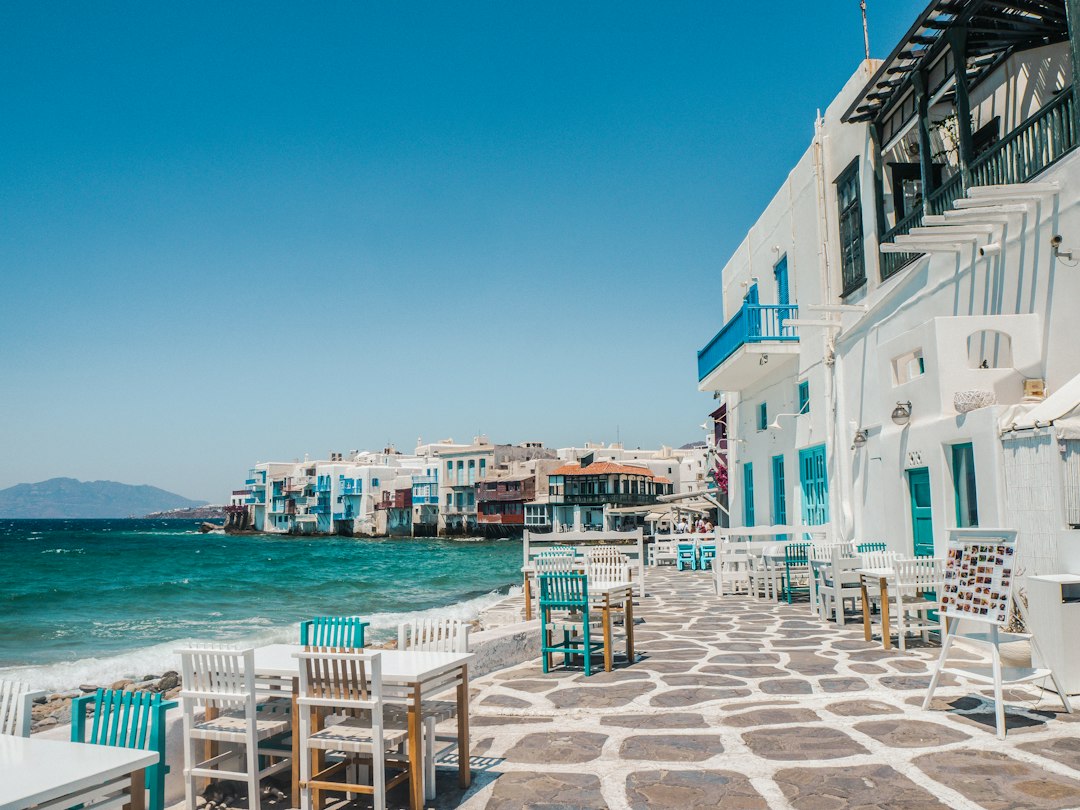
- Little Venice — A row of 18th-century sea-captains’ houses built directly over the water, best seen at sunset from the Alefkandra waterfront.
- Delos Island Day Trip — An uninhabited sacred island just 30 minutes by boat, with UNESCO-listed ancient ruins including the 2,500-year-old Terrace of the Lions.
Scroll down for our complete travel guide with tips on getting there, where to stay, costs and more.
Ferries & Flights to Mykonos
How do I get to Mykonos — by flight or ferry?
Flying is the faster and more reliable option for most travellers. Direct international flights land at Mykonos Airport (JMK) in under 4 hours from most Western European cities. Ferries from Athens’ Piraeus port take 2.5 to 5 hours depending on whether you take a high-speed catamaran or a conventional ferry. Blue Star Ferries and SeaJets both serve the route regularly. Worth knowing: ferry schedules thin out considerably outside the May–October season, and the Aegean crossing can be rough in high winds. For travellers combining Mykonos with Santorini or Paros, inter-island ferries make more sense than backtracking to Athens.
Which airport or port is the best starting point for Mykonos?
Mykonos Airport (JMK) is the most convenient entry point, located just 4 km southeast of Chora. It handles direct flights from major European hubs including London Heathrow, Amsterdam, and Frankfurt from spring through early autumn. The New Port (Tourlos) is the main ferry terminal, 2 km north of Chora, serving both high-speed and conventional ferries from Piraeus, Rafina, and neighbouring Cycladic islands like Paros, Naxos, and Santorini. Tip: Rafina port, about 30 km east of Athens centre, often has shorter ferry crossings and less crowded departures than Piraeus — check Hellenic Seaways and Golden Star Ferries for schedules.
How long does the ferry crossing to Mykonos take?
Journey time ranges from about 2 hours 20 minutes to 5 hours from Piraeus, depending on vessel type. High-speed catamarans (SeaJets, Golden Star Ferries) cover the route in roughly 2.5 hours, while conventional Blue Star Ferries take around 4.5 to 5 hours but allow you to sleep on board. From Rafina port, crossings are slightly shorter. Inter-island routes from Paros take approximately 1 hour by fast ferry, and from Santorini roughly 2.5 to 3 hours. Caveat: the Aegean is subject to strong meltemi winds in July and August, which can delay or cancel sailings — always build buffer time into your itinerary.
What does a flight or ferry to Mykonos cost?
Budget airlines fly from Athens to Mykonos for roughly €40–€90 one-way on Sky Express or Olympic Air; check directly with operators for current fares. Aegean Airlines dominates the route and typically prices higher. Ferry tickets from Piraeus cost approximately €30–€45 for deck/economy class on conventional ferries and €60–€90 for high-speed catamarans. Cabin berths on overnight sailings add around €20–€40 extra. Tip: book ferry tickets through Ferryhopper or directly via Blue Star Ferries at least 2–3 weeks ahead in July and August, as popular departure times sell out quickly. Prices listed are approximate — always verify directly with the operator.
Are overnight ferries to Mykonos worth it?
Overnight ferries are worth it if you want to save on one night’s accommodation and avoid flying. Blue Star Ferries operate overnight sailings from Piraeus with cabin options, departing late evening and arriving in Mykonos the following morning. An inside cabin for two costs roughly €60–€100 extra on top of the base ticket. This saves you a hotel night that could cost €200 or more on-island in peak season. Caveat: cabin quality is functional rather than comfortable, and the route is not always the smoothest sailing. We recommend this option primarily for travellers on longer Cyclades itineraries who are combining Mykonos with Naxos, Paros, or Santorini.
Moving Around Mykonos
Do I need a rental car or scooter on Mykonos?
A scooter or ATV is the most practical choice for exploring Mykonos beyond Chora. The island is 85.5 km² and public bus coverage outside the main beach corridors is limited. Scooter rentals run approximately €25–€45 per day from agencies around the New Port and in Chora; ATVs cost slightly more. A rental car is useful if you are travelling with children or want to carry gear for remote beaches like Fokos or Mersini in the north. Caveat: roads are narrow, often unpaved near remote beaches, and summer traffic around Mykonos Town can be genuinely chaotic. International driving licences are required for non-EU visitors.
Are there buses between towns and beaches on Mykonos?
Yes, KTEL Mykonos buses serve the main routes but coverage is limited. There are two bus stations in Mykonos Town: the Old Port station near the harbour covers northern and eastern routes including Ano Mera village, while the Fabrika station south of Chora serves popular beaches including Paradise, Platis Gialos, and Ornos. Single tickets cost approximately €2, in line with local transport pricing. Buses run frequently in summer but become unreliable after midnight. Worth knowing: for beaches like Elia or Super Paradise, boats from Platis Gialos jetty (roughly €5–€10 per trip) are a popular and scenic alternative to the bus.
What does a rental car on Mykonos cost and where do I hire one?
Expect to pay roughly €50–€90 per day for a small rental car in peak season. Established agencies with desks at Mykonos Airport (JMK) include Europcar, Sixt, and local operators such as Mykonos Rent a Car. Booking directly through the agency website or aggregators like Discovercars at least 3–4 weeks before July or August arrival is strongly advised — fleet availability drops fast. Caveat: Mykonos is not a large island at 85.5 km², but a car can feel cumbersome in narrow Chora streets where parking is almost impossible. We recommend basing yourself in Chora and using the car only for day trips to the north coast or Ano Mera.
Which parts of Mykonos are accessible by public transport?
**The main tourist corridor — Chora, Ornos, Platis Gialos, Paradise Beach, and Ano Mera — is reasonably covered by KTEL buses. Frequencies on the Fabrika–Paradise Beach route can be as short as 15–20 minutes in peak summer. However, the northern and eastern coasts, including beaches like Fokos, Ftelia, and Agios Sostis**, are essentially unreachable without a rental vehicle or taxi. Taxis are metered but scarce and often pre-booked; the taxi rank is at Mando Mavrogenous Square in Chora. Worth knowing: water taxis from the Old Port and from Platis Gialos jetty fill some of the gaps between southern beaches and can be a practical supplement to the bus network.
Can I cycle around Mykonos?
Cycling on Mykonos is not recommended as a primary transport mode. The island rises to 341 metres and the terrain is hilly, roads are narrow with no dedicated cycling lanes, and summer heat regularly exceeds 30°C in July and August. There is no established bike-share scheme as of 2025. E-bike rentals are available from a few outlets in Chora and near the New Port, costing roughly €20–€35 per day, and make the terrain more manageable. For short leisure rides between nearby beaches in the early morning, cycling is pleasant enough. For covering the island efficiently, however, a scooter, ATV, or car remains the practical choice.
Choosing a Base on Mykonos
Which town should I base myself in on Mykonos?
Mykonos Town (Chora) is the best base for first-time visitors. It places you within walking distance of Little Venice, the windmills, the Old Port, and the island’s main restaurant and bar scene. Ornos, about 3 km south of Chora, is a calmer family-friendly alternative with a sheltered beach and good taverna options. Platis Gialos, 4 km south, suits those prioritising beach time with easy bus connections. Compared to neighbouring Paros (roughly 1 hour by fast ferry), Mykonos Town is more expensive and more cosmopolitan; Naxos (1.5 hours away) offers a quieter, cheaper base for those wanting authentic island life alongside Cycladic scenery.
What does accommodation on Mykonos cost per night?
Economy hotels average around €200 per night based on verified Numbeo data. Budget guesthouses in areas like Ano Mera or on the outskirts of Chora can come in closer to €80–€120 in shoulder season. Mid-range hotels in Ornos or Platis Gialos typically run €150–€300 in July and August. Luxury properties in Mykonos Town or cliff-edge hotels above Agios Ioannis beach can exceed €600–€1,000 per night. Caveat: Mykonos consistently ranks among the most expensive Greek islands for accommodation — roughly 2–3 times the cost of comparable rooms on Naxos or Paros. Self-catering apartments booked directly reduce costs significantly outside peak weeks.
Which area on Mykonos suits which travel style?
Chora suits nightlife and culture seekers; Ornos and Platis Gialos suit families; Paradise Beach suits party travellers. Little Venice within Chora is the most photogenic neighbourhood, with waterfront cocktail bars and the iconic windmills a short walk away. Ornos Bay offers calm swimming and family tavernas without the late-night noise. Paradise Beach, roughly 5 km from Chora, is the centre of the island’s legendary club scene, with venues like Tropicana operating through the night in summer. For complete seclusion, northern beaches such as Fokos and Mersini attract a quieter crowd and require your own transport. We recommend Chora for stays of 3 nights or fewer.
How far in advance do I need to book accommodation on Mykonos?
Book at least 3–4 months ahead for July and August travel. The island’s population of just 10,134 year-round residents means accommodation stock is genuinely finite, and top-rated mid-range hotels in Chora or Ornos sell out well before peak season. The last two weeks of July and first two weeks of August are the most pressured period. For shoulder season travel in May, June, September, or October, booking 4–6 weeks ahead is usually sufficient. Worth knowing: Mykonos attracts a significant volume of last-minute wealthy travellers willing to pay high walk-in rates, which keeps prices elevated even when some properties still have availability — early booking almost always secures better value.
Are there good apartments or villas with sea views on Mykonos?
Yes, Mykonos has a well-developed villa and apartment rental market. Platforms like Airbnb, Booking.com, and specialist agencies such as Mykonos Accommodation Centre list properties ranging from studio apartments in Chora from roughly €100–€150 per night in shoulder season to private infinity-pool villas above Agios Ioannis or Panormos starting at €500–€1,000+ per night in August. The Tagoo area just north of Chora is particularly known for design-forward accommodation with Aegean views. Caveat: many villas in remote locations require a rental car, as bus access is limited. Verify cancellation policies carefully — Mykonos operators typically enforce strict terms during peak weeks.
When to Come to Mykonos
When is the best time to visit Mykonos?
May, June, September, and October offer the best balance of weather, value, and manageable crowds. Based on verified climate analysis, the ideal travel window runs from May through October. July and August bring reliable sunshine and warm Aegean water temperatures of around 25°C, but also maximum crowds, peak prices, and the strong meltemi winds that can make certain beaches uncomfortable and occasionally delay ferries. June and September deliver similar warmth with significantly fewer visitors and noticeably lower accommodation rates. Tip: late May is particularly attractive — hotels are open, beaches are usable, and Chora’s restaurants are not yet overwhelmed. The island largely closes between November and March.
What is the weather on Mykonos like throughout the year?
Mykonos has a classic Mediterranean climate — hot, dry summers and mild, wetter winters. Summer temperatures in July and August regularly reach 28–32°C, with intense sunshine and the famous meltemi northerly wind that cools temperatures but can create choppy seas. Spring (April–May) and autumn (September–October) bring temperatures of 18–24°C with occasional light rain. Winter months from November through March see temperatures drop to 10–15°C with higher rainfall and most tourist businesses closed. Worth knowing: the meltemi winds peak between mid-July and mid-August and are strongest on exposed north-facing beaches like Ftelia and Panormos — this makes these spots ideal for windsurfers but less pleasant for sunbathing.
When does Mykonos get overcrowded?
Mykonos reaches peak saturation in the last two weeks of July and first two weeks of August. During this period, Chora’s narrow alleys become genuinely difficult to navigate, restaurant wait times stretch to 60–90 minutes, beach clubs at Paradise and Super Paradise are packed from midday, and taxi availability collapses. The island attracts a large proportion of international visitors — including significant numbers from the US, UK, and Middle East — pushing prices and congestion to their annual maximum. We recommend avoiding this window unless nightlife and social atmosphere are your primary goal. June and September offer the same landscape, beaches, and restaurant quality with crowds reduced by roughly half.
Is there a worthwhile shoulder season on Mykonos?
Yes — late May to mid-June and mid-September to mid-October are genuinely rewarding. Accommodation prices in these windows can be 30–50% lower than August peaks, most businesses are open, sea temperatures are comfortable (around 22–24°C in September), and Chora is walkable without crowds. The ancient site of Delos is far more enjoyable to explore without the summer volume of day-trippers. Worth knowing: some beach clubs and party venues at Paradise Beach scale back operations or close entirely before June and after mid-September, so if the nightlife scene is part of your plan, stick closer to July–August. For culture, walking, and food, shoulder season is clearly the smarter choice.
When does the beach and watersports season begin on Mykonos?
The practical beach season runs from late April through October. Sea temperatures reach a swimmable 20°C by mid-May and peak at around 25–26°C in August. Beach bars and sun-lounger rental operations at Platis Gialos, Ornos, and Paradise typically open from late April or early May and close by late October. Watersports centres offering windsurfing, kitesurfing, and paddleboarding are generally operational from May through September. The bay at Ftelia on the north coast is one of the top windsurfing spots in the Cyclades, with reliable meltemi winds from June onwards. Diving centres such as Mykonos Diving Center near Psarou open from approximately May and run through September.
Costs on Mykonos
What does a daily budget cost on Mykonos?
A realistic daily budget for one person is approximately €120–€180 on a mid-range basis. Using verified Numbeo data: a cheap meal costs around €20, a mid-range dinner for two approximately €36 (so roughly €18 per person), and a local transport trip about €2. Add a mid-range hotel at €200 per night (split between two: €100 each), a beach-club sun lounger at roughly €20–€30, and two to three drinks at around €10–€15 each in Chora bars, and daily spend climbs quickly. Budget travellers staying in Ano Mera, eating at local souvlaki spots, and using KTEL buses can survive on closer to €80–€100 per day, but this is genuinely difficult in peak season.
Is Mykonos more expensive than the Greek mainland?
Yes — Mykonos is substantially more expensive than mainland Greece and most other Cycladic islands. A mid-range Athens dinner for two typically costs €25–€30, compared to approximately €36 on Mykonos per verified data. Hotel rates in Athens average €80–€120 for a good mid-range option versus €200+ on Mykonos. Compared to nearby Naxos (about 1.5 hours by fast ferry), groceries and taverna meals on Mykonos run roughly 30–40% higher. Paros, just 1 hour away, offers a similar Cycladic atmosphere at meaningfully lower prices. The premium on Mykonos reflects its international brand status — travellers on tighter budgets often use Mykonos for 2–3 nights and base themselves on Naxos or Paros for the rest of their Cyclades trip.
What expenses on Mykonos are unavoidable?
Ferry or flight costs, airport or port transfers, and accommodation are the fixed unavoidable expenses. Beyond these, beach sunlounger fees at most named beaches (Paradise, Psarou, Ornos) are effectively mandatory in peak season — expect €20–€50 per pair at staffed beach clubs. Eating out is nearly inescapable given the limited self-catering infrastructure in most Chora hotels; even a simple lunch runs €15–€20 per person. Worth knowing: bottled water prices at beach clubs can reach €5–€8 per bottle — carrying a refillable bottle and filling it at your hotel each morning saves a meaningful sum over a week-long stay. Tip: supermarkets in Ano Mera and near the New Port are noticeably cheaper than Chora convenience shops.
What does food cost on Mykonos — local versus tourist prices?
A cheap meal runs about €20 and a mid-range dinner for two about €36, per verified Numbeo data. At a local-facing bakery or souvlaki stand in Ano Mera or near the Fabrika bus station, a gyros or spanakopita costs roughly €3–€6. Sit-down tavernas in Chora’s tourist core charge €18–€30 for a main course. Upscale restaurants in Little Venice or around Matogianni Street push well beyond €40–€60 per person for a full meal. Worth knowing: the village of Ano Mera, about 8 km east of Chora, has traditional kafeneions and tavernas serving genuinely local food at roughly half the price of equivalent meals in Mykonos Town — a worthwhile detour for a meal.
What are the best beaches on Mykonos?
Psarou, Platis Gialos, and Elia are consistently rated the top beaches for different reasons. Psarou is a small, sheltered cove known as the most exclusive beach on the island, with premium beach clubs and calm, turquoise water. Platis Gialos, about 4 km from Chora, is the main family beach, well-served by KTEL buses and water taxis. Elia, roughly 10 km southeast of Chora, is the island’s longest beach at about 400 metres and is more relaxed in atmosphere. For non-commercial beauty, Fokos and Agios Sostis on the north coast have no beach clubs and no sunloungers — bring your own shade. Super Paradise suits those specifically seeking the party beach atmosphere.
Beaches, Coves & Highlights of Mykonos
What are the top sights on Mykonos beyond the beaches?
Delos, the Windmills, Little Venice, and Chora’s Paraportiani church are the essential non-beach highlights. The uninhabited island of Delos, reachable in about 30 minutes by boat from the Old Port, holds one of the most important ancient Greek archaeological sites in the Aegean — a UNESCO World Heritage Site with the iconic Terrace of the Lions. Entry costs approximately €12; boats depart from the Old Port in Chora. The Kato Myli windmills on the Chora hilltop are the island’s most photographed landmark. The Mykonos Archaeological Museum and the Aegean Maritime Museum in Chora both offer worthwhile context for under €4 entry. Ano Mera village has the well-preserved Monastery of Panagia Tourliani, founded in 1542.
What watersports activities are available on Mykonos?
Windsurfing, kitesurfing, paddleboarding, diving, and boat charter are all available. The bay at Ftelia on the northern coast is one of the most consistent windsurfing spots in the Cyclades thanks to reliable meltemi winds; rental and lessons are available from local operators there. Platis Gialos beach hosts a water sports centre offering jet-ski rental, banana boat rides, and paddleboard hire. Scuba diving is centred around Mykonos Diving Center near Psarou beach, with reef and wreck dives available from approximately €50–€70 per dive — verify current pricing directly with the operator. Private boat and catamaran charters from the Old Port offer half-day trips to Delos and nearby uninhabited islets, starting from roughly €80–€150 per person.
What is the culinary highlight of Mykonos?
Kopanisti cheese and loukoumades are the signature local food products of Mykonos. Kopanisti is a pungent, spicy soft cheese made exclusively on the Cycladic islands and granted PDO (Protected Designation of Origin) status — it is served in traditional tavernas throughout Chora and Ano Mera, typically paired with local bread and tomatoes. Loukoumades (honey-drenched fried dough balls) from street vendors near the Old Port cost roughly €3–€5 per portion. Fresh fish is excellent given the island’s fishing tradition; the tiny neighbourhood of Kalogera Street in Chora has some of the most respected seafood restaurants. Worth knowing: the island also produces its own honey and capers, both available at the small market shops near Matogianni Street.
Which parts of Mykonos are still off the beaten track?
The northern coast and the village of Ano Mera remain genuinely less visited. Beaches like Fokos, Mersini, and Agios Sostis have no beach bars, no sunloungers, and no bus service — reaching them requires a rental vehicle but rewards with near-solitude even in August. Ano Mera, 8 km east of Chora, is the island’s only other village, with a central plateia, local kafeneions, and the Monastery of Panagia Tourliani largely ignored by day-tripping tourists. The inland walking path between Chora and Ano Mera passes windmills and dry-stone walls and takes about 2 hours on foot. Compared to the Chora–Paradise Beach corridor, these areas feel like a different island entirely.
How many days do I need on Mykonos?
Three to four days is the sweet spot for most first-time visitors. This allows one full day exploring Chora and Little Venice on foot, one day trip to Delos (boats run mornings, allow 3–4 hours on-island), one beach day at Platis Gialos or Psarou, and an evening in the nightlife areas if that is part of your plan. A fifth day suits those wanting to reach the northern beaches or hike to Ano Mera. Compared to Naxos (which warrants 5–7 days for its larger area, Byzantine trails, and mountain villages) or Paros (4–5 days comfortably), Mykonos is smaller in cultural depth but can absorb longer stays if beach and nightlife are the priority. We recommend Mykonos as part of a broader Cyclades circuit rather than a standalone week.
Mykonos at a Glance
| Population | 10,134 |
|---|---|
| Currency | EUR (€) |
| Official language | Greek |
| Time zone | UTC+02:00 |
Source: Wikidata, retrieved October 2026.
Greece › Mykonos
More Destinations in South Aegean Region
More Destinations in Greece
Essential Resources for Planning Your Trip to Mykonos
- Mykonos — official visitor information
- Wikivoyage: Mykonos — community travel guide & practical tips
- Wikipedia: Mykonos — history, geography & background
- What are transportation options from Mykonos airport to … — how to get there and around
- Mykonos Travel 2026 – Lonely Planet | Greece, Europe — itineraries & inspiration
Data Sources
Key facts on this page (population, currency, language, time zone) come from Wikidata, climate figures from Open-Meteo. The retrieval date is shown next to the facts table.