
Cannes: The Complete Travel Guide (2026)

Last reviewed: September 2026 · key facts checked against Wikidata
Cannes Travel Guide: Everything You Need to Know (2026)
Cannes sits on the French Riviera at sea level, home to 73,325 permanent residents who share their city with millions of annual visitors drawn by the legendary Cannes Film Festival held every May since 1946. The city stretches along 11 kilometres of Mediterranean coastline in the Alpes-Maritimes department, making it one of Europe’s most glamorous mid-size resort cities. What surprises most first-timers is that beyond the Palais des Festivals and the yacht-lined Vieux Port, Cannes has genuinely livable neighbourhoods where locals still eat affordably and life moves at a human pace.
Top 3 Highlights at a Glance
- La Croisette — The iconic 2.3-kilometre palm-lined promenade fronting the Mediterranean, lined with palace hotels and designer boutiques — unmissable at sunrise.
- Île Sainte-Marguerite — 15-minute ferry from the Vieux Port leads to this forested island where the Man in the Iron Mask was imprisoned in 1687.
- Le Suquet (Old Town) — Cannes’ 11th-century hilltop quarter with a Romanesque church and panoramic views over the bay and Lérins Islands.
Scroll down for our complete travel guide with tips on getting there, where to stay, costs and more.
Arrival & Airport
How do I get to Cannes?
Fly into Nice Côte d’Azur Airport (NCE), then take the direct train or bus to Cannes. In my experience, the train from Nice Ville station is the sharpest option — €8–12 by TER regional train, journey time roughly 35–40 minutes, running every 30 minutes. Taxis from NCE cost €80–110 and gain you nothing in speed during daytime traffic on the A8. The Lignes d’Azur Bus 210 costs only €1.50 but takes 75 minutes with stops. My tip: skip the taxi entirely unless you’re arriving after midnight with heavy luggage. Book train tickets on the SNCF Connect app the morning of travel — they rarely sell out outside Film Festival week.
Which airport is closest to Cannes?
Nice Côte d’Azur Airport (NCE) is the closest major airport, located 26 km east of Cannes city centre. It handles direct intercontinental routes including New York, Dubai, and Montreal, which is a genuine advantage. Marseille Provence Airport (MRS) sits 150 km west and is only worth considering if you find dramatically cheaper fares — the transfer adds 2 hours by bus or car. What surprised me: NCE is actually France’s second-busiest airport after Paris CDG, so international connections are excellent. A third option, Cannes Mandelieu Airport (CEQ), handles private jets and small charter flights only — it is irrelevant for most travellers. For 2026, I recommend booking NCE arrivals at least 6 weeks ahead for summer.
How long does the journey to Cannes take from Nice Airport?
By TER train from Nice Ville, the trip takes 35–40 minutes once you’re at the station — add 25 minutes for the free shuttle bus (line 99) from NCE Terminal 1 or 2 to Nice Ville station, making total door-to-door time roughly 60–70 minutes. The caveat most guides omit: the shuttle bus runs every 30 minutes, so bad timing can cost you 25 minutes of waiting. In my experience, leaving the arrivals hall and heading straight to the bus stop beats any taxi queue during daytime. Direct private transfer services like Blacklane charge around €95 and pick you up from the terminal — worth it only for 3+ people splitting the cost.
Do I need a car in Cannes?
No — Cannes is walkable and well-served by trains for day trips. La Croisette, Le Suquet, the Palais des Festivals, and the Vieux Port are all within a 15-minute walk of each other. The Lérins Islands ferry leaves from the port on foot. For day trips to Antibes (15 min by train, €3.50), Grasse (45 min by bus, €1.50), or Monaco (55 min by train, €11), public transport is perfectly sufficient. The honest warning: parking in Cannes costs €3–5 per hour in central car parks, and during Film Festival week in May, entire streets are closed to non-accredited vehicles. If you plan to explore inland Provence villages like Mougins or Gourdon, a rental car for one day makes sense — budget €45–70/day through Europcar at NCE.
City Transport
What are the best areas to stay in Cannes?
La Croisette is the address for luxury: palace hotels like the Carlton and Martinez sit directly on the beach promenade — expect to pay €400–1,200/night. For a more livable base at a fraction of the cost, I recommend Le Suquet / Vieux Port area, where you’re within a 5-minute walk of the market, local restaurants, and the ferry to the islands, at prices starting around €120/night. The Rue d’Antibes corridor — one block inland from La Croisette — gives you a central location with boutiques and bakeries, more neighbourhood feel, mid-range hotels from €140–220/night. Avoid booking in the La Bocca district (western outskirts) if you’re without a car — it’s residential and a 20-minute bus ride from all attractions.
What does accommodation cost per night in Cannes?
Based on verified data, expect to pay around €130 (≈$140) per night for a decent economy hotel outside peak season. Mid-range hotels with sea views on or near La Croisette run €200–350/night in spring and autumn. In my experience, apartment rentals via Airbnb in the Forville market neighbourhood offer the best value — a private studio runs €90–130/night in October. The caveat: during the Cannes Film Festival (May), standard rooms triple or quadruple in price — I’ve seen €140 rooms listed at €600+ for that single week. Budget travellers can find acceptable 2-star hotels on Rue du Maréchal Joffre from €85–100/night in low season. Book anything for May at least 9–12 months in advance.
How far in advance should I book accommodation in Cannes during high season?
For July and August, book 3–4 months ahead to secure reasonable rates — anything within 500 metres of La Croisette fills fast. For the Cannes Film Festival in May, the hard truth is that most accredited festival hotels are pre-contracted 12 months out, and public rooms disappear 9–10 months before the event — I’ve seen travellers locked out entirely by February for a May trip. For the Cannes Lions Festival in June and MIPIM in March, book 4–6 months ahead. My tip: use Booking.com’s free cancellation filter and secure a room early, then rebook if rates drop in the 6-week window before arrival — hotels in Cannes regularly drop prices to fill unsold inventory in shoulder periods like October and November.
What special or unique accommodation types are available in Cannes?
Cannes offers one genuinely unique stay option: sleeping on a private yacht or sailing boat moored in the Vieux Port — platforms like Click&Boat list berths and private cabins from €120–250/night, and waking up with a view of the Palais des Festivals is a legitimate experience. The Île Sainte-Marguerite has a small eco-lodge camping area open in summer — the only accommodation on the islands, at around €25/night for a pitch. For film buffs, Hotel Splendid directly across from the Palais has hosted festival guests since 1871 and maintains original Belle Époque architecture at more accessible prices (€180–280/night) than the palace hotels. The warning: ‘sea view’ in Cannes marketing often means a partial glimpse between buildings — always demand photos before booking.
Accommodation & Neighbourhoods
What are the must-see sights in Cannes?
Three sights I consider non-negotiable: La Croisette promenade for the full Riviera spectacle — walk it at 7am before the crowds arrive. Le Suquet, the medieval hilltop old town, houses the Musée de la Castre (€6 entry) with panoramic terrace views over the bay and the Esterel mountains. The Île Sainte-Marguerite — a 15-minute ferry ride at €15 return — offers Fort Royal, the cell where the Man in the Iron Mask was held, and pine-shaded walking paths above turquoise water. Beyond these three, the Marché Forville morning market (open Tuesday–Sunday, 7am–1pm) is genuinely worth an hour: local farmers sell Provençal produce directly, and it hasn’t been touristified yet. The Palais des Festivals is photogenic from outside but interior tours are limited and frankly skippable.
What can I experience for free in Cannes?
More than most people expect. La Croisette promenade costs nothing and is best at sunrise or after 9pm when the light is golden and crowds thin. The Handprints of Stars embedded in the pavement outside the Palais des Festivals are free to view — 300+ imprints from Cate Blanchett to Clint Eastwood. Le Suquet’s panoramic terrace requires no entry fee — only the Musée de la Castre inside costs €6. The Marché Forville is free to browse. Every July, the Cannes Cinéma de la Plage screens classic and festival films for free on the beach — outdoor screenings starting at 9:30pm, open to the public with no ticket. In my experience, simply sitting at the Vieux Port watching superyachts manoeuvre costs nothing and provides entertainment for a full hour.
Which day trips from Cannes are worth taking?
Antibes is my first recommendation — 15 minutes by train (€3.50), with the Picasso Museum (€8 entry) inside a genuine 16th-century castle and the best-preserved old town on the Riviera. Grasse sits 18 km inland and is the world capital of perfume — the Fragonard and Galimard factory tours are free and genuinely fascinating, not a tourist trap. Monaco is doable in 55 minutes by train (€11 one-way) — the Oceanographic Museum (€20) and the walk through Monaco-Ville justify the trip. The honest caveat: Saint-Tropez is 2 hours by boat or 1.5 hours by car — it’s overrated for a day trip and traffic on the coastal road in summer is brutal. Mougins village (10 minutes by car or taxi, €20 one-way) is the most overlooked option: medieval streets, zero crowds, and 3 Michelin-starred restaurants.
What are the local specialities to try in Cannes?
Cannes sits in Provence, so the food identity is firmly Mediterranean. Socca — a crispy chickpea flour pancake — is the essential street snack, sold at the Marché Forville for €2–3 per portion. Pan bagnat, the Niçoise stuffed bread sandwich, costs around €5 at market stalls and is a proper lunch. The regional bouillabaisse (Provençal fish stew) is available in Cannes but is done better and more authentically in Marseille — my honest advice is to skip it here unless you’re at a restaurant with a written provenance for the fish. Tapenade, pissaladière (onion and anchovy tart), and fresh sea bream are the flavours you should focus on. For wine, Côtes de Provence rosé served chilled at €6–8 per glass in any decent bar is the definitive Cannes drink.
Highlights & Must-Sees
What makes Cannes unique compared to other French Riviera cities?
Cannes occupies a specific position no other Riviera city matches: it operates as a global event machine for 11 months of the year while maintaining a navigable human scale. 73,325 permanent residents — smaller than Nice (340,000) and Monaco (39,000 within a city-state) — means you can walk from one end to the other in 25 minutes. The Palais des Festivals generates more than €200 million in economic activity annually from conventions alone, which means infrastructure, restaurants, and hotels are calibrated to international business standards year-round, not just summer. What surprised me most: unlike Saint-Tropez, Cannes has a genuine working port where fishing boats return at 5am alongside superyachts worth €50 million. That contrast — artisanal and ultra-luxury coexisting on the same quay — is something I haven’t seen replicated anywhere else on the Riviera.
How many days are worthwhile in Cannes?
2 full days cover Cannes itself completely. Day 1: morning at Marché Forville, walk to Le Suquet, afternoon ferry to Île Sainte-Marguerite, evening on the Vieux Port. Day 2: La Croisette at sunrise, Musée de la Castre, an afternoon at Plage de la Croisette or a private beach club. Add a 3rd day only if you’re doing a day trip to Antibes or Grasse. The caveat most visitors ignore: 4 or 5 days in Cannes alone leads to repetition — the city is gorgeous but compact. A smarter approach is to use Cannes as a Riviera base for 5–7 days, making daily train trips along the coast. In my experience, travellers who try to fill a week in Cannes without day trips consistently report running out of things to do by day 3.
When is the best time to visit Cannes?
Based on verified climate data, July and September are the optimal months. July delivers guaranteed sunshine and warm sea temperatures — typically 24–26°C water — but also maximum crowds and peak prices. September is my personal recommendation: the Mediterranean is at its warmest (25°C sea temperature), summer crowds have retreated, and hotel rates drop 30–40% compared to August. The honest trade-off: May looks tempting on paper with pleasant temperatures, but the Cannes Film Festival (second and third week of May) makes accommodation nearly impossible to find and doubles the city’s visitor density. April and October offer mild weather, uncrowded beaches, and the best value, but sea temperatures (17–19°C) are cool for swimming. December through February is quiet, hotels are cheapest, but the beach experience is nonexistent.
What are the local festivals and events in Cannes worth attending?
The Cannes Film Festival (held annually in May, 12 days) is the defining event — though most screenings are industry-only, the red carpet spectacle at the Palais des Festivals is viewable free from the Croisette barriers each evening from 7–10pm. In July, the Cannes Cinéma de la Plage screens free outdoor films on Plage Macé nightly — a genuinely atmospheric experience that locals actually attend. MIPIM (March) and Cannes Lions (June) are massive trade conferences that flood the city with professionals — interesting to observe but they spike hotel rates. The Feux d’Artifice de Cannes (fireworks festival, July–August) fires 90-minute international competitions from the bay — free to watch from the Croisette or the Lérins ferry pier. My tip: the Nuits Musicales d’Èze in August is a classical music festival 30 minutes away that most Cannes visitors completely miss.
Food & Drink
How does weather in Cannes affect activities throughout the year?
Summer (June–August) means guaranteed beach days and outdoor dining every evening — the risk is heat above 32°C in July and August making midday sightseeing uncomfortable; plan walks for before 10am or after 6pm. Spring (April–May) brings blooming mimosa and pleasant temperatures around 18–21°C — ideal for Le Suquet walks and day trips, but the Film Festival in May crowds every restaurant. Autumn (September–October) is the sleeper season: 22–25°C, the sea swimmable through October, and 40% fewer visitors than August. The caveat: autumn brings occasional heavy Mediterranean rain events (épisode cévenol) — I once experienced 80mm of rain in 3 hours in October, flooding the Rue d’Antibes underpass. Winter is sunny most days (12–15°C) but essentially closes beach clubs and water taxis to the islands from November to March.
How crowded does Cannes get in peak season?
August is the most crowded month — La Croisette is genuinely shoulder-to-shoulder from 11am to 8pm, and private beach clubs require reservations 5–7 days ahead for a sun lounger costing €25–40/day. The Film Festival in May concentrates a different kind of crowd: 30,000+ industry professionals plus global media, which paradoxically makes some neighbourhoods calmer because visitors are in screenings. July 4th weekend and Bastille Day (July 14th) bring the French domestic rush — train seats from Paris sell out 3 weeks ahead. In my experience, the western end of La Croisette near the Sofitel is consistently 60% less crowded than the Palais des Festivals end. The Lérins Islands ferry queue at Quai Laubeuf can hit 45-minute waits on August Saturdays — go on a Tuesday morning and you’ll board immediately.
How safe is Cannes for travellers?
Cannes is safe by any European standard — violent crime targeting tourists is rare. The primary risk is petty theft: pickpocketing on La Croisette and in the Forville market area, and opportunistic bag-snatching from restaurant chairs facing the street. In my experience, the area around the train station (Gare de Cannes) warrants the same awareness you’d apply in any busy French station — don’t leave bags unattended. During the Film Festival, the concentration of expensive watches and handbags in a small area does attract professional pickpocket teams from across Europe — keep valuables in front pockets or a cross-body bag. Le Suquet and the residential areas west of the Vieux Port feel calm and safe at night. Emergency number: 15 (SAMU medical), 17 (police), 18 (fire) — or the pan-European 112 from any mobile.
Is English widely spoken in Cannes?
Yes — English fluency in Cannes is well above the French average. The city hosts international festivals 52 weeks a year, which means hotel staff, most restaurant servers along La Croisette, and anyone working in tourism speaks functional-to-fluent English. In my experience, the Palais des Festivals area and Rue d’Antibes restaurants are near-100% English-friendly. The honest caveat: at the Marché Forville and neighbourhood boulangeries away from the tourist spine, vendors may have limited English — a few words of French (’bonjour’, ‘combien?’, ‘merci’) goes a long way and is genuinely appreciated. At formal hotel check-ins, English is safe to use without apology. Google Translate’s camera function handles any written French menus instantly — download the French language pack offline before arriving.
Practical Tips
What is the daily budget for visiting Cannes?
Based on verified Numbeo data: a budget traveller spending carefully should plan €90–110/day — economy hotel at ≈€130/night (split if sharing), socca and pan bagnat meals at €15–20, one museum entry, and local transport. A mid-range day runs €180–250: a decent hotel, one proper sit-down dinner for two at ≈€32 per person, a private beach sun lounger at €30, and a ferry to the islands at €15 return. The warning most budget guides hide: Cannes has no real cheap restaurant district — even a basic lunch on a café terrace near La Croisette costs €18–22. My tip: eat breakfast at your accommodation, buy lunch at Marché Forville (maximum €10 for charcuterie, cheese, bread, olives), and spend your restaurant budget on one quality dinner — this approach saves €30–40/day without compromising the experience.
How does public transport work in Cannes?
Within Cannes, Bus Azur runs the urban network — a single ticket costs €1.50 (≈$1.80), day pass around €4. In practice, the city is so compact that buses are rarely necessary — I’ve never needed one to reach any major sight. The SNCF TER regional train connects Cannes to the Riviera corridor: Antibes (€3.50, 15 min), Nice (€8–12, 40 min), Monaco (€11, 55 min), Menton (€13, 65 min) — trains run every 30 minutes through the day. The ferry to Île Sainte-Marguerite and Île Saint-Honorat departs from Quai Laubeuf and costs €15–17 return, run by Trans Côte d’Azur. The caveat: there is no metro in Cannes — the TGV high-speed train stops at Cannes station but serves mainly longer routes to Paris (3.5 hours, from €49 booked early) rather than local hops.
Which apps do you recommend for visiting Cannes?
My core four: SNCF Connect for booking TER trains to Antibes, Nice, and Monaco — always buy in advance to lock the cheapest fares. Moovit covers Bus Azur routes with real-time departures and walk times to stops. TheFork (LaFourchette in French) is essential for restaurant reservations in Cannes — popular places like La Palme d’Or and Mantel require booking 5–10 days ahead in summer, and TheFork often offers 50% discount promotions on early and late seatings. Google Maps offline (download the Alpes-Maritimes region before arriving) handles navigation without data. Bonus: Aircarto is a niche hiking app useful if you’re walking the Sentier du Littoral coastal path east toward Théoule-sur-Mer — 8 km of cliff-top trails starting at La Croisette’s eastern end that most Cannes visitors never discover.
More Destinations in Europe
Explore our complete travel guides for more Europe destinations: Cádiz Travel Guide (2026), Île de Glénan Travel Guide (2026), Amsterdam Travel Guide (2026), Île Rouzic Travel Guide (2026), Île de Porquerolles Travel Guide (2026).
Cannes at a Glance
| Population | 74,350 |
|---|---|
| Currency | EUR (€) |
| Official language | French |
| Time zone | UTC+01:00 |
Source: Wikidata, retrieved September 2026.
Useful Resources for Planning Your Trip to Cannes
- Wikipedia: Cannes — history, geography and background
- Lonely Planet: Cannes — itineraries and travel inspiration
- TripAdvisor: Cannes — hotels, restaurants and traveller reviews
🎥 Cannes Travel Videos

Top 10 Things to Do in Cannes, France | French Riviera …
Warsaw Daytrips
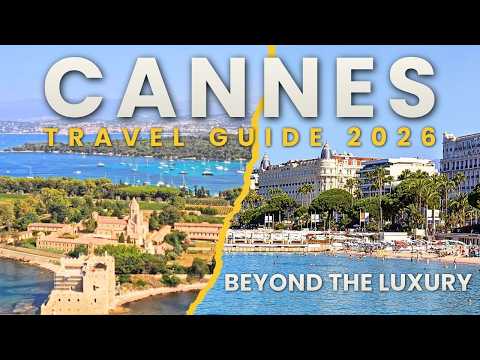
Cannes Travel Guide 2026: Best Things to do Beyond the …
The World From Above

Top 10 Things To Do In Cannes + Sailing the French Riviera
Kristina’s Travels
You are currently viewing a placeholder content from Vimeo. To access the actual content, click the button below. Please note that doing so will share data with third-party providers.
More InformationYou are currently viewing a placeholder content from YouTube. To access the actual content, click the button below. Please note that doing so will share data with third-party providers.
More InformationYou need to load content from reCAPTCHA to submit the form. Please note that doing so will share data with third-party providers.
More InformationYou are currently viewing a placeholder content from GetYourGuide. To access the actual content, click the button below. Please note that doing so will share data with third-party providers.
More Information