
La Palma: The Complete Travel Guide (2026)
Last reviewed: October 2026 · key facts checked against Wikidata
La Palma Weather by Month: When to Go
| Month | Day | Night | Sea | Rain days | Rain mm | Wind km/h | Good for |
|---|---|---|---|---|---|---|---|
| Jan | 21° | 15° | 21° | 8 | 45 | 16 | Hike |
| Feb | 21° | 15° | 21° | 7 | 41 | 18 | Hike |
| Mar | 22° | 15° | 20° | 9 | 52 | 18 | Hike |
| Apr | 23° | 16° | 21° | 9 | 67 | 16 | – |
| May | 24° | 17° | 21° | 6 | 30 | 18 | Hike |
| Jun | 26° | 19° | 23° | 5 | 34 | 18 | Swim |
| Jul | 29° | 21° | 24° | 0 | 1 | 20 | Swim |
| Aug | 30° | 22° | 24° | 1 | 4 | 19 | Swim |
| Sep | 28° | 21° | 25° | 5 | 31 | 18 | Swim |
| Oct | 27° | 20° | 24° | 8 | 44 | 15 | Swim |
| Nov | 24° | 18° | 23° | 11 | 70 | 16 | Swim |
| Dec | 22° | 16° | 22° | 10 | 50 | 16 | Hike |
Sources: ERA5 reanalysis via Open-Meteo, 2016–2025 (10-year average) for air temperature, rain and wind (average daily maximum); Open-Meteo Marine API, 2023–2025 for sea surface temperature. A rain day has at least 1 mm. Area averages; individual years vary.
La Palma Travel Guide: Everything You Need to Know (2026)
La Palma, the most northwesterly of the Canary Islands, sits at a dramatic elevation peaking at 2,426 metres above sea level and is home to just 85,104 residents across its 708 square kilometres. Known as ‘La Isla Bonita’, this compact Spanish island punches far above its weight with UNESCO Biosphere Reserve status, a world-class stargazing observatory, and a 2021 volcanic eruption that reshaped its southern landscape entirely. Flying in from mainland Spain takes under 3 hours, yet La Palma feels a world away from mass tourism.
Top 3 Highlights at a Glance
- Roque de los Muchachos Observatory — The highest point on La Palma at 2,426m hosts one of Earth’s most powerful telescopes with near-perfect dark skies.
- Caldera de Taburiente National Park — A collapsed volcanic crater 9km wide with 1,500m vertical walls, crossed by trails through ancient laurel forest.
- Tajogaite Volcano (2021 Eruption Zone) — Walk across solidified lava fields that buried entire neighbourhoods just 3 years ago — raw geological drama.
Scroll down for our complete travel guide with tips on getting there, where to stay, costs and more.
Arrival & Airport
How do I get to La Palma?
Fly directly into La Palma Airport (SPC) — that is your only practical option. In my experience, the quickest routes come from Madrid (MAD) with Iberia or Binter Canarias, taking roughly 2 hours 45 minutes. From other Canary Islands like Tenerife Norte (TFN), inter-island Binter flights take just 45 minutes and run multiple times daily. A ferry from Tenerife exists but takes 8–10 hours overnight, which I only recommend if you want to avoid flying. My tip: book Binter inter-island hops separately on bintercanarias.com — they are often €40–70 cheaper than bundled packages through mainland carriers.
Which airport serves La Palma and how close is it?
La Palma Airport (SPC), also called Aeropuerto de La Palma, is the island’s sole airport, located near Mazo on the east coast, approximately 8km south of Santa Cruz de La Palma, the capital. In my experience, it is a refreshingly small terminal — you collect bags within 15 minutes of landing. The honest caveat: it has no rail link and only a limited bus service (Line 10, roughly €1.45), so most travellers end up in a taxi costing around €12–16 to Santa Cruz. Car hire desks are right in arrivals, which matters because you will likely need wheels to explore properly.
How long does the journey into La Palma’s main town take?
From La Palma Airport (SPC) to Santa Cruz de La Palma centre takes 15–20 minutes by taxi or rental car along the LP-2 coastal road. In my experience, traffic is rarely a problem except during the February Carnival, when the capital clogs completely. The Line 10 bus covers the same route but stops 6 times en route and takes closer to 35 minutes — fine if you have no luggage. What surprised me: Uber does not operate on La Palma, so pre-booking a taxi through Radio Taxi La Palma (+34 922 411 111) for early-morning flights is genuinely necessary, not optional.
Do I need a car on La Palma?
Yes, a car is essential for exploring La Palma beyond Santa Cruz. In my experience, public buses cover the main coastal towns but completely miss Caldera de Taburiente, Roque de los Muchachos, and the 2021 eruption zone near Los Llanos de Aridane. Rental cars at SPC airport start from €35 per day with local companies like CICAR, which is significantly cheaper than international chains. The honest warning: mountain roads above El Paso involve tight switchbacks with steep drops — not ideal if you hate heights. A small automatic (Seat Ibiza class) handles 95% of island roads perfectly. Avoid cheap deals that exclude gravel-road insurance.
City Transport
Which are the best areas to stay in La Palma?
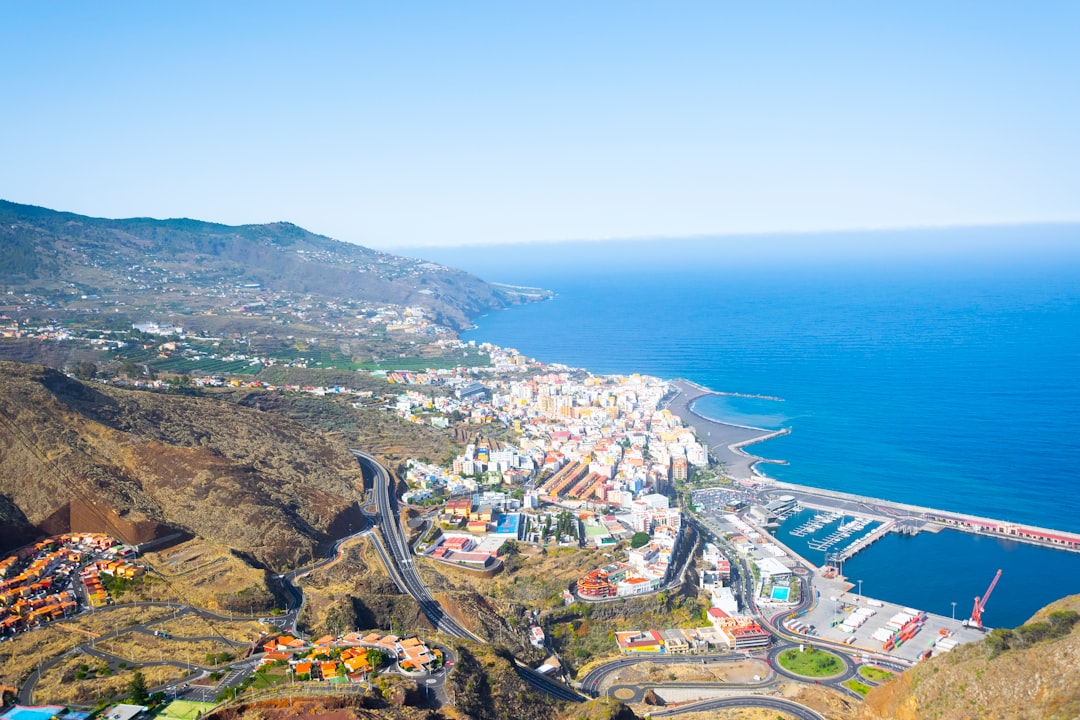
My top recommendation for a base is Santa Cruz de La Palma, the island capital, for its walkable old town, ferry connections, and restaurant scene along Calle O’Daly. For beach access, stay in Puerto Naos on the west coast — black sand beach, calmer weather, and closer to the eruption zone sights. Los Llanos de Aridane suits anyone wanting an authentic local town with supermarkets, cafes, and no tourist markup. What surprised me: the north of the island around Barlovento is dramatically green and almost entirely tourist-free, ideal for hikers who want solitude. Avoid booking solely in Fuencaliente unless you are obsessed with wine and volcanoes — it is too isolated for a main base.
What does accommodation cost per night in La Palma?
A solid mid-range hotel in Santa Cruz de La Palma costs €75–120 per night for a double room. Rural casas (agro-tourism properties) scattered through the highlands around El Paso or Tijarafe run €60–95 and often include breakfast — exceptional value. Budget hostels barely exist on La Palma; the cheapest private rooms start around €45. The honest caveat: luxury options are thin — there is no 5-star resort on the island. The best upscale choice is Hotel San Telmo in Santa Cruz, at roughly €140–160 per night. Self-catering apartments via Airbnb in Puerto Naos average €70–90 per night and make sense for stays over 5 days.
How far in advance should I book accommodation in La Palma during high season?
Book 3–4 months ahead for July and August, and at least 6 weeks ahead for the February Carnival period. In my experience, La Palma’s accommodation stock is genuinely small for an island — the entire island has maybe 4,000 tourist beds, which fills faster than people expect. The honest warning: the week of La Bajada de la Virgen de Las Nieves (held every 5 years, next in 2025 and then 2030) books out 12 months in advance. For October — one of the best months — booking 4–6 weeks out is usually sufficient. Last-minute deals are rare because cancellation rates on this island are low.
Are there special or unique accommodation types on La Palma?
La Palma’s standout accommodation niche is casas rurales — traditional Canarian farmhouses converted to tourist rentals, regulated by the island government. Properties like Finca La Florida near Breña Alta sit inside banana plantations with mountain views at around €80–100 per night. For something genuinely unusual, two observatories on the slopes of Roque de los Muchachos occasionally offer stargazing overnight packages — book through the Instituto de Astrofísica de Canarias website months ahead. What surprised me: several eco-lodges near Los Tiles biosphere reserve rent out timber cabins with no Wi-Fi by design. These suit digital-detox travellers perfectly.
Accommodation & Neighbourhoods
What are the must-see sights on La Palma?
My non-negotiable list: Caldera de Taburiente National Park for the 9km-wide volcanic crater and laurel forest trails; Roque de los Muchachos at 2,426m for sunrise and the telescope complex; the 2021 Tajogaite lava fields near La Laguna for raw volcanic drama you cannot see anywhere else in Europe; and the Calle O’Daly in Santa Cruz for the finest colonial architecture in the Canaries. The natural pools at La Fajana in the north are a hidden gem requiring a 10-minute walk from the road. In my experience, tourists who skip the interior and stick to the coast miss 70% of what makes La Palma extraordinary.
What can I experience for free on La Palma?
Quite a lot. Every trail in Caldera de Taburiente National Park is free to walk — only the camping permit costs anything (€6 per night). The entire volcanic lava flow zone around Tajogaite is open access with no entry fee. Calle O’Daly in Santa Cruz and the historic quarter around Plaza de España require nothing but walking shoes. The black sand beaches at Puerto Naos and Charco Verde are free. In my experience, the free Visitor Centre at Parque Nacional on the LP-4 road above El Paso gives a better geological briefing than many paid museums. The Saturday morning market in Los Llanos de Aridane is free and genuinely local.
Which day trips from La Palma are possible or worthwhile?
La Palma’s inter-island ferry connects to Tenerife (8 hours, operated by Fred. Olsen and Naviera Armas) and La Gomera (4 hours), but these are too long for a day trip. Realistically, day trips work best within the island itself. My recommended day circuit: drive from Santa Cruz north through Barlovento and Los Tilos laurel forest, then cut across to Puerto de Tazacorte for lunch and the black beach, finishing at the Fuencaliente lighthouse and salt pans. That covers the island’s ecological diversity in one 180km loop. A dedicated volcanic day trip to Tajogaite from any base takes only a half-day — spend the afternoon at Charco Verde pool.
What local specialities should I try on La Palma?
Start with queso palmero — a smoked goat cheese produced exclusively on the island and protected by EU designation of origin. In my experience, buying a whole wheel at the market in Los Llanos de Aridane for around €8–12 beats any airport version. Try mojo colorado (red pepper and cumin sauce) over papas arrugadas (wrinkled salted potatoes) at any local bar. Ron miel (honey rum) is produced on the island and a bottle costs €10–15 at local shops. The banana variety grown here — plátano de Canarias — is smaller and sweeter than supermarket bananas. For a full meal, ropa vieja canaria (shredded chickpea stew) in any family-run restaurant in Breña Baja is unmissable.
Highlights & Must-Sees
What makes La Palma unique compared to other Canary Islands?
Three things no other Canary Island offers simultaneously: the darkest certified night skies in Europe (La Palma holds a UNESCO Starlight Reserve designation since 2012), a still-fresh 2021 volcanic eruption zone you can walk through, and laurel forest ecosystems that predate the ice age. In my experience, La Palma has actively resisted mass tourism — hotel bed capacity is deliberately capped by local law. This keeps it authentic where Tenerife and Gran Canaria feel like airport towns. The altitude change from sea level to 2,426 metres within 30 kilometres creates 4 distinct climate zones on one small island — something I have never experienced so dramatically anywhere else.
How many days should I spend on La Palma?
7 days minimum to do La Palma justice — 5 days feels rushed. I recommend: 2 days in the north (Los Tilos, Barlovento, Garafía dark sky zone), 2 days in the Caldera and central mountains, 1 day on the volcanic south (Fuencaliente, salt pans, Tajogaite lava), and 1 day in Santa Cruz plus Puerto de Tazacorte. The honest caveat: 10 days suits hikers — the GR 130 long-distance trail runs the island’s full length and takes 8 hiking days alone. First-time visitors who book only 3 nights consistently tell me they regret not staying longer. La Palma rewards slow travel.
When is the best time to visit La Palma?
July, August, and October are the climate-verified best months. July and August bring reliable sunshine with temperatures around 24–27°C at the coast, though these are also the busiest months. My personal favourite is October: the island is noticeably quieter after summer, temperatures remain warm at 22–25°C, the hiking conditions are excellent, and almond and grape harvests are underway. The honest caveat: trade winds can make the northeast coast choppy in July. February is worth considering solely for the Santa Cruz Carnival, rated among Spain’s top three carnivals — but expect rain in the mountains during winter months. Avoid December–January if you plan hiking above 1,500m.
Are there local festivals in La Palma worth attending?
Carnaval de Santa Cruz de La Palma in February is the centrepiece — a week-long street festival that transforms the capital completely, with the famous Día de los Indianos (Indian Emigrants’ Day) on Shrove Monday when locals dress in white and throw talcum powder. It is genuinely one of Spain’s most atmospheric carnivals. In August, the Fiesta de las Estrellas in Garafía celebrates the observatory heritage with free public stargazing nights. La Bajada de la Virgen de las Nieves occurs every 5 years (next in 2030) and is UNESCO Intangible Heritage — the entire island shuts down for it. My tip: book accommodation for Carnival 6 months ahead — every room on the island fills.
Food & Drink
How does the weather affect activities on La Palma throughout the year?
La Palma’s elevation creates a split personality: the coast stays mild year-round at 18–27°C, but above 1,000 metres clouds frequently settle, making Caldera de Taburiente hiking socked in during winter. In my experience, the northeast (windward) side around Barlovento receives significantly more rainfall and is dramatically green — the southwest around Puerto Naos stays drier and sunnier year-round. Stargazing at Roque de los Muchachos is best June–October when the cloud inversion layer sits below 1,500m, leaving the summit clear. The honest warning: mountain roads above El Paso can become dangerous during winter storms — the LP-4 road to the observatory occasionally closes in January and February.
How crowded does La Palma get in peak season?
Compared to Tenerife or Gran Canaria, La Palma never truly gets ‘crowded’ in the mass-tourism sense. At peak August, Santa Cruz de La Palma feels pleasantly busy rather than overwhelming — you will queue maybe 20 minutes at Restaurante La Placeta on a Saturday evening. The honest caveat: Caldera de Taburiente parking at the Visitor Centre fills by 10am on summer weekends, and the trail to Playa de Taburiente gets genuinely congested. Puerto Naos beach in August can feel full by noon. The island’s total annual visitor count is a fraction of Tenerife’s 6 million — but its infrastructure is proportionally smaller, so even moderate numbers stress certain pinch points.
How safe is La Palma for travellers?
La Palma is extremely safe — in my experience, one of the safest island destinations I have visited in Europe. Petty crime is low; I have never heard of bag-snatching incidents in Santa Cruz de La Palma the way they occur in larger Spanish cities. The honest caveat: the main safety risks are environmental. Hiking trails above 1,800 metres in the Caldera can be treacherous in wet conditions — 3 hikers required helicopter rescue in 2023 from the Barrancos de Las Angustias trail. The 2021 lava zone has areas with unstable ground and occasional sulphur emissions — stay on marked paths near La Laguna. Standard EU emergency number 112 works across the island.
Is English widely spoken on La Palma?
Less than on Tenerife or Gran Canaria — and that is part of the charm. In my experience, Santa Cruz de La Palma hotels and tourist restaurants have English-speaking staff, but step into a local bar in Tijarafe or Puntagorda and Spanish is essential. Younger islanders under 35 generally manage conversational English. My tip: download Google Translate with offline Spanish installed before you land — it is genuinely useful at rural farmstays. The honest caveat: rental car companies at the airport vary hugely in English proficiency — CICAR staff speak reliable English, some smaller local operators do not. Learning 10 Spanish phrases earns you a warmer reception almost everywhere on the island.
Practical Tips
What is the daily budget for travelling on La Palma?
A realistic mid-range daily budget on La Palma runs €90–140 per person, including accommodation, meals, car hire share, and entry fees. Budget travellers staying in rural casas and self-catering can manage €55–70 per day. Breakdown: accommodation €40–60 (shared double), car hire split €18–20, lunch at a local restaurant €10–14, dinner €18–25, coffee and snacks €5–8. In my experience, La Palma is modestly cheaper than the Spanish mainland for food and accommodation, but petrol costs roughly €1.65 per litre and distances add up on mountain roads. The honest caveat: the island has almost no budget hostel infrastructure — the €55 floor assumes self-catering or agro-tourism, not hotels.
How does public transport work on La Palma?
Transportes Insular de La Palma (TILP) operates the bus network with around 15 lines covering coastal towns and the capital. The main corridor — Line 10 linking Santa Cruz with Los Llanos de Aridane via the western coast — runs roughly every 90 minutes and costs €3.50 for the full route. In my experience, buses are clean, punctual, and useless for reaching any mountain interior destination. There is no bus to Roque de los Muchachos, no bus to Caldera de Taburiente, and no bus to the Tajogaite lava zone. My honest assessment: public transport works for travellers based in Santa Cruz who want to visit Puerto de Tazacorte or Fuencaliente as a day trip. Everyone else needs a rental car.
Which apps do you recommend for visiting La Palma?
Wikiloc is essential — it hosts over 400 verified hiking routes for La Palma, many with offline GPS tracking (premium costs €9.99/year). Maps.me with La Palma downloaded offline beats Google Maps for rural road detail when signal drops above 1,200m. Star Walk 2 or SkySafari for stargazing nights at Roque de los Muchachos — the dark sky quality makes a star-identification app genuinely rewarding. TILP’s official website (no dedicated app) shows real-time bus timetables. In my experience, Buenas Migas — a Spanish-language local food blog app — consistently finds better restaurant recommendations than TripAdvisor for La Palma. AEMET (Spain’s meteorology agency) app gives the most accurate mountain weather forecasts on the island.
La Palma at a Glance
| Population | 86,194 |
|---|---|
| Currency | EUR (€) |
| Official language | Spanish |
| Time zone | UTC±00:00 |
Source: Wikidata, retrieved October 2026.
Combine La Palma With These Europe Destinations
These destinations pair well with La Palma — close enough to visit in one trip: Lanzarote, Fuerteventura, Gran Canaria.
🎥 La Palma Travel Videos
8 Mistakes to Avoid When Visiting La Palma (For First-Time …
Carol & Max

La Palma | Travel Guide
Dominik Modrakowski

SPAIN’S HIDDEN GEM: Less Than 1% of Tourists Travel Here …
Greta’s Travels
You are currently viewing a placeholder content from Vimeo. To access the actual content, click the button below. Please note that doing so will share data with third-party providers.
More InformationYou are currently viewing a placeholder content from YouTube. To access the actual content, click the button below. Please note that doing so will share data with third-party providers.
More InformationYou need to load content from reCAPTCHA to submit the form. Please note that doing so will share data with third-party providers.
More InformationYou are currently viewing a placeholder content from GetYourGuide. To access the actual content, click the button below. Please note that doing so will share data with third-party providers.
More Information