
Palma de Mallorca: The Complete Travel Guide (2026)
Last reviewed: October 2026 · key facts checked against Wikidata
Palma de Mallorca Travel Guide: Everything You Need to Know (2026)
Palma de Mallorca, the capital of the Balearic Islands, sits at just 13 metres above sea level on the sun-drenched Bay of Mallorca and is home to 434,786 residents. Founded as a Roman colony in 123 BC, it ranks as Spain’s 8th-largest city and receives over 10 million tourists annually through its international airport. The old town alone packs more than 1,000 years of layered architecture — Gothic, Moorish, and Art Nouveau — into a walkable waterfront grid that most visitors chronically underestimate.
Top 3 Highlights at a Glance
- La Seu Cathedral — Gothic cathedral begun in 1229, its rose window is one of the largest in the world at 12.5 metres in diameter.
- Bellver Castle — Unique circular 14th-century hilltop fortress offering a 360-degree panorama over Palma Bay — free on Sundays.
- Sant Pere District & Lonja de Palma — 15th-century Gothic merchant exchange building, one of Spain’s finest secular Gothic structures, still standing in original condition.
Scroll down for our complete travel guide with tips on getting there, where to stay, costs and more.
Arrival & Airport
How do I get to Palma de Mallorca?
Fly directly into Palma de Mallorca Airport (PMI) — it’s by far the easiest entry point. In my experience, Ryanair, Vueling, and easyJet dominate routes from most European cities, with fares as low as €30 one-way if booked 3+ months ahead. PMI sits just 8 km east of the city centre, making transfers fast and cheap. You can also reach Palma by ferry from Barcelona (roughly 7–8 hours overnight) or Valencia (6–7 hours), operated by Baleària and Trasmediterránea — a scenic option but far slower. My tip: avoid peak-season ferries on Friday evenings unless booked weeks in advance; they sell out completely.
Which airport is closest to Palma de Mallorca?
Palma de Mallorca Airport (PMI) is the only option — it’s 8 km from the city centre and one of Spain’s busiest airports, handling over 29 million passengers annually. In my experience, arrivals at PMI are smooth outside July–August when baggage halls become genuinely chaotic. The taxi rank is well-organised at Terminal B arrivals. What surprised me: there’s no airport railway station, so train lovers will be disappointed — your options are taxi, bus, or rental car only. Bus line 1 runs directly to Plaça d’Espanya in central Palma and costs just $2 — the best budget transfer available.
How long does the journey from PMI Airport to Palma de Mallorca city centre take?
Under 20 minutes by taxi, 30–40 minutes by bus. A taxi from PMI to Passeig del Born in central Palma costs roughly €15–20 on the meter. Bus line 1 is the budget option at $2 flat fare, running every 15 minutes during the day directly to Plaça d’Espanya. My tip: the bus stop is a short walk outside arrivals — follow the signs to the public transport area. The honest caveat most guides skip: during August rush hours, the 8 km road can extend journey time to 45+ minutes by taxi, so factor that in if you have a tight dinner reservation.
Do I need a car to explore Palma de Mallorca?
For the city itself, absolutely not — Palma’s historic centre is completely walkable within a 2 km radius. The EMT city bus network covers outer neighbourhoods reliably for $2 per ride. However, if you want to explore Mallorca’s interior villages like Valldemossa or the rugged Cap de Formentor, a rental car becomes essential since buses to rural areas run infrequently. My honest warning: parking in central Palma is genuinely brutal — underground car parks near the Parc de la Mar charge €3–4 per hour. I recommend arriving without a car, renting one for just 2–3 days for island excursions, then returning it.
City Transport
What are the best areas to stay in Palma de Mallorca?
Stay in the Old Town (Casc Antic) or Santa Catalina for the best all-round experience. The Casc Antic puts you within walking distance of La Seu, the Almudaina Palace, and the waterfront — perfect for first-timers. Santa Catalina is my personal favourite: a converted market neighbourhood with the best independent restaurants and zero coach-tour crowds. El Terreno suits nightlife seekers but feels dated. Avoid booking in Playa de Palma (the eastern beach strip near S’Arenal) unless beach proximity is your absolute priority — it’s generic resort territory, 5 km from any authentic Palma experience. Families with young children often prefer Portixol, a quiet marina neighbourhood 2 km east of the centre.
What does accommodation cost per night in Palma de Mallorca?
Expect to pay €80–140 per night for a solid mid-range hotel in the Old Town during shoulder season. Budget hostels in Santa Catalina start at €25–35 per dorm bed. Boutique hotels inside converted palaus (noble mansions) in the Casc Antic — like Can Cera or Sant Francesc Hotel — run €200–400 per night and are genuinely worth it for a splurge. In July and August, every category inflates by 30–50% without any quality improvement. My honest trade-off: a 3-star hotel in El Molinar, just 1.5 km east of centre, cuts your rate by roughly 40% — the tradeoff is a 20-minute walk or short bus ride to the main sights.
How far in advance should I book accommodation in Palma de Mallorca during high season?
Book at least 3 months ahead for July and August — non-negotiable. In my experience, quality hotels in the Casc Antic below €150 per night disappear from booking platforms by April for peak summer. For June and September, 6–8 weeks ahead is workable. What most guides omit: the week of Sant Sebastià festival (January 19–20) and the Semana Santa (Holy Week) processions fill the city completely — book 4 months ahead for those dates. I recommend using Booking.com with free cancellation options and locking in a room early, then monitoring for price drops closer to your travel date.
Are there special accommodation types worth considering in Palma de Mallorca?
Historic palau boutique hotels are uniquely Palman — nothing else compares. Palma’s Old Town contains dozens of 16th–18th century noble mansions converted into intimate hotels, offering stone-vaulted rooms, private courtyards, and rooftop terraces with cathedral views. Hotel Cort at Plaça de Cort and Palacio Ca Sa Galesa are standouts in this category. For self-catering, apartments in Santa Catalina offer excellent value at €80–120 per night and include a kitchen — crucial for cutting food costs. My honest warning: many palau hotels have no lift and steep medieval staircases — if mobility is a concern, verify accessibility with the property directly before booking.
Accommodation & Neighbourhoods
What are the must-see sights in Palma de Mallorca?
La Seu Cathedral, Bellver Castle, and the Almudaina Palace are the three non-negotiables. La Seu’s interior — redesigned partly by Antoni Gaudí between 1904–1914 — includes a gravity-defying baldachin that alone justifies entry (€9 adults). Bellver Castle’s circular hilltop design is unique in Europe and costs just €4 entry (free on Sundays). The Lonja de Palma, a 15th-century Gothic merchant exchange near the waterfront, is free to enter during exhibitions. In my experience, most visitors spend 90% of their time near the waterfront and entirely miss Plaça Major, the Arab Baths (Banys Àrabs), and the stunning Fundació Miró — all within 1.5 km of each other.
What can I experience for free in Palma de Mallorca?
Bellver Castle is free every Sunday, and that’s just the start. The Passeig del Born and the entire waterfront promenade from the castle to Portixol cost nothing and offer superb people-watching. La Lonja is free during temporary exhibitions. The Parc de la Mar — with its artificial lake reflecting La Seu — is free 24 hours and stunning at golden hour. My tip: every first Sunday of the month, the Es Baluard Museum of Modern Art waives its €9 entry fee. What surprised me: the Barrio Gótico alleyways around Carrer de la Portella reward slow, unplanned walking far more than any paid attraction.
Which day trips from Palma de Mallorca are most worthwhile?
Valldemossa and Sóller are the two best day trips within 30 km of Palma. The mountain village of Valldemossa — where Chopin spent his 1838–39 winter — is 17 km north via the MA-1110 and takes 25 minutes by car. Sóller is reachable on the iconic wooden tram railway departing from Palma’s Plaça d’Espanya for €22 return — a genuinely vintage 1912 train through orange groves. For beaches, Cala Millor on the east coast takes 55 minutes by car. My honest caveat: the Valldemossa bus (line 210 from Plaça d’Espanya) runs 4 times daily — check the return timetable before you go or you’ll be stranded.
What local specialities should I try in Palma de Mallorca?
Order pa amb oli first — it’s Mallorca’s defining dish and costs just €4–7. This is thick bread rubbed with tomato and olive oil, topped with local sobrassada (cured paprika sausage) or botifarró (black sausage). Ensaïmada, the spiral-shaped lard pastry dusted in icing sugar, is the island’s most iconic baked good — buy it from Ca’n Joan de S’Aigo, Palma’s oldest café open since 1700, not the airport gift shops. For seafood, arroz brut (a rich rice stew) and tumbet (layered vegetable casserole) are essential. My tip: the Mercat de l’Olivar on Plaça de l’Olivar is the best place to graze authentically for under €15 total.
Highlights & Must-Sees
What makes Palma de Mallorca unique compared to other Spanish cities?
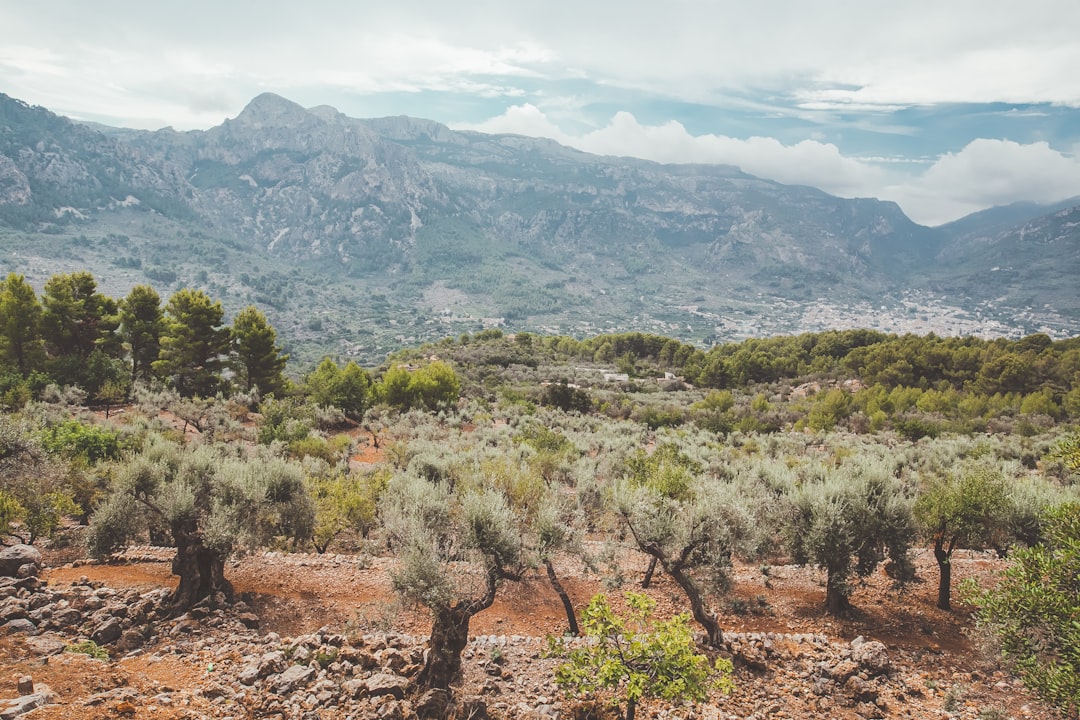
Palma uniquely blends Arabic, Gothic, and Modernista architecture within a 500-metre waterfront radius — no other Spanish city offers this density. The Arab Baths (Banys Àrabs) on Carrer Can Serra are among the best-preserved Moorish remains in Spain. What surprised me most: Palma has a genuinely cosmopolitan, year-round resident culture — unlike purely seasonal resort towns — with a thriving gallery scene concentrated in Sant Pere and La Calatrava neighbourhoods. The city also sits at just 13 metres elevation yet has the Serra de Tramuntana mountain range (UNESCO World Heritage, peaking at 1,445 m) visible on clear days from the waterfront — a dramatic contrast found nowhere else in Spain.
How many days should I spend in Palma de Mallorca?
3 full days covers the city thoroughly; 5 days lets you add island day trips. Day 1: La Seu, Almudaina Palace, and the Casc Antic on foot. Day 2: Bellver Castle in the morning, Santa Catalina market and neighbourhood in the afternoon. Day 3: Es Baluard museum, Lonja waterfront, and evening tapas in La Llotja quarter. Days 4–5: rent a car and do Valldemossa + Deià or the Tramuntana coast road. My honest caveat: travellers who stay only 1–2 nights consistently tell me they booked too short. The city reveals itself slowly — the best pa amb oli bar and the quietest cathedral courtyard both require time to find.
When is the best time to visit Palma de Mallorca?
June, August, and October are the optimal months based on 5-year climate data. June gives you long days, warm sea temperatures (~23°C), and crowds that haven’t yet peaked. August is high-season perfection weatherwise but prices surge 30–50% and beach areas get genuinely packed. October is my personal recommendation: temperatures around 22–24°C, the sea still swimmable at 24°C, hotel rates drop sharply, and the city returns to local rhythm after the summer exodus. My honest warning: July is statistically the hottest month — urban Palma can hit 35°C+ in heat islands — which makes midday sightseeing genuinely uncomfortable without a plan for shaded breaks.
What local festivals in Palma de Mallorca are worth attending?
Sant Sebastià (January 19–20) is Palma’s best festival and almost entirely unknown to international tourists. The city’s patron saint celebration fills Plaça de la Reina and Parc de la Mar with free open-air concerts, bonfires, and a collective outdoor party that runs all night. Locals grill sardines over open fires — a genuinely unique atmosphere. Semana Santa (Holy Week, March–April) brings solemn, spectacular processions through the Casc Antic that rival Seville’s in visual drama at a fraction of the crowd density. The Nit de l’Art in September opens 50+ galleries simultaneously for one free evening — the best introduction to Palma’s serious contemporary art scene.
Food & Drink
How does the weather in Palma de Mallorca affect what activities I can do?
From November to February, beaches are off the table but the city is at its most authentic. Winter temperatures hover around 12–15°C — pleasant for walking, cycling, and eating outdoors at lunch but cool for evenings. The Serra de Tramuntana occasionally gets snow above 1,000 metres in January, making it spectacular for drives. Spring (March–May) unlocks cycling routes as temperatures reach 18–22°C. Summer heat above 30°C means I recommend front-loading outdoor sightseeing before 11 am and retreating to museums or shaded café terraces from 1–5 pm. My tip: the Cathedral’s interior is noticeably cooler than outside in summer — a legitimate reason to linger beyond the standard 45-minute visit.
How crowded does Palma de Mallorca get in peak season?
July and August are genuinely overwhelming in tourist zones — PMI Airport alone handles 29 million passengers annually. The Passeig del Born and waterfront near La Seu become shoulder-to-shoulder between 10 am and 6 pm in peak summer. Playa de Palma (S’Arenal) is packed wall-to-wall with sun loungers. My honest warning: restaurant queues at popular spots in Santa Catalina can reach 45–60 minutes without a reservation in August. The practical fix: book dinner tables 24–48 hours ahead, visit La Seu before 9:30 am when coach tours arrive, and base yourself in Portixol or El Molinar — neighbourhoods where tourist density drops to near-zero even in August.
How safe is Palma de Mallorca for tourists?
Palma is safe by European standards, but petty theft is a real and consistent problem. Pickpocketing is most active on the Passeig del Born, in the Mercat de l’Olivar, and on Bus line 1 from the airport during peak season. The Playa de Palma strip at night has a boisterous bar-crawl atmosphere that occasionally escalates — I’d avoid it after midnight unless that’s specifically what you’re looking for. The Casc Antic is completely safe at all hours. My honest tip: use a front-zip crossbody bag, never leave anything in a parked car (especially rental cars, which thieves identify easily), and keep your phone in a zipped pocket when walking crowded markets.
Is English widely spoken in Palma de Mallorca?
Yes — English is spoken at virtually every hotel, restaurant, and tourist attraction. Palma receives millions of British and German tourists annually, so frontline hospitality staff are typically fluent in English and German alongside Spanish and Catalan (Mallorquí dialect). In my experience, even interactions in local supermarkets and the Mercat de l’Olivar are manageable in English. My honest nuance: locals genuinely appreciate any attempt at Catalan or Spanish — a simple gràcies (thank you in Catalan) or per favor opens doors noticeably. Menus in the Casc Antic tourist zone are almost universally printed in 4+ languages, but venturing into residential neighbourhoods like Sant Gofre means you’ll occasionally need a translation app.
Practical Tips
What is the daily budget for travelling in Palma de Mallorca?
Budget €60–80 per person per day excluding accommodation is realistic. Breakdown: a cheap meal costs $15, a mid-range dinner for two runs $27.29 (Numbeo verified), local transport per ride is $2, and entry to La Seu is €9. A practical daily budget: breakfast at a neighbourhood café €4, lunch at Mercat de l’Olivar €10–12, one museum or sight €5–9, dinner with a glass of local wine €20–25 per person. My honest caveat: cocktail bars on Passeig del Born charge €12–16 per drink — two rounds doubles your evening budget instantly. Stick to local wine (€3–5 per glass in Santa Catalina) and your costs stay very manageable.
How does public transport work in Palma de Mallorca?
The EMT city bus network covers Palma comprehensively at $2 per ride. The hub is Plaça d’Espanya, where city buses, the Sóller vintage train, and intercity buses to the rest of Mallorca all converge. A T-10 rechargeable card (10 trips for ~€10) saves money for stays over 3 days. The Intermodal de Palma station connects to Mallorca’s limited suburban rail line serving Inca and Sa Pobla in the north. My honest warning: Palma has no metro and the tram network is non-existent in the city itself. For late-night returns after 11 pm, buses become infrequent — budget €10–15 for a taxi via the Cabify app rather than waiting.
Which apps do you recommend for visiting Palma de Mallorca?
Download Cabify, Citymapper, and the EMT Palma app before you land. Cabify is the reliable Uber equivalent in Spain — more regulated and safer than street taxis at peak hours, with upfront pricing. EMT Palma shows real-time bus arrivals and routes across the city. Citymapper covers Palma’s transit network better than Google Maps for bus routing specifically. For dining, TheFork (ElTenedor) lets you book Santa Catalina restaurants with occasional 30% discounts during off-peak hours — genuinely useful. My tip: download Mallorca Offline Maps (Maps.me works well) because cell signal drops in the Serra de Tramuntana valleys during day trips, and Google Maps reroutes you onto tracks that rental car contracts explicitly prohibit.
More Destinations in Europe
Explore our complete travel guides for more Europe destinations: Aquitaine Travel Guide (2026), Mont Saint-Michel Travel Guide (2026), Korsika Travel Guide (2026), Marseille Travel Guide (2026), Cádiz Travel Guide (2026).
Palma de Mallorca at a Glance
| Population | 434,786 |
|---|---|
| Currency | EUR (€) |
| Official language | Spanish, Catalan |
| Time zone | UTC+01:00 |
Source: Wikidata, retrieved October 2026.
Useful Resources for Planning Your Trip to Palma de Mallorca
- Wikipedia: Palma de Mallorca — history, geography and background
- Lonely Planet: Palma de Mallorca — itineraries and travel inspiration
- TripAdvisor: Palma de Mallorca — hotels, restaurants and traveller reviews
🎥 Palma de Mallorca Travel Videos

The Ultimate Palma de Mallorca Travel Guide
Patrick Guide Barcelona

20 Things I Wish I Knew Before Visiting Mallorca
Destination Well Known
KNOW THIS Before Visiting Palma de Mallorca, Spain
Mallorca Under the Sun
You are currently viewing a placeholder content from Vimeo. To access the actual content, click the button below. Please note that doing so will share data with third-party providers.
More InformationYou are currently viewing a placeholder content from YouTube. To access the actual content, click the button below. Please note that doing so will share data with third-party providers.
More InformationYou need to load content from reCAPTCHA to submit the form. Please note that doing so will share data with third-party providers.
More InformationYou are currently viewing a placeholder content from GetYourGuide. To access the actual content, click the button below. Please note that doing so will share data with third-party providers.
More Information