
Venice: The Complete Travel Guide (2026)
Last reviewed: September 2026 · key facts checked against Wikidata
Venice Travel Guide: Everything You Need to Know (2026)
Venice is built on 126 islands connected by 472 bridges at just 2 metres above sea level, making it one of the most architecturally improbable cities on Earth. With a resident population of 250,369 across the greater metropolitan area, the historic centre itself is rapidly losing locals to overtourism — fewer than 50,000 people now live on the islands. Founded in the 5th century AD as a refuge from Barbarian invasions, Venice spent centuries as the wealthiest trading republic in the Mediterranean.
Three Things Not to Miss in Venice
- St. Mark’s Basilica — A 1,000-year-old Byzantine masterpiece housing the Pala d’Oro altarpiece, encrusted with 1,927 gemstones.
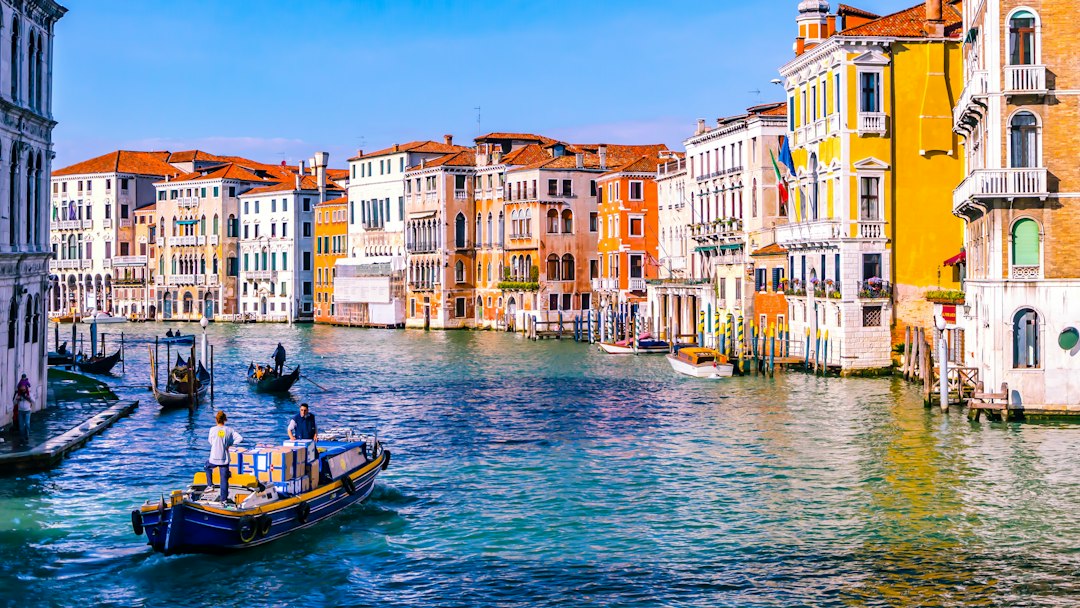
- Grand Canal at Dawn — The 3.8 km S-shaped waterway flanked by 200 palaces is eerily crowd-free before 7am.
- Burano Island — A 40-minute vaporetto ride delivers you to a fishing village of candy-coloured houses found nowhere else in Italy.
Scroll down for our complete travel guide with tips on getting there, where to stay, costs and more.
Arriving in Venice: Airport & Transfers
How do I get to Venice — by train, plane, or car?
Train is the best way to reach Venice for most European travellers. Venezia Santa Lucia station drops you directly onto the Grand Canal, with high-speed Frecciarossa trains arriving from Rome in 3 hours 45 minutes and from Milan in 2 hours 20 minutes. Trenitalia tickets booked 60 days ahead start at €19. If flying internationally, Marco Polo Airport (VCE) is only 13 km from the city. In my experience, the train beats flying for anyone already in Italy — the station arrival alone is one of the great travel moments. Warning: driving to Venice requires leaving your car at Piazzale Roma or Tronchetto parking, which costs €25–€35 per day and adds logistical stress.
Which airport is closest to Venice?
Marco Polo Airport (VCE) is the primary gateway, located 13 km north of the historic centre near Mestre. It handles direct flights from North America, the Middle East, and across Europe. A secondary option is Treviso Airport (TSF), used by Ryanair, sitting 30 km northwest — budget-priced but awkward to reach without a bus transfer. From Marco Polo, the Alilaguna water bus takes 75 minutes to San Marco for €15, or you can take the People Mover and bus combination for €8 in under 40 minutes to Piazzale Roma. My tip: book the Alilaguna in advance during summer — boats fill up and the arrival by water is an experience in itself.
How long does the journey from Marco Polo Airport to Venice centre take?
The journey takes 40–80 minutes depending on which route you choose. The fastest option is the Alilaguna Arancio (Orange Line) direct water bus at 75 minutes, landing at Fondamenta delle Zattere or continuing to San Marco — genuinely scenic but slow. For speed, take the ATVO airport shuttle bus to Piazzale Roma in 20 minutes for €10, then hop on vaporetto Line 1 or 2. What surprised me: taxis from the airport cost a flat €40 to Piazzale Roma but you still face the canal network after that — no vehicle reaches the historic centre. A private water taxi from Marco Polo to your hotel dock runs €120–€140 but is worth it with heavy luggage.
Do I need a car to explore Venice?
Absolutely not — a car is useless inside Venice and actively costly. The entire historic island city is pedestrian and boat-only; no road vehicles exist beyond Piazzale Roma. Leave any car at Tronchetto Island parking for €28 per day, or better, don’t bring one at all. In my experience, the vaporetto network (water buses) and walking cover 95% of what visitors need. The caveat most guides skip: if you plan day trips to Verona (120 km) or the Dolomites, renting a car from Mestre on the mainland for a single day — roughly €40 — is smarter than keeping one parked expensively all trip. My tip: use trains for Verona and Padua, rent a car only for the mountains.
Getting Around Venice
What are the best areas to stay in Venice?
Dorsoduro is my top recommendation — it has the Gallerie dell’Accademia, student bars along Fondamenta Zattere, and far fewer tourist hordes than San Marco. Cannaregio near the Ghetto offers authentic neighbourhood life at lower prices and puts you a 15-minute walk from the station. San Polo is central and charming with the Rialto Market nearby. Avoid staying directly on Calle Larga XXII Marzo or the immediate San Marco grid — you pay a 40% premium for maximum noise and crowds. What surprised me: Giudecca Island, reachable by a 5-minute vaporetto, offers canal-view apartments at mainland prices with a peaceful residential atmosphere most visitors completely overlook.
What does accommodation cost per night in Venice?
Expect to pay €110–€140 per night for a decent economy hotel, which aligns with verified Numbeo data showing economy rooms at approximately $120 per night. A mid-range 3-star in Cannaregio or Dorsoduro runs €150–€200. Boutique canal-view options in San Polo start at €220. Budget travellers should look at hostels near Santa Lucia station from €35 per dorm bed. The honest caveat: Venice hotel rooms are physically small — a “double” in a historic palazzo often means a room barely 18 square metres because buildings from the 15th and 16th centuries weren’t built for modern hotel standards. My tip: book apartments on Cannaregio’s quieter fondamente for more space at similar prices to cramped hotel rooms.
How far in advance should I book accommodation in Venice during high season?
Book 3–4 months ahead for June, July, August, and Carnival (February). Venice is not a large city — quality rooms in desirable neighbourhoods like Dorsoduro and San Polo disappear fast, especially for the Vogalonga regatta in May and Redentore festival in July. In my experience, waiting until 6 weeks out in summer means choosing between overpriced San Marco hotels or inconvenient mainland Mestre options. My tip: for the Venice Film Festival in late August and early September, add an extra month — Lido Island accommodation books out completely. Shoulder season (October, November) allows booking just 3–4 weeks ahead with good availability, often at rates 30% lower than peak.
What special accommodation types are unique to Venice?
Palazzo apartments inside 15th-century Gothic buildings along minor canals are the standout Venice-specific experience — some have private canal-facing terraces where gondolas drift past at eye level. Convento stays are genuinely surprising: several converted monasteries like Istituto San Giuseppe in Castello offer clean rooms from €70 per night with garden courtyards. Locande are small family-run guesthouses with typically 4–8 rooms tucked into residential neighbourhoods — Locanda Ca’ Le Vele in Cannaregio is my personal favourite for character and value. What most guides skip: the Giudecca has 2 luxury hotels — Cipriani and Molino Stucky Hilton — with rooftop pool views across the lagoon, and both run regular free shuttles to San Marco in under 5 minutes.
Where to Stay in Venice
What are the absolute must-sees in Venice?
St. Mark’s Basilica is non-negotiable — climb to the Loggia dei Cavalli terrace for a €7 ticket and look down over the piazza from above. The Doge’s Palace (Palazzo Ducale) reveals the machinery of a 1,000-year republic for €30 and is worth every cent. Walk the Rialto Bridge at 6am before the stalls open — you’ll have one of Europe’s most photographed bridges to yourself. Take vaporetto Line 1 the full length of the Grand Canal for €9.50 — it’s an unbeatable 45-minute architecture tour. In my experience, the Frari Church in San Polo with Titian’s Assumption altarpiece is equally moving as the Basilica and costs just €5 — but 90% of visitors walk past it.
What can I experience for free in Venice?
The Grand Canal itself costs nothing to walk along its banks. Campo Santa Margherita in Dorsoduro is a living neighbourhood square with no entry fee and excellent people-watching. San Giorgio Maggiore church (Palladio’s 1566 masterpiece) is free to enter. The walk from Santa Lucia station to Rialto through Cannaregio exposes you to 6 distinct neighbourhoods without spending a cent. My tip: the Scuola Grande di San Marco facade is arguably the most beautiful Renaissance marble relief in Italy and is visible from Campo Santi Giovanni e Paolo for free. The honest caveat: Venice charges a day-tripper fee of €5 (introduced in 2024 for peak days) — check the official calendar before visiting to avoid surprise charges.
Which day trips from Venice are worth the time?
Verona is 120 km away and reachable in 70 minutes by Frecciarossa for €19 — genuinely one of Italy’s most beautiful Roman cities and criminally undervisited because people think of it only as a Romeo-and-Juliet backdrop. Padua is just 30 minutes by regional train for €5 and contains Giotto’s Scrovegni Chapel, which many art historians rank above the Sistine Chapel in emotional power — book the timed entry €15 weeks ahead. Burano and Murano are technically day trips reachable by vaporetto Line 12 in 40–55 minutes. What surprised me: the Palladian Villas of the Brenta Riviera — 30 minutes by regional train to Stra — offer 18th-century frescoed mansions for €10 entry with almost no queues.
What local specialities should I eat in Venice?
Cicchetti are Venice’s answer to tapas — small bread rounds topped with salt cod cream (baccalà mantecato), cured meats, or marinated sardines, priced at €1.50–€3 each at bars called bacari. Sarde in saor (sweet-sour sardines with pine nuts and raisins) is a 14th-century dish you’ll find nowhere else this authentically. Risotto al nero di seppia — cuttlefish ink risotto — is the lagoon’s signature primo. My tip: eat cicchetti standing at the counter in Cannaregio at Osteria all’Arco or Cantina do Spade near Rialto for prices 40% lower than seated menus. The painful caveat: anything within 200 metres of San Marco adds a €3–€6 surcharge per dish just for location — sit down anywhere near the piazza and your bill doubles.
Venice Highlights & Must-Sees
What makes Venice genuinely unique compared to other Italian cities?
Venice has no roads, no cars, and no motorcycles — a living medieval city where all transport is on foot or by boat, unchanged in basic structure since the 12th century. The lagoon ecosystem is a UNESCO World Heritage Site, and the city itself sits on 177,000 timber piles driven into the seabed — engineering that has kept it standing for 1,500 years. What surprised me most: the acoustic silence of Venice is profound — without engines or wheels, you hear only footsteps, water, and bells. No other city of this size operates this way. The experience of navigating by calle (alley) and campo (square) using a paper map — getting genuinely lost in a 15-minute radius — is irreproducible anywhere else on Earth.
How many days do I need to see Venice properly?
3 full days covers the essential historic centre without feeling rushed. Day 1: San Marco and Dorsoduro. Day 2: Rialto, San Polo, Cannaregio. Day 3: lagoon islands — Murano (glass) and Burano (lace and colour). Add a 4th day if you want a mainland day trip to Padua or Verona. In my experience, 1–2 days leaves you having seen only the obvious hits and missed the neighbourhood life that makes Venice genuinely extraordinary. The caveat: 5+ days in central Venice without day trips can feel repetitive — the city is compact at roughly 4 km end to end. My tip: plan your early mornings (before 8am) at major sights and use afternoons for wandering without a map — that’s where Venice reveals itself.
When is the best time to visit Venice?
June and September are the verified optimal months based on 5-year climate analysis — warm and sunny without July-August’s suffocating crowds. September is my personal preference: the Venice Film Festival runs through early September on the Lido, the light on the lagoon turns golden, and hotel rates drop roughly 25% from August peaks. October is underrated — fewer crowds, dramatic skies, and acqua alta (high water) flooding season begins, which is atmospheric rather than dangerous for healthy visitors with ankle-high rubber boots (€15 at any hardware shop). Avoid July and August unless you enjoy 35°C heat, shoulder-to-shoulder walking on the Ponte dell’Accademia, and fully booked restaurants. Carnival in February is spectacular but accommodation costs spike 60–80% for that week.
Are there local festivals in Venice worth planning a trip around?
The Venice Biennale runs in odd years (next: 2025, with preview effects still visible in 2026 at permanent venues) and transforms Arsenale and Giardini into the world’s most important contemporary art exhibition — €30 entry. The Festa del Redentore in July involves a bridge of boats built across the Giudecca Canal and one of Italy’s best fireworks displays over the lagoon — book a waterfront table at a Giudecca restaurant by April. La Regata Storica in September is a historic gondola and boat race down the Grand Canal with costumes dating to the 16th century and no entry fee for spectators. My tip: position yourself on Ca’ d’Oro steps on the Grand Canal from 3pm for the best free view of the regatta.
Eating & Drinking in Venice
How does Venice’s weather affect what activities are possible?
Summer (June–August) enables every outdoor activity — open-air concerts in Campo San Polo, lagoon kayaking, rooftop aperitivo — but heat above 33°C makes the narrow calli feel like ovens, and acqua alta risk is zero. Autumn (October–November) brings acqua alta flooding: the Piazza San Marco floods at roughly 90cm tide, requiring raised walkways — surreal to experience but limits some ground-floor access. Winter is atmospheric, often misty, and dramatically uncrowded — but 30% of smaller restaurants close January through February. What surprised me: spring (April–May) has unpredictable rain and the Vogalonga brings 7,000 rowing boats to the lagoon one Sunday in May — wonderful to witness, chaotic for vaporetto travel that day. Check MOSE barrier activation forecasts on the City of Venice app if visiting October–March.
How crowded does Venice get in peak season, and how do I avoid the worst of it?
At peak, July and August weekends see an estimated 100,000 day-trippers arriving — the city’s resident population is only around 50,000 in the historic centre. The Ponte di Rialto and Calle Larga XXII Marzo become physically uncomfortable to walk. My avoidance strategy: be at St. Mark’s Basilica by 8am when it opens — the queue at 10am stretches 90 minutes. Stay in the Cannaregio northwest or Castello east — crowds thin dramatically within a 10-minute walk from San Marco. Avoid vaporetto Line 1 between 10am–6pm in August; walk instead. The honest caveat: Venice introduced a €5 day-tripper entry fee for peak days in 2024, extended in 2026 — check the official Città di Venezia website for the exact calendar and register in advance to avoid the fine.
How safe is Venice for tourists?
Venice is extremely safe by any European city standard — violent crime is virtually nonexistent in the historic centre. The population of 250,369 includes a heavily tourist-oriented service economy where local livelihoods depend on visitor safety and satisfaction. The real risks are pickpocketing on crowded vaporettos (Line 1 and Line 2 near Rialto and San Marco) and overcharging at unmarked restaurants — not physical danger. In my experience, the biggest safety issue is navigation: getting disoriented after dark in Castello or Santa Croce is common, alleys are poorly lit, and bridges have steep steps without rails that cause real falls. My tip: download Venice offline maps on Maps.me before arrival and always note the nearest vaporetto stop to your accommodation.
Is English widely spoken in Venice?
Yes — English is spoken extensively across the tourist economy. Every hotel, restaurant, museum, and vaporetto information point in the historic centre has English-speaking staff. Marco Polo Airport is fully bilingual. In my experience, you can navigate an entire Venice trip without speaking a word of Italian. The caveat: venture into residential Cannaregio or Castello away from the tourist spine, enter a hardware shop for acqua alta boots, or try a locals’ bacaro at the outer edges of the city, and Italian becomes necessary — staff are friendly but genuinely don’t always speak English. My tip: learn 5 Italian phrases — especially ”un ombra, per favore” (a small glass of wine, please) — and Venetians warm to you immediately. It signals respect in a city exhausted by anonymous tourist traffic.
Practical Tips for Venice
What is the daily budget for travelling in Venice?
A realistic daily budget in Venice: Budget traveller: €80–€100 (hostel dorm at €35, cicchetti meals at €15–€20, vaporetto day pass at €25). Mid-range: €180–€220 (economy hotel at €120, two restaurant meals, vaporetto). Comfortable: €300+ (boutique hotel, one nice dinner in Dorsoduro, museum entries). Verified Numbeo data puts a cheap meal at approximately $15 (€14) and a mid-range dinner for two at $27 (€25) — but those figures skew low for Venice specifically. The hidden cost most budgets miss: vaporetto passes are essential and a 24-hour pass costs €25, while a 7-day pass is €65. My tip: the single biggest money-saver is eating cicchetti standing at bacari rather than sitting at any table within 300 metres of Piazza San Marco.
How does Venice’s public transport system work?
Vaporetti (water buses) are Venice’s metro system, operated by ACTV. Line 1 runs the full length of the Grand Canal stopping at every station — slow but scenic. Line 2 runs the same route with fewer stops in half the time. Traghetti are standing gondola crossings at 7 fixed points across the Grand Canal, costing €2 per crossing — a locals’ secret most tourists miss. A single vaporetto ticket costs €9.50 (valid 75 minutes), which makes the 24-hour pass at €25 immediately better value if you take 3+ trips. In my experience, the ACTV app is reliable for timetables and purchasing tickets digitally. The honest caveat: during acqua alta season, some fondamente (canal-side walks) flood, altering vaporetto routes — check the MOSE status before planning morning travel October through March.
Which apps do you recommend for navigating Venice?
Maps.me with Venice offline map is my non-negotiable first download — Google Maps is surprisingly poor in Venice’s narrow alley network. The ACTV official app handles vaporetto timetables and digital ticket purchase. Venezia Unica is the official city app for booking museum entry (skip-the-line at Palazzo Ducale is worth €3 extra) and checking acqua alta forecasts via the CPSM tide alert system. TheFork (LaFourchette) finds and books restaurants with occasional 50% lunch deals in the shoulder season. My tip: download Marée for real-time lagoon tide forecasts — during October–March it tells you exactly how many centimetres of flooding to expect and at what time, which is legitimately useful for planning your day. Avoid relying on Google Maps transit for vaporetto — it misses service changes.
Venice at a Glance
| Population | 250,369 |
|---|---|
| Currency | EUR (€) |
| Official language | Italian |
| Time zone | Europe/Rome |
Source: Wikidata, retrieved September 2026.
Italy › Venice
More Destinations in Veneto
More Destinations in Italy
Essential Resources for Planning Your Trip to Venice
- Travel without leaving a trace – how to tackle overtourism I … — official visitor information
- Wikivoyage: Venice — community travel guide & practical tips
- Wikipedia: Venice — history, geography & background
- Tips for Visiting Venice: Airport Arrival, Transportation, and … — how to get there and around
- Travel without leaving a trace – how to tackle overtourism I …
Data Sources
Key facts on this page (population, currency, language, time zone) come from Wikidata, climate figures from Open-Meteo. The retrieval date is shown next to the facts table.