
Vicenza: The Complete Travel Guide (2026)
Last reviewed: September 2026 · key facts checked against Wikidata
Vicenza Travel Guide: Everything You Need to Know (2026)
Vicenza, home to 109,823 residents in the Veneto region of northeastern Italy, sits just 60 kilometres west of Venice and is one of the world’s most concentrated showcases of Renaissance architecture. The city’s historic centre earned UNESCO World Heritage status in 1994 largely because of Andrea Palladio, the 16th-century architect whose buildings here influenced construction from Washington D.C. to St. Petersburg. At only 39 metres above sea level on the banks of the Bacchiglione River, Vicenza is flat, walkable, and chronically underrated by travellers rushing between Venice and Verona.
Three Things Not to Miss in Vicenza
- Basilica Palladiana — Palladio’s masterpiece loggia wrapping a Gothic hall, dominating Piazza dei Signori with its iconic copper-green dome.
- Teatro Olimpico — The world’s oldest surviving indoor Renaissance theatre, built in 1580 with a permanent trompe-l’œil stage set still intact.
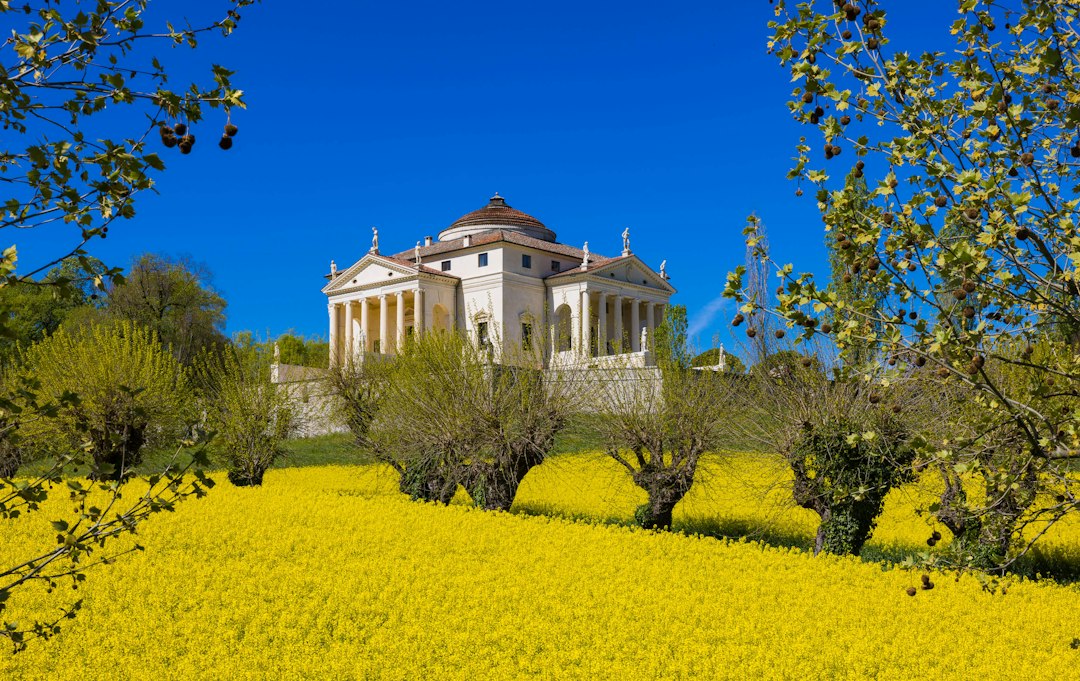
- Villa della Rotonda — The perfectly symmetrical hilltop villa that directly inspired the Panthéon in Paris and countless neoclassical buildings worldwide.
Scroll down for our complete travel guide with tips on getting there, where to stay, costs and more.
How to Reach Vicenza
How do I get to Vicenza — by train, car, or plane?
Take the train — it is by far the fastest and cheapest option. Vicenza sits directly on the main Venice–Milan high-speed rail corridor, so intercity trains arrive frequently. From Venice Santa Lucia, the journey takes around 45 minutes and costs roughly €5–€12 on a regional Trenitalia service. From Verona, it is only 25 minutes. I recommend the train over driving because Vicenza’s historic centre has strict ZTL (restricted traffic zone) rules that will earn you an automatic fine if you enter by car without a permit. My tip: buy tickets on the Trenitalia app the same day — this route rarely sells out.
Which airport is closest to Vicenza?
Venice Marco Polo Airport (VCE) is the closest major gateway, approximately 75 kilometres east of Vicenza. From VCE, I recommend taking the ATVO or ACTV bus to Venice Mestre station, then a direct regional train to Vicenza — total travel time around 90 minutes, costing roughly €15–€20 combined. Alternatively, Verona Villafranca Airport (VRN) sits about 60 kilometres west and is less crowded, with a bus connection to Verona Porta Nuova station and then a 25-minute train to Vicenza. What surprised me: many travellers overlook Verona’s airport and find it significantly less chaotic than Marco Polo in August.
How long does the journey to Vicenza take from Venice or Milan?
From Venice Santa Lucia to Vicenza Central Station, expect 45 minutes on a regional train. From Milan Centrale, the fastest Frecciabianca or Intercity service takes around 2 hours. Driving from Venice takes a similar 50–60 minutes on the A4 motorway, but factor in toll costs of roughly €5 and the headache of parking in Vicenza — the most convenient car park is Parcheggio Bassano near the historic centre at about €2 per hour. My honest caveat: if you are based in Milan and doing a day trip, the return window is tight — book the earliest morning train to maximise time in the city.
Do I need a rental car to explore Vicenza and its surroundings?
No — you do not need a car for Vicenza’s city centre, which is entirely walkable in under 20 minutes end to end. However, if you plan to visit the Palladian villas scattered across the surrounding countryside — particularly Villa Barbaro in Maser or Villa Emo in Fanzolo — a rental car becomes genuinely useful. Local buses connect some villas but schedules are infrequent, sometimes only 2–3 departures daily. I recommend renting from Hertz or Europcar at Vicenza station for a single day excursion rather than keeping a car for your whole stay. Warning: driving into the ZTL historic zone without authorisation triggers automatic camera fines that arrive weeks later at home.
Vicenza Public Transport Explained
What are the best areas to stay in Vicenza?
Stay in the historic centre (Centro Storico) — it puts you within walking distance of every major Palladian sight, the Basilica Palladiana, and the best restaurants on Corso Palladio. The area around Piazza dei Signori is the most atmospheric but slightly pricier. For a quieter stay with easy access, the streets around Contra Porti offer boutique B&Bs with fewer crowds. I would avoid staying near the train station district unless budget is your top priority — it lacks character and adds a 10-minute walk to everything interesting. What surprised me: even the central accommodation is genuinely quiet at night since Vicenza is not a party destination.
What does accommodation cost per night in Vicenza?
A solid 3-star hotel in the historic centre costs €80–€130 per night for a double room. Boutique B&Bs run €65–€100, while 4-star options like Hotel Campo Marzio near the city walls start around €140. Budget travellers can find clean guesthouses from €50. Vicenza is noticeably cheaper than Venice for equivalent quality — I have stayed in a beautifully restored palazzo B&B here for €85 that would cost double in Venice’s Cannaregio district. My tip: book directly with smaller properties for better rates, as they often skip the OTA commission. The honest trade-off: fewer luxury five-star options exist compared to Verona or Padua.
How far in advance should I book accommodation in Vicenza during high season?
For peak summer months — June through August — book at least 6–8 weeks ahead, especially if you want a room in the historic centre. During the Vicenza Gold jewellery trade fair (Vicenzaoro), held in January and September, hotels fill up with industry professionals and prices spike by 30–50% — this is the warning most travel guides completely omit. For shoulder season visits in April, May, or October, booking 2–3 weeks ahead is sufficient. In my experience, September is the sweet spot for weather and availability, though Vicenzaoro in mid-September will push rates up, so check the exact dates before finalising your visit.
Are there special or unique accommodation types in Vicenza?
Yes — several agriturismo farmhouses operate in the Berici Hills immediately south of the city, offering vineyard stays within 5–10 kilometres of the centre. These typically cost €70–€110 per night with breakfast included and local wine. The hills around Monte Berico also have a handful of converted historic villas available as self-catering apartments. For something truly unusual, a few owners of UNESCO-listed Palladian villas in the broader Vicenza province rent private rooms or apartments — check platforms like Airbnb under Colli Berici. My tip: an agriturismo stay pairs perfectly with wine tasting in the Gambellara DOC zone just 20 kilometres west of the city.
Neighbourhoods of Vicenza
What are the must-see sights in Vicenza?
The absolute essentials are the Teatro Olimpico, the Basilica Palladiana, and the Villa della Rotonda. Teatro Olimpico (entry €11, combined ticket with Museo del Risorgimento available) is genuinely jaw-dropping — the painted perspective stage set has not been moved since 1585. The Basilica Palladiana on Piazza dei Signori is free to admire externally and hosts rotating art exhibitions inside. The Villa della Rotonda sits 2 kilometres southeast of the centre and charges €10 for the grounds, €13 for interior access on limited open days. I also recommend the Museo Civico di Palazzo Chiericati, one of Palladio’s finest palace designs, with an underrated painting collection for €8.
What can I experience for free in Vicenza?
Quite a lot. Walking Corso Palladio, Vicenza’s main pedestrian street lined with Renaissance palaces, costs nothing and takes around 30 minutes at a leisurely pace. The Piazza dei Signori with its twin columns and the exterior of the Basilica Palladiana is entirely free. Climbing to the Sanctuary of Monte Berico via the 17th-century porticoed walkway — a covered colonnade of 192 arches ascending the hillside — is free and offers sweeping views over the city. The public gardens of Parco Querini, with its small island temple, are free. My honest caveat: most of Vicenza’s greatest beauty is on its façades and streets, not locked behind ticket booths — so even a tight budget works here.
Which day trips from Vicenza are worth taking?
Verona is the obvious choice — only 25 minutes by train and worth a half-day for the Arena, Juliet’s House, and the Adige riverbank. Padua (Padova) is 30 minutes east and offers the Scrovegni Chapel frescoes by Giotto (pre-booking mandatory, €14) and a magnificent medieval market square. For villa enthusiasts, Villa Barbaro in Maser — featuring Veronese frescoes inside a Palladian shell — is a 45-minute drive northeast and absolutely unmissable at €10 entry. Venice is only 45 minutes by train. My tip: Padua is the most underrated of these options and pairs brilliantly with Vicenza on a single itinerary — most tourists sprint straight to Venice instead.
What are the local specialities I should eat in Vicenza?
Baccalà alla Vicentina — salt cod slow-cooked in milk with onions and anchovies — is Vicenza’s defining dish and has its own official confraternity dedicated to preserving the recipe. Eat it at Righetti, a self-service trattoria on Piazza Duomo beloved by locals, for around €10–€12 per plate. The surrounding Berici Hills produce excellent Tai Rosso wine (a local Grenache variant) worth seeking out. Risotto al Tastasal (risotto with cured pork mixture) is another regional staple. For snacks, grab cicchetti — Venetian-style small bites — from any bacaro bar in the centre. My warning: tourist menus near Piazza dei Signori inflate prices by 30–40% and often skip the authentic local dishes entirely.
What to See in Vicenza
What makes Vicenza truly unique compared to other northern Italian cities?
Vicenza is essentially the only city on earth where a single architect’s vision dominates an entire urban fabric. Andrea Palladio designed or redesigned so many buildings here between 1540 and 1580 that walking its streets is like touring one architect’s living portfolio. This is not a museum-piece effect — people live and work inside these buildings daily. No other city in Italy, not even Rome or Florence, offers this singular architectural coherence. What surprised me: Vicenza has almost no mass tourism infrastructure — no queues snaking around the block, no tour-group gridlock — yet the quality of what you see rivals anywhere in Italy. The city’s UNESCO designation covers 23 buildings, the highest concentration of Palladian work anywhere.
How many days should I spend in Vicenza?
2 full days is the ideal minimum. Day one: walk Corso Palladio, visit Teatro Olimpico and Palazzo Chiericati, climb to Monte Berico. Day two: rent a bike or take a taxi to Villa della Rotonda in the morning, explore the Berici Hills or a nearby villa in the afternoon. A third day works well if you add a half-day excursion to Verona or Padua. I have seen travellers do Vicenza as a single-day stop between Venice and Verona — you will hit the highlights but miss the quieter pleasures entirely. My honest caveat: Vicenza is not a nightlife city, so if evenings buzzing with bars and clubs matter to you, base yourself in Verona instead and day-trip here.
When is the best time to visit Vicenza?
September is the best month, based on climate data — temperatures are warm but not oppressive, crowds are thinner than July and August, and the city returns to its normal rhythms after summer. May and October are excellent alternatives with reliable sunshine and almost no tourist pressure. I personally love Vicenza in late April when the Berici Hills are green and the light on Palladio’s stone turns extraordinary in the late afternoon. Avoid the second and third weeks of September if Vicenzaoro (the gold trade fair) falls in your window — hotel prices surge and rooms disappear. July and August are perfectly manageable but expect 35°C heat and a slightly more touristy atmosphere.
Are there local festivals in Vicenza worth attending?
Estate Teatrale Vicentina runs from June through August and stages classical theatre and drama inside the Teatro Olimpico itself — watching a performance in that 1580 Renaissance theatre by candlelight is genuinely unforgettable and tickets start from €15. The Giostra dell’Arte, a medieval-themed market and pageant, typically takes place in spring in the historic centre. The Corpus Domini procession through the centre in June is a serious local religious event, not staged for tourists. My tip: check the Teatro Olimpico program at least 2 months ahead — the best productions sell out quickly, particularly in July. The honest caveat: Vicenza is not a festival-heavy city, so the theatre season is the single must-plan cultural event.
Vicenza Food Scene
How does weather affect activities in Vicenza throughout the year?
Vicenza’s position at the northern base of Monte Berico means it catches more fog and winter rain than Venice or Verona. From November through February, expect grey skies, temperatures around 3–8°C, and occasional thick fog that softens the city into something almost painterly. Summer brings reliable heat — July averages around 30°C — which can make afternoon sightseeing uncomfortable. The major outdoor activity affected is villa touring: Villa della Rotonda’s interior is open only on limited days in spring and autumn, so check before you go. In my experience, rain gear is useful even in May. The Berici Hills hiking trails are best from April through October before winter mud sets in.
How crowded does Vicenza get in peak season?
Vicenza is one of the least crowded UNESCO World Heritage cities in Italy even in August — which is part of its charm and its best-kept secret. The Teatro Olimpico might have a 30-minute wait on a busy summer Saturday, but nothing approaching the queues of Florence’s Uffizi or Venice’s Doge’s Palace. Piazza dei Signori fills up pleasantly on summer evenings but never feels overwhelming. The biggest crowd pressure comes not from tourists but from the Vicenzaoro trade fair in January and September, which floods hotels with jewellery industry professionals. My honest assessment: if you are choosing between Vicenza and Venice in July and want a quieter, more authentic northern Italian experience, Vicenza wins without question.
How safe is Vicenza for travellers?
Vicenza is very safe — one of the more secure mid-sized cities in northern Italy. Violent crime is rare and the historic centre is well-lit and busy with locals until late evening. The main risk for tourists is standard pickpocketing near the train station and on crowded market days in Piazza dei Signori (markets run Tuesday and Thursday mornings). I have walked the city alone at midnight without any concern. The area around Viale Milano northwest of the centre is less polished but not dangerous. My practical tip: keep your phone in a front pocket near the station, apply the same awareness you would in any Italian city, and you will have zero issues. Emergency number in Italy: 112.
Is English widely spoken in Vicenza?
English is functional but less universal than in Venice or Milan. At hotels, major restaurants, and tourist sites like Teatro Olimpico, English is spoken reliably. At local bars, smaller trattorias, and shops on streets away from Corso Palladio, staff may have limited English — a phrasebook or translation app helps. What surprised me: Vicenza has a significant American military presence at Caserma Ederle (US Army Garrison Italy) just outside the city, meaning some locals in bars near the base speak surprisingly good English from years of interaction. My tip: learning five Italian phrases — greetings, ordering food, asking for the bill — earns you immediate goodwill in a city where tourists are less expected to make the effort.
Local Know-How for Vicenza
What is the daily budget for visiting Vicenza?
A realistic daily budget in Vicenza breaks down as follows. Budget traveller: €60–€75 per day covering a guesthouse, self-catering lunch, one sit-down dinner, and 1–2 museum entries. Mid-range: €110–€150 per day with a 3-star hotel, two restaurant meals, and entrance to Teatro Olimpico plus Villa della Rotonda. Local transport within the city costs around €2 per journey based on verified Numbeo data, though the centre is walkable and you may spend nothing on transport. Vicenza is noticeably cheaper than Venice — a comparable day in Venice costs 20–30% more. My tip: the biggest savings come from eating lunch at Righetti on Piazza Duomo (self-service, pay by weight, locals only) rather than tourist-facing restaurants on the main piazza.
How does public transport work within Vicenza?
SVT buses operate Vicenza’s urban network with a flat €1.50–€2 ticket valid for 75 minutes across the city. The main routes connect the train station to Monte Berico, the hospital, and outer residential zones. Honest truth: for the historic centre, you will walk everywhere and almost never need a bus — the entire pedestrian zone is under 1.5 kilometres across. Bus No. 8 is useful for reaching Monte Berico sanctuary. For the Villa della Rotonda, bus No. 13 runs from the centre but infrequently. The SVT app allows digital ticket purchase. Taxis are available at the train station rank but are rarely necessary for sightseeing. My tip: buy a multi-journey carnet at any tabacchi shop for slight savings over single tickets.
Which apps do you recommend for visiting Vicenza?
I recommend five apps for Vicenza. Trenitalia or Italiarail for booking trains from Venice, Verona, or Milan — essential for advance tickets. SVT Vicenza for local bus routes and digital tickets. Google Maps works accurately for walking routes through the historic centre and locating specific Palladian buildings. TheFork (ElTenedor) for restaurant reservations in advance — useful for popular local spots. Duolingo or Google Translate for basic Italian phrases, especially in smaller trattorias. For the Teatro Olimpico, book directly on the official Musei Civici di Vicenza website rather than third-party resellers who add fees of €3–€5 per ticket. My tip: download offline maps of Vicenza before arrival in case of poor signal in older stone buildings.
Vicenza at a Glance
| Population | 109,823 |
|---|---|
| Currency | EUR (€) |
| Official language | Italian |
| Time zone | Europe/Rome |
Source: Wikidata, retrieved September 2026.
Italy › Vicenza
More Destinations in Veneto
More Destinations in Italy
Essential Resources for Planning Your Trip to Vicenza
- Visit Vicenza: Tourist Information, What to Do and See — official visitor information
- Wikivoyage: Vicenza — community travel guide & practical tips
- Wikipedia: Vicenza — history, geography & background
- Vicenza: Tourist and Travel Guide — how to get there and around
- Vicenza travel – The Veneto, Italy, Europe — itineraries & inspiration
Data Sources
Key facts on this page (population, currency, language, time zone) come from Wikidata, climate figures from Open-Meteo. The retrieval date is shown next to the facts table.