
Biarritz: The Complete Travel Guide (2026)
Last reviewed: September 2026 · key facts checked against Wikidata
Biarritz Travel Guide: Everything You Need to Know (2026)
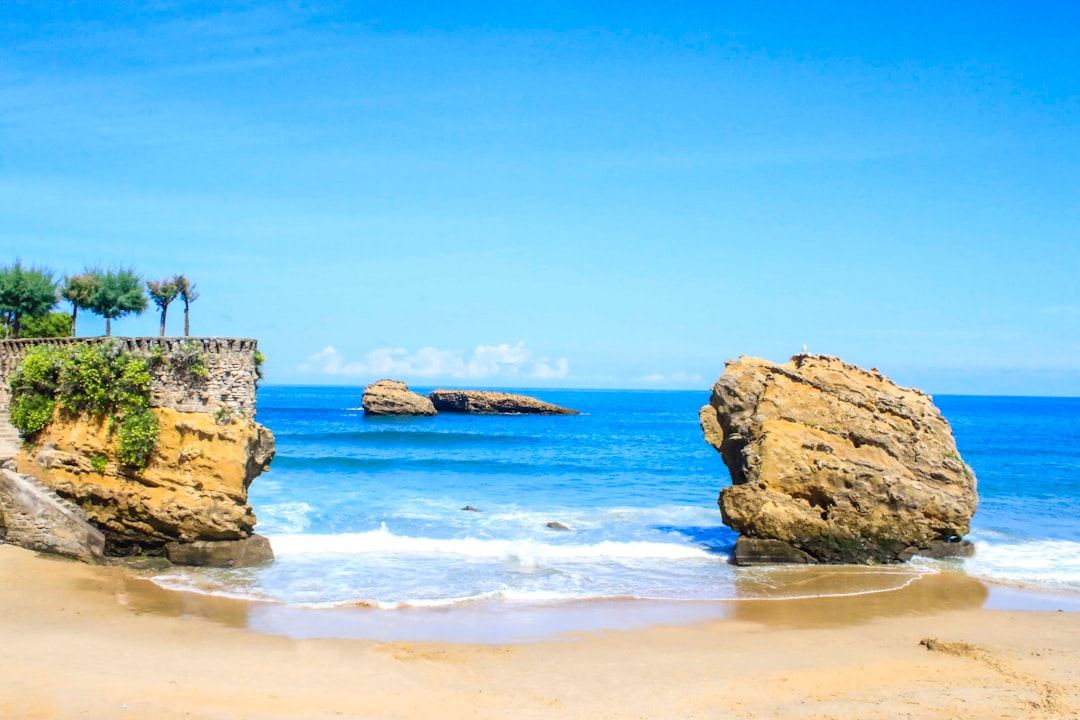
Biarritz sits on the Bay of Biscay in the French Basque Country, just 35 kilometres from the Spanish border, with a population of 26,206 permanent residents. Once the playground of Napoleon III and Empress Eugénie, who built the Hôtel du Palais here in 1855, it has evolved into Europe’s premier surf destination while retaining its imperial-era grandeur. The Grande Plage stretches 600 metres of Atlantic-facing sand, anchoring a town that draws millions of visitors annually.
Top 3 Highlights at a Glance
- Grande Plage & Surf Culture — Biarritz hosted Europe’s first surf competition in 1957, making this beach the continent’s surfing birthplace.
- Rocher de la Vierge — A sea stack connected by a footbridge, built under Napoleon III, with panoramic Atlantic views from 20 metres above the waves.
- Marché des Halles — Biarritz’s covered market open daily from 7am sells jambon de Bayonne and Basque cheeses directly from regional producers.
Scroll down for our complete travel guide with tips on getting there, where to stay, costs and more.
Arrival & Airport
How do I get to Biarritz?
Fly into Biarritz Pays Basque Airport (BIQ), just 3 km from the city centre. In my experience, direct flights operate from Paris Orly with Air France in under 2 hours. Alternatively, Biarritz train station receives TGVs from Paris Montparnasse in 5 hours 20 minutes, with fares from €35 booked in advance. From Spain, the bus from San Sebastián takes 1 hour and costs around €8. My tip: book the TGV over flying if you’re coming from Paris — the city centre arrival saves you taxi hassle. Warning most guides skip: BIQ has very limited winter routes, so check schedules carefully outside summer.
Which airport is closest to Biarritz?
Biarritz Pays Basque Airport (BIQ) is the closest, just 3 km from the town centre. In my experience, a taxi from BIQ to Grande Plage costs around €15 and takes under 10 minutes. The alternative is Bilbao Airport (BIO) in Spain, 115 km away, which offers far more international routes and budget carriers including Vueling and Ryanair. What surprised me: Bordeaux Mérignac (BOD), 180 km north, sometimes has cheaper transatlantic connections, making it worth checking if you’re flying from outside Europe. The caveat: BIQ’s convenience is unbeatable for summer visitors, but its seasonal schedule is brutally limited November through March.
How long does the journey to Biarritz take from major cities?
From Paris Montparnasse by TGV, the journey takes 5 hours 20 minutes. In my experience, this is the most comfortable option — you arrive directly in Biarritz city centre. From Bordeaux, regional trains take 1 hour 50 minutes and cost as little as €20. Driving from Paris covers 780 km on the A10 and A63 motorways and takes roughly 7 hours, with toll costs around €55 each way. From San Sebastián across the Spanish border, it’s 50 km by road, about 45 minutes without traffic — though summer beach weekends can double that. My tip: the train wins on comfort; the car wins if you’re exploring the Basque hinterland.
Do I need a car in Biarritz?
No — Biarritz’s compact centre is entirely walkable. In my experience, everything between Grande Plage, the Rocher de la Vierge, and the Marché des Halles is within a 20-minute walk. Local buses run by TXIK TXAK connect the main zones for €1.80 per trip. The honest caveat most guides skip: if you want to explore Basque villages like Espelette or Sare, or drive the Corniche Basque coastal road, a car becomes essential. Rental rates at BIQ start around €45/day in shoulder season but spike to €90/day in August. My tip: book a car only for day trips — park it at your hotel and walk everywhere within town.
City Transport
What are the best areas to stay in Biarritz?
Stay in the Centre-Ville / Grande Plage area for first-timers — everything is within walking distance and the Atlantic views are immediate. The Côte des Basques neighbourhood suits surfers and younger travellers, sitting directly above the most famous surf break in town. For quieter luxury, Saint-Charles offers elegant Belle Époque villas away from peak-season crowds on the main drag. In my experience, Rue Gambetta is the practical sweet spot — central, walkable to both beaches, and close to the best pintxos bars. The honest warning: rooms facing the sea at Grande Plage cost 30–50% more than identical rooms two streets back, and the noise in July–August is relentless.
What does accommodation cost per night in Biarritz?
Budget accommodation starts around €90/night for an economy hotel or basic B&B. Mid-range hotels in the Centre-Ville run €140–220/night in summer. The iconic Hôtel du Palais, originally built for Empress Eugénie, starts at €450/night in peak season. In my experience, the best value sits in self-catering apartments near Côte des Basques, averaging €110/night for a studio. What surprised me: prices in Biarritz are roughly 40% higher than equivalent Basque towns like Hendaye just 20 km south. My tip: book apartments through local agencies rather than major platforms — you’ll often find better rates and properties with sea-view terraces that don’t appear on standard booking sites.
How far in advance should I book accommodation in Biarritz during high season?
Book at least 4–5 months ahead for July and August. In my experience, the Biarritz Surf Festival in late July — the longest-running surf festival in Europe, running since 1981 — fills every decent hotel within 10 km within days of bookings opening. The Hôtel du Palais can sell out 6 months in advance for peak summer weekends. The honest caveat: September is increasingly popular and now requires 2–3 months advance booking for quality options. My tip: if you miss the summer window entirely, October bookings can often be made just 3 weeks ahead at rates 35% lower than August — and the surf is arguably better anyway.
Are there special or unique accommodation types in Biarritz?
Yes — surf lodges are genuinely unique to Biarritz. Places like Surf Lodge Biarritz near Côte des Basques bundle board rental, coaching, and accommodation from around €80/night per person. Belle Époque villa rentals in the Saint-Charles district let you stay in the same architectural style that made Biarritz famous in the 1880s. In my experience, chambres d’hôtes in the Basque farmhouse style just 10 minutes inland near Arcangues offer the most authentic experience for €95–130/night, including homemade gâteau Basque at breakfast. The warning: marketing photos of ‘sea view’ accommodations are aggressively optimistic in Biarritz — always verify the actual distance to water before booking.
Accommodation & Neighbourhoods
What are the must-see sights in Biarritz?
Three are non-negotiable. Rocher de la Vierge — Napoleon III’s sea stack connected by a metal footbridge — delivers the best panoramic Atlantic view in town and is free. Phare de Biarritz, the lighthouse built in 1834, stands 73 metres above sea level and is climbable for €3. The Musée de la Mer houses a shark tank and live seal feeding at 11am and 5pm daily, costing €15 adult entry — genuinely worth it. In my experience, most visitors skip the Villa Belza, a dramatic neo-Gothic castle perched above Côte des Basques beach — walk past it at sunset for a free architectural spectacle that rivals anything on the tourist map.
What can I experience for free in Biarritz?
Quite a lot. The Rocher de la Vierge footbridge and coastal path is free and arguably the best single experience in Biarritz. The Halles market on Rue des Halles, open daily from 7am to 1:30pm, costs nothing to explore and is packed with free tastings of Basque produce. Watching surf competitions at Côte des Basques beach in summer — including qualifying events for the World Surf League — is free from the cliff path above. In my experience, the coastal walk from Grande Plage south to Plage Marbella, covering 4 km of cliff-top Atlantic scenery, is the single best free activity in the entire French Basque Country. The lighthouse interior costs €3 but the exterior view is free.
Which day trips from Biarritz are worth doing?
Saint-Jean-de-Luz, 18 km south, is the best day trip — a working fishing port where fresh tuna and anchovy are sold directly off boats, and the 17th-century église where Louis XIV married in 1660 is free to enter. Espelette, 30 km inland, is the village of the famous AOC red pepper, with strings of drying chillies on every white-and-red façade — free to walk, and a plate of local piperade costs €12. In my experience, San Sebastián in Spain, 50 km away, is unmissable — budget a full day and €30–40 for pintxos and txakoli wine in the Parte Vieja. The warning: driving into San Sebastián in July–August is brutal; take the PESA bus from Biarritz station for €8 instead.
What local Basque specialities should I try in Biarritz?
Start with gâteau Basque — a dense pastry filled with either black cherry jam from Itxassou or pastry cream, sold in every boulangerie from €3 a slice. Ttoro, the Basque fisherman’s stew with Atlantic fish, mussels, and peppers, is the signature restaurant dish — expect to pay €22–28 at a serious table. In my experience, the pintxos bars on Rue du Centre serve the best Basque snacks outside Spain for €2–3 per piece — order the jambon de Bayonne with Ossau-Iraty cheese combination. The honest caveat: anything labelled ‘Basque’ on a tourist-facing menu near Grande Plage commands a 40% markup — walk two streets back and the same dish costs significantly less.
Highlights & Must-Sees
What makes Biarritz unique compared to other French coastal cities?
Biarritz is the only city in continental France where imperial 19th-century grandeur and a living surf culture coexist on the same beach. The Hôtel du Palais was literally built as a private villa for Empress Eugénie in 1855 — no other French resort can claim that provenance. What surprised me: Biarritz introduced surfing to Europe in 1957, when Peter Viertel surfed here while filming ‘The Sun Also Rises’ — making it the authentic origin point of European surf culture, not a modern marketing invention. The Basque language (Euskara), one of the world’s linguistic isolates with no known relatives, is spoken here alongside French — a genuinely rare cultural layer you find nowhere else in France.
How many days do I need in Biarritz?
3 full days covers Biarritz itself comfortably. Day 1: the coastal walk, Rocher de la Vierge, Musée de la Mer, and Grande Plage. Day 2: Marché des Halles in the morning, surf lesson at Côte des Basques (€45 for 2 hours with equipment at Hastea Surf School), and the Phare lighthouse. Day 3: day trip to Saint-Jean-de-Luz or San Sebastián. In my experience, 5 days is the ideal length if you want to add Espelette, the Basque hinterland villages, and a second beach day. The caveat: treating Biarritz as a single-day stop from Bordeaux is the most common mistake — you need at least one overnight to feel the rhythm of the Atlantic light in the evening.
When is the best time to visit Biarritz?
June and September are the optimal months — warm enough for beach and surf, but without August’s crowds. Climate data confirms June through September as the best travel window. In my experience, September is the single best month: Atlantic swells peak, water temperature sits around 20°C, and hotel rates drop 20–30% from August highs. July and August deliver reliably warm weather but bring peak crowds — the population of 26,206 swells dramatically. The honest caveat: Biarritz gets more annual rainfall than most French coastal cities due to its Atlantic exposure — even in summer, expect 4–5 rainy days per month. Always pack a light waterproof, even in July.
Are there local festivals in Biarritz worth attending?
The Biarritz Surf Festival in late July is the anchor event — running since 1981, it’s the oldest surf festival in Europe and free to watch from the cliff path above Côte des Basques. The Biarritz Festival of Audiovisual Programmes (MIPCOM Junior counterpart) in October draws industry visitors but doesn’t disrupt tourism. In my experience, the Fêtes de Bayonne in late July/early August — held in Bayonne, 8 km inland — is the Basque answer to Pamplona’s San Fermín festival, with 1.3 million attendees over 5 days, free street parties, and Basque music from 10pm daily. Book accommodation 5–6 months ahead if your dates overlap with Fêtes de Bayonne; it clears out Biarritz hotels completely.
Food & Drink
How does weather affect activities in Biarritz?
Surf conditions are actually best in autumn and winter, when Atlantic swells reach 2–4 metres at Côte des Basques. In my experience, beach swimming is most enjoyable mid-June to late September when water temperatures reach 19–21°C. The coastal walking trails and the GR10 long-distance path, which starts near Biarritz and runs to the Mediterranean, are accessible year-round but genuinely slippery on cliff paths after rain. The warning most guides omit: Biarritz’s famous Atlantic wind — the viento del sur or southern föhn — can arrive with 24 hours’ notice and turn a warm beach day into a cold, gusty experience; check Windguru the day before, not just general forecasts. Winter markets and the covered Halles are always weather-proof alternatives.
How crowded does Biarritz get in peak season?
August is genuinely overwhelming — Grande Plage has no visible sand visible by 11am on sunny days. In my experience, the Rocher de la Vierge footbridge queues reach 45 minutes on August weekends, and restaurant waits at popular spots exceed 1 hour without a reservation. The population of 26,206 is effectively multiplied several times over. The honest caveat: Biarritz’s infrastructure — narrow coastal roads, limited parking, a single main beach promenade — was designed for a 19th-century spa town, not modern mass tourism. My tip: arrive at Grande Plage before 9am for a morning swim before the crowds, then retreat to Plage Marbella or Plage de la Milady, 3 km south, which stays calmer even in peak weeks.
How safe is Biarritz?
Biarritz is one of France’s safer coastal cities — violent crime is rare. In my experience, the main risks are petty theft from bags left unattended on Grande Plage in peak season and car break-ins at cliff-top parking areas above Côte des Basques. The Centre-Ville and all tourist areas are safe after midnight. The honest warning most guides skip: Atlantic rip currents at Côte des Basques and Plage de la Milady cause genuine drowning incidents every summer — always swim between the red-and-yellow flagged zones supervised by lifeguards (active June 15 to September 15 only). Outside those dates, there are no lifeguards on duty regardless of surf conditions. Keep valuables in your hotel safe, not in a beach bag.
Is English widely spoken in Biarritz?
Better than most of France, but French remains essential in non-tourist contexts. In my experience, staff at hotels, surf schools, and restaurants in the Centre-Ville and Grande Plage area speak functional to fluent English — the international surf and festival crowd has trained them well. The Marché des Halles vendors are hit-or-miss; learning ’Je voudrais goûter ça, s’il vous plaît’ (‘I’d like to try that, please’) pays real dividends. The honest caveat: venture 5 km inland to villages like Arcangues or Arbonne and you’ll find French (and sometimes Basque Euskara) only. My tip: the Biarritz tourist office on Square d’Ixelles has English-speaking staff and free walking maps — a genuinely useful first stop.
Practical Tips
What is the daily budget for Biarritz?
Budget travellers can manage €80–100/day; mid-range comfort costs €180–220/day. A cheap restaurant meal runs around €14; a mid-range dinner for two costs approximately €25 based on current Numbeo data. Add €90/night for economy accommodation, €1.80 for a local bus trip, and €15 for the Musée de la Mer. In my experience, the real budget killer is drinks — a glass of Basque txakoli wine at a Grande Plage terrace costs €9–12, double what the same pour costs two streets inland. My tip: eat your main meal at lunch — most restaurants offer a ’formule midi’ for €16–22 that includes two courses and is substantially cheaper than the identical dinner menu. Avoid the beachfront café strip entirely for food.
How does Biarritz public transport work?
TXIK TXAK buses run 8 urban lines covering the town centre, beaches, and residential zones. A single ticket costs €1.80; a 10-trip carnet costs €14. In my experience, Line 9 is the most useful for tourists, connecting the train station to Grande Plage and Côte des Basques in under 15 minutes. The honest caveat: bus frequency drops to every 30–40 minutes after 8pm and the network is skeletal in winter — this is fundamentally a walking city. The Biarritz–Bayonne–Anglet agglomeration bus network (also TXIK TXAK) connects Bayonne’s train station in 30 minutes for €1.80, making it viable to stay in Bayonne and day-trip to Biarritz if budget accommodation is tight.
Which apps do you recommend for visiting Biarritz?
Windguru is non-negotiable for surf and beach planning — it gives hyperlocal Atlantic forecast data that general weather apps miss entirely. SNCF Connect for train bookings from Bordeaux or Paris, with the cheapest TGV fares from €35 when booked 60–90 days ahead. In my experience, Komoot is the best app for the coastal cliff walks and GR10 trail sections around Biarritz, with offline maps that work without signal on exposed headlands. TheFork (LaFourchette) gives 10–50% discounts at participating Biarritz restaurants — including some genuinely good Basque tables that use it to fill shoulder-season midweek slots. The honest caveat: Google Maps pedestrian routing in Biarritz is poor on the cliff paths — trust Komoot or a printed map from the tourist office instead.
More Destinations in Europe
Explore our complete travel guides for more Europe destinations: Ourense Travel Guide (2026), Amsterdam Travel Guide (2026), Ajaccio Travel Guide (2026), Besançon Travel Guide (2026), Castellón de la Plana Travel Guide (2026).
Biarritz at a Glance
| Population | 26,206 |
|---|---|
| Currency | EUR (€) |
| Official language | French |
| Time zone | UTC+01:00 |
Source: Wikidata, retrieved September 2026.
Useful Resources for Planning Your Trip to Biarritz
- Wikipedia: Biarritz — history, geography and background
- Lonely Planet: Biarritz — itineraries and travel inspiration
- TripAdvisor: Biarritz — hotels, restaurants and traveller reviews
🎥 Biarritz Travel Videos
First Time Biarritz? Watch This BEFORE You Go – Hidden …
Burak’s Journey

7 Must-Visit Places in Biarritz
One Day Originals
You are currently viewing a placeholder content from Vimeo. To access the actual content, click the button below. Please note that doing so will share data with third-party providers.
More InformationYou are currently viewing a placeholder content from YouTube. To access the actual content, click the button below. Please note that doing so will share data with third-party providers.
More InformationYou need to load content from reCAPTCHA to submit the form. Please note that doing so will share data with third-party providers.
More InformationYou are currently viewing a placeholder content from GetYourGuide. To access the actual content, click the button below. Please note that doing so will share data with third-party providers.
More Information