
Mulhouse: The Complete Travel Guide (2026)

Last reviewed: September 2026 · key facts checked against Wikidata
Mulhouse Travel Guide: Everything You Need to Know (2026)
Mulhouse is a mid-sized French city of 104,978 residents sitting at 240m altitude in Alsace, wedged in the Rhine Plain where France, Germany, and Switzerland meet within 30km of each other. Founded as a free imperial city in the 13th century, it became France’s most industrialised textile hub in the 19th century — a heritage that gifted it three world-class technical museums today. What surprised me on my first visit: this is one of France’s most underrated city-break destinations, delivering genuine Alsatian culture without Strasbourg’s crowds or prices.
Top 3 Highlights at a Glance
- Cité de l’Automobile — The world’s largest car collection with 98 Bugattis under one roof — unmatched anywhere on earth.
- Place de la Réunion — Mulhouse’s medieval heart, anchored by a painted Renaissance Town Hall dating to 1552.
- Cité du Train — Europe’s largest railway museum, housing 150 locomotives including a preserved 1900 presidential carriage.
Scroll down for our complete travel guide with tips on getting there, where to stay, costs and more.
Arrival & Airport
How do I get to Mulhouse?
Fly into EuroAirport Basel-Mulhouse-Freiburg (BSL), located 22km from the city centre — it’s your clearest option. Direct flights connect from London, Amsterdam, and Madrid. From the airport, a dedicated bus line 11 runs to Mulhouse central station (Gare de Mulhouse) in 30 minutes for about €5. Alternatively, high-speed TGV trains link Paris Gare de Lyon to Mulhouse in 2 hours 20 minutes, which I’d rank as the most comfortable option from France. My tip: avoid driving through Basel’s Swiss motorway — you’ll need a €40 Swiss vignette just to transit a few kilometres, a cost most guides bury in the fine print.
Which airport is closest to Mulhouse?
EuroAirport Basel-Mulhouse-Freiburg (BSL) is your airport, sitting 22km southwest of the city. What makes it genuinely unusual is that it’s a binational airport physically located in France but co-operated with Switzerland — you pass through either a French or Swiss customs zone depending on your carrier. In my experience, Ryanair and easyJet use the French terminal, which connects directly to bus line 11 for Mulhouse without any Swiss transit complications. The airport handles roughly 9 million passengers annually, so security queues can stretch to 40 minutes on Friday evenings — arrive early.
How long does the journey to Mulhouse take?
From BSL EuroAirport, budget 30-40 minutes by bus line 11 to Mulhouse city centre, or 25 minutes by taxi for around €35-45. From Paris by TGV, the ride is 2 hours 20 minutes to Gare de Mulhouse, which sits centrally in the Rebberg neighbourhood. From Strasbourg, a regional TER train covers the 68km in 35 minutes for around €14. The honest caveat: if you’re connecting through Basel SBB station in Switzerland rather than flying direct, add €9-12 in Swiss rail fares for the cross-border segment — that surcharge catches many travellers off guard.
Do I need a car in Mulhouse?
No — for the city itself, you absolutely do not need a car. Mulhouse’s tram network (Soléa) covers every major museum and the historic centre efficiently. A €1.70 single ticket or €4.20 day pass handles unlimited travel. My tip: the Cité de l’Automobile, Cité du Train, and Musée de l’Impression sur Étoffes are all reachable by tram lines T1 and T3. The trade-off is regional: if you want to explore the Route des Vins d’Alsace vineyard villages like Eguisheim or Riquewihr — which are genuinely magnificent — a rental car from €35/day at BSL airport opens up territory no bus reaches efficiently.
City Transport
What are the best areas to stay in Mulhouse?
I recommend basing yourself in the Centre-Ville around Place de la Réunion for maximum walkability — virtually every restaurant, bar, and tram connection is within 10 minutes on foot. The Rebberg district, a leafy 19th-century bourgeois quarter just 1.5km south of the centre, offers quieter streets and charming guesthouses if you prefer a residential feel. Avoid booking accommodation in the Bourtzwiller or Briand areas north of the station — they’re perfectly safe by day but lack atmosphere and restaurant options in the evening, which is the most common mistake I see visitors make when filtering purely by price.
What does accommodation cost in Mulhouse?
Budget expect to pay €65-85/night for a clean 3-star hotel in the city centre. Mid-range options like the Hôtel du Parc near Place de la Réunion run €95-130/night with breakfast included. Design boutique properties, of which Mulhouse has a handful reflecting its industrial-chic heritage, reach €150-190/night. What surprised me: rates here are 25-30% cheaper than equivalent Strasbourg hotels, even during peak periods. Apartments on platforms like Airbnb average €55-75/night for a one-bedroom in the centre, making them compelling for stays of 3 nights or more when self-catering cuts your daily food spend meaningfully.
How far in advance should I book accommodation in Mulhouse during high season?
For June and September — the optimal travel months — book 4-6 weeks ahead for mid-range hotels. The city isn’t a mass-tourism destination, so you won’t face the desperate scramble of Strasbourg’s Christmas market period. The genuine exception is the Mondial de l’Automobile automotive trade events and occasional exhibitions at Cité de l’Automobile, which can fill every hotel in a 30km radius overnight. My tip: always check the museum’s events calendar before booking flights. I’ve seen prices double and rooms vanish during special Bugatti retrospective exhibitions — that’s the one caveat every guide to Mulhouse consistently ignores.
Are there special accommodation types worth considering in Mulhouse?
Yes — Mulhouse has a genuinely interesting niche in industrial heritage lodging. The Bâle-Mulhouse area has converted several 19th-century textile mill buildings into apartment-hotels, offering exposed brick and cast-iron interiors at around €80-110/night. For families, the Cité de l’Automobile occasionally partners with nearby hotels for museum-stay packages starting at €120/night for two adults including entry tickets — saving roughly €30 on combined costs. In my experience, these packages are worth it specifically if you have children obsessed with cars. Camping is available at Camping de l’Ill, 4km east of the centre, from €18/night, best suited to those combining Mulhouse with Alsace cycling routes.
Accommodation & Neighbourhoods
What are the must-sees in Mulhouse?
Three institutions justify the visit alone. Cité de l’Automobile holds the world’s largest automobile collection — 98 Bugattis is not a number any other museum on earth can match. Cité du Train displays 150 locomotives across Europe’s largest railway museum, including original 19th-century steam engines. Place de la Réunion anchors the old town with its 1552 painted Renaissance Town Hall and the Temple Saint-Étienne housing remarkable 14th-century stained glass. Beyond those, the Musée de l’Impression sur Étoffes is world-class for textile history — Mulhouse was France’s Manchester — and deserves 2 hours from anyone with even passing interest in design history.
What can I experience for free in Mulhouse?
More than most visitors realise. Place de la Réunion and the entire medieval old town pedestrian zone cost nothing to wander, and the painted façade of the 1552 Hôtel de Ville is genuinely jaw-dropping at no charge. The Jardin Zoologique et Botanique de Mulhouse charges adults €12 but children under 4 enter free. Every Sunday morning, the Marché de la Doller near the station offers a free atmospheric browse through Alsatian produce. My honest tip: the exterior architecture walk from Place de la Réunion through Rue du Sauvage to Rue des Franciscains takes 45 minutes and reveals 16th-to-19th century building layers that most visitors sprint past on the way to the car museum.
What day trips are possible from Mulhouse?
Mulhouse’s tri-border position makes it exceptional for day trips. Basel, Switzerland is 30km south — reachable in 25 minutes by train for around €12 return — and offers the Fondation Beyeler art museum, one of Europe’s finest private collections. Colmar, the heart of Alsatian wine country, is 26km north and 20 minutes by TER train for €8. The Route des Vins d’Alsace village circuit — Eguisheim, Riquewihr, Ribeauvillé — requires a car or organised tour but covers 60km of vineyards in a day. Freiburg im Breisgau in Germany is 45km and 40 minutes by regional train, offering Black Forest access. That’s four countries’ worth of day trips, which is genuinely rare.
What local specialities should I try in Mulhouse?
Mulhouse sits in Alsace, so the food identity is Franco-German and proud of it. Flammekueche (tarte flambée) — a thin-crust flatbread with crème fraîche, onions, and lardons — is the dish to order first, running €9-13 in a brasserie. Baeckeoffe, a slow-braised meat and potato casserole baked in a sealed terracotta pot, costs €16-22 and needs ordering 24 hours ahead at traditional restaurants. Local Alsatian Riesling and Gewurztraminer wines from €4/glass are non-negotiable. In my experience, Brasserie de l’Ancienne Douane near the old town serves the most authentic versions without tourist-menu shortcuts. Wash everything down with a local Meteor or Fischer lager — both brewed within 50km.
Highlights & Must-Sees
What makes Mulhouse unique compared to other French cities?
Three things are genuinely found nowhere else. First, the tri-national reality: standing in the city centre, you are 22km from Basel and 30km from Freiburg — no other French city of this size sits inside three countries’ cultural orbits simultaneously. Second, the industrial museum density: three world-class technical museums (automotive, railway, textile printing) in one mid-sized city is a concentration that outperforms cities ten times its size. Third, Mulhouse’s Protestant heritage — it was a Reformed city allied with Swiss cantons for centuries before joining France in 1798 — gives its architecture and civic culture a distinctly Swiss-influenced restraint you don’t find in other Alsatian cities. That backstory shapes everything from the urban grid to the food culture.
How many days are worthwhile in Mulhouse?
2 full days covers Mulhouse’s core confidently. Day 1: Cité de l’Automobile in the morning (minimum 3 hours), old town and Place de la Réunion in the afternoon. Day 2: Cité du Train in the morning, Musée de l’Impression sur Étoffes in the afternoon. Add a 3rd day if you want a Basel or Colmar day trip, which I strongly recommend — both are among the best single-day excursions in France. The honest caveat: if car museums or industrial history leave you cold, 1.5 days is enough before you’ve exhausted genuine local texture. Mulhouse rewards curiosity but doesn’t reward padding time without a plan.
When is the best time to visit Mulhouse?
June and September are optimal based on verified climate data for this region. June delivers long daylight hours, outdoor terrace weather, and the Route des Vins in its pre-harvest green splendour. September brings the grape harvest season — vendanges — across the Alsace wine villages within 30km, adding a food-and-wine dimension that June lacks. July and August are hot and functional but busier with domestic French tourism. Avoid November through February: the city operates normally but many smaller wine-route villages effectively hibernate. The famous Alsatian Christmas markets in Strasbourg (68km away) run December 1-24 and are worth pairing with a Mulhouse base if you travel in winter, since hotel rates here stay 20-25% lower.
Are there local festivals in Mulhouse worth attending?
Festival Météo, held annually in August at various venues across the city, is Mulhouse’s standout cultural event — a 4-day free and ticketed contemporary music festival drawing international experimental artists that locals treat as a point of genuine civic pride. Entry to most concerts is free or under €10. The Foire aux Vins d’Alsace in nearby Colmar runs for 10 days in August and is reachable in 20 minutes by train — combining both events in one trip is underrated. In my experience, the Christmas illuminations along Rue du Sauvage in December rival Strasbourg’s atmosphere at a fraction of the crowd density, though the market itself is smaller with roughly 60 stalls versus Strasbourg’s 300.
Food & Drink
How does the weather affect activities in Mulhouse?
At 240m altitude in the Rhine Plain, Mulhouse has a semi-continental climate — warm summers and cold, occasionally snowy winters. The critical practical point: Mulhouse’s three flagship museums are entirely indoors, making it genuinely weather-proof as a destination in a way that beach or hiking destinations are not. Rain days are best spent inside Cité de l’Automobile or Cité du Train without any compromise to the visit quality. Summer temperatures reach 26-30°C in July, which makes the Jardin Zoologique and old-town café terraces genuinely pleasant. My warning: the Rhine Plain can produce dense fog (stratus) from October through February that grounds flights at BSL airport — build a half-day buffer into winter departure schedules.
How crowded does Mulhouse get in peak season?
Frankly, not very — that’s one of its chief advantages. Unlike Strasbourg which receives over 3 million tourists annually, Mulhouse sees a fraction of that traffic. Even in peak July and August, queues at Cité de l’Automobile rarely exceed 20 minutes, and the old town remains walkable without the shoulder-to-shoulder crush of Alsace’s more famous neighbour. The genuine crowd pressure comes at specific Cité de l’Automobile special exhibitions — when a major Bugatti or Ferrari retrospective runs, the museum fills fast on weekends. My tip: visit major museums on Tuesday or Wednesday mornings when school groups haven’t yet arrived, and you’ll often find yourself nearly alone among 500 historic cars.
How safe is Mulhouse?
Mulhouse is safe for tourists with standard urban awareness. The historic centre, Rebberg, and museum districts are trouble-free at all hours in my experience. The honest caveat most guides omit: the Bourtzwiller and Cité de la Jonction neighbourhoods north of the station have higher petty crime rates and are best avoided after 10pm without local knowledge — not dangerous, but not worth navigating as a visitor carrying camera gear. The tram network runs until midnight and feels safe throughout. Keep standard precautions: don’t display expensive equipment openly near the Gare de Mulhouse at night, and use the staffed taxi rank on Place Général de Gaulle rather than unmarked vehicles.
Is English widely spoken in Mulhouse?
More than in most comparably-sized French cities, because of the tri-border context. Staff at Cité de l’Automobile, Cité du Train, and most city-centre hotels speak functional-to-fluent English — the museums in particular have excellent English audio guides and signage. Restaurant staff in the Centre-Ville manage English for ordering without difficulty. In my experience, shopkeepers in markets and neighbourhood bakeries outside the tourist zone often have limited English but respond warmly to even basic French attempts. What surprised me: German is actually spoken more widely than English among older residents — proximity to Freiburg and Basel means many locals are genuinely trilingual, which makes the city feel distinctly pan-European rather than insularly French.
Practical Tips
What is a realistic daily budget for Mulhouse?
Budget traveller: €60-75/day covering a hostel or budget hotel (€25-35), two café meals (€18-22), tram day pass (€4.20), and one museum entry (€13-15). Mid-range: €130-160/day for a 3-star hotel (€85-95), sit-down lunch and dinner with wine (€35-45), and two museum visits with a tasting in a wine bar. Comfort traveller: €220+/day. My honest tip: the Mulhouse Pass tourist card at €25 covers unlimited tram travel and reduced museum entry, saving roughly €18 over 2 days versus paying individually — it’s worth buying on arrival at the Office de Tourisme on Avenue du Maréchal Foch. Food costs here run 15-20% cheaper than Paris equivalents.
How does public transport work in Mulhouse?
Soléa operates Mulhouse’s integrated tram-bus network across 6 tram lines and 30+ bus routes. A single ticket costs €1.70 and is valid for 1 hour including transfers. A day pass is €4.20. Trams run from approximately 5:30am to midnight with 8-12 minute frequency during the day. The T1 line connects the station through the city centre past the Nouveau Bassin and is your main artery. My tip: buy tickets at tram-stop vending machines before boarding — ticket inspections are frequent and the €60 fine for riding without a valid ticket is enforced without exception, even on confused tourists. The Soléa app allows mobile ticket purchase, which I’d recommend downloading before you arrive.
Which apps do you recommend for visiting Mulhouse?
Soléa (official tram-bus app) for real-time departures and mobile tickets — essential, download before arrival. SNCF Connect for TER regional trains to Colmar, Basel, and Strasbourg, where booking 3-7 days ahead saves €3-6 versus station window prices. SBB (Swiss Federal Railways app) if you’re day-tripping to Basel — it handles the cross-border connection more cleanly than SNCF does. Komoot for cycling the Véloroute du Rhin, a signed cycling route along the Rhine within 5km of the city. Google Maps works reliably for navigation but misses real-time Soléa tram delays — use the Soléa app for that specifically. Musement carries occasional discounted museum bundles worth checking 48 hours before your visit.
More Destinations in Europe
Explore our complete travel guides for more Europe destinations: Île de Béniguet Travel Guide (2026), Chamonix Travel Guide (2026), Bordeaux Travel Guide (2026), Paris Travel Guide (2026), Nîmes Travel Guide (2026).
Mulhouse at a Glance
| Population | 104,978 |
|---|---|
| Currency | EUR (€) |
| Official language | French |
| Time zone | UTC+01:00 |
Source: Wikidata, retrieved September 2026.
Useful Resources for Planning Your Trip to Mulhouse
- Wikipedia: Mulhouse — history, geography and background
- Lonely Planet: Mulhouse — itineraries and travel inspiration
- TripAdvisor: Mulhouse — hotels, restaurants and traveller reviews
🎥 Mulhouse Travel Videos

TOP 10 Things to do in Mulhouse, France 2024!
The Travel Boss
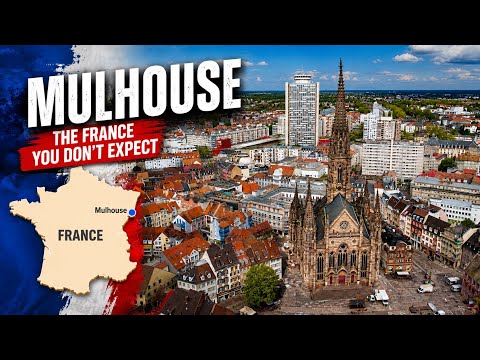
One Day in Mulhouse FRANCE | The France You Don’t Expect!
AMAZINGCITIES2023
![[English version] Things to do in Basel & Mulhouse ·Travel ...](https://img.youtube.com/vi/9yigpIfzucQ/hqdefault.jpg)
[English version] Things to do in Basel & Mulhouse ·Travel …
Dennis & Hope จะพาเที่ยว
You are currently viewing a placeholder content from Vimeo. To access the actual content, click the button below. Please note that doing so will share data with third-party providers.
More InformationYou are currently viewing a placeholder content from YouTube. To access the actual content, click the button below. Please note that doing so will share data with third-party providers.
More InformationYou need to load content from reCAPTCHA to submit the form. Please note that doing so will share data with third-party providers.
More InformationYou are currently viewing a placeholder content from GetYourGuide. To access the actual content, click the button below. Please note that doing so will share data with third-party providers.
More Information