
Gran Canaria: The Complete Travel Guide (2026)
Last reviewed: October 2026 · key facts checked against Wikidata
Gran Canaria Weather by Month: When to Go
| Month | Day | Night | Sea | Rain days | Rain mm | Wind km/h | Good for |
|---|---|---|---|---|---|---|---|
| Jan | 22° | 15° | 21° | 2 | 22 | 19 | Hike |
| Feb | 22° | 15° | 20° | 3 | 24 | 19 | Hike |
| Mar | 23° | 16° | 20° | 6 | 29 | 20 | Hike |
| Apr | 23° | 17° | 21° | 6 | 29 | 19 | Hike |
| May | 25° | 18° | 22° | 4 | 11 | 19 | Hike |
| Jun | 26° | 20° | 23° | 2 | 7 | 18 | Swim |
| Jul | 30° | 22° | 23° | 0 | 1 | 18 | Swim |
| Aug | 31° | 24° | 24° | 0 | 1 | 18 | Swim |
| Sep | 28° | 22° | 24° | 2 | 10 | 17 | Swim |
| Oct | 27° | 21° | 24° | 3 | 17 | 16 | Swim |
| Nov | 25° | 19° | 23° | 4 | 26 | 17 | SwimHike |
| Dec | 22° | 16° | 22° | 3 | 16 | 19 | Hike |
Sources: ERA5 reanalysis via Open-Meteo, 2016–2025 (10-year average) for air temperature, rain and wind (average daily maximum); Open-Meteo Marine API, 2023–2025 for sea surface temperature. A rain day has at least 1 mm. Area averages; individual years vary.
Gran Canaria Travel Guide: Everything You Need to Know (2026)
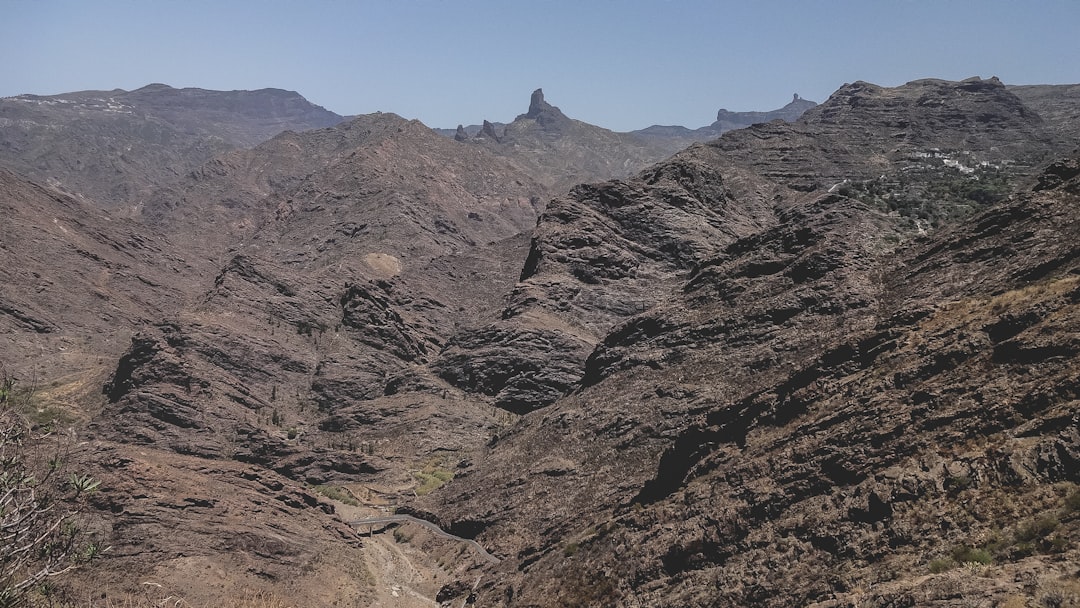
Gran Canaria sits at sea level but its interior peaks at 1,956m, packing desert dunes, pine forests, and a UNESCO Biosphere Reserve into an island of 862,893 residents. Las Palmas de Gran Canaria, the capital, is Spain’s 8th-largest city and hosts over 4 million tourists annually. The island sits just 210km off the Northwest African coast, giving it one of the most stable climates on Earth — nicknamed ‘the Continent in Miniature.’
Top 3 Highlights at a Glance
- Maspalomas Dunes — A 400-hectare Saharan-scale sand dune system that ends dramatically at the Atlantic Ocean.
- Roque Nublo — A 1,813m volcanic monolith rising above cloud level with 360-degree island panoramas.
- Vegueta Old Town, Las Palmas — Spain’s best-preserved 15th-century colonial quarter, where Columbus slept before sailing to America.
Scroll down for our complete travel guide with tips on getting there, where to stay, costs and more.
Arrival & Airport
How do I best get to Gran Canaria?
Fly directly into Gran Canaria Airport (LPA) — it receives direct flights from over 80 European cities. In my experience, Ryanair, easyJet, and Vueling offer the cheapest fares from the UK and mainland Europe, often under €60 one-way booked 6-8 weeks out. There is no practical ferry from mainland Spain — the crossing from Cádiz takes 38+ hours and is only worth it if shipping a vehicle. What surprised me: direct flights from northern European cities like Manchester, Amsterdam, and Stockholm are often cheaper than routing via Madrid. My tip: avoid booking the last flight of the day into LPA — evening delays ripple into missed hotel check-ins.
Which airport is closest to Gran Canaria’s main destinations?
Gran Canaria Airport (LPA) is the only commercial airport on the island, located 18km south of Las Palmas and just 25km north of the Maspalomas resort zone. There is no alternative — every arrival uses LPA. The honest caveat: the airport road (GC-1 motorway) suffers severe congestion on Friday afternoons and Sunday evenings during peak season, turning a 20-minute drive into 50 minutes. My tip: if heading to the south resorts like Playa del Inglés or Puerto Rico, arrange pickup or hire a car — the bus (route 30) to Las Palmas is good, but direct south-bound public transport from the airport is slower and requires a transfer.
How long does the journey from Gran Canaria Airport to the main tourist areas take?
To Las Palmas city centre, expect 25-35 minutes by taxi or bus off-peak. To Maspalomas and Playa del Inglés in the south, it’s 30-40 minutes by car via the GC-1. The Global bus route 30 from the airport to Las Palmas runs every 30 minutes and costs €2.05 — honest and reliable. A taxi to Las Palmas costs approximately €28-35; to Maspalomas expect €35-45. What most guides omit: the guagua (local bus) network is excellent between Las Palmas zones, but the single direct airport-to-south bus route runs infrequently. I recommend renting a car at the airport if your base is south of San Bartolomé de Tirajana — it pays for itself in flexibility within one day.
Do I need a rental car to explore Gran Canaria properly?
Yes, absolutely — for anything beyond Las Palmas city or the Maspalomas strip, a car is essential. The interior villages like Tejeda, Artenara, and Agüimes have zero practical public transport for tourists. Rental prices from Cicar (the best local company) start at €25-35 per day for a compact car including full insurance — significantly cheaper than international chains at the same airport desk. My honest warning: mountain roads in the central interior are genuinely narrow and winding; the GC-60 towards Roque Nublo requires comfort with switchbacks. Parking in Las Palmas’ Vegueta is difficult — use the Cono Sur underground car park at €1.20/hour. I recommend booking Cicar online at least 2 weeks ahead in July and August.
City Transport
What are the best areas to stay in Gran Canaria?
It depends entirely on your travel style, but I’ll be direct: Las Palmas (Triana/Santa Catalina districts) suits city-focused travellers wanting authentic Canarian life, restaurants, and culture. Maspalomas/Playa del Inglés suits beach-first travellers who want guaranteed sun, watersports, and resort infrastructure. Puerto Rico de Gran Canaria is the calmest resort bay with the most reliable sunny weather on the island — it averages only 19 rainy days per year. What surprised me: Mogán in the southwest is far quieter than Maspalomas, with a genuinely charming harbour and 40% lower hotel prices. I actively steer first-timers away from San Agustín — it’s dated, overpriced, and lacks character compared to neighbours 5km away.
What does accommodation cost per night in Gran Canaria?
Budget clearly: a decent 3-star hotel in Las Palmas (Triana area) costs €70-95/night in shoulder season. South resort hotels in Playa del Inglés run €90-130/night for 3-star all-inclusive in July. A quality 4-star apartment in Puerto Rico with sea view costs €110-150/night in August. The honest caveat most travel sites hide: all-inclusive packages look cheap but lock you on-site — you miss the island’s genuinely excellent local restaurants. Airbnb in residential Las Palmas neighbourhoods like Schamann or Guanarteme offers studios from €55/night year-round. My tip: the best value is a self-catering apartment in Arguineguín — half the price of Puerto Rico, same weather, 10-minute drive to everything.
How far in advance should I book accommodation in Gran Canaria during high season?
Book at least 3 months ahead for July, August, and the Christmas-New Year fortnight — these windows sell out fast. In my experience, the German and Scandinavian charter market blocks large resort hotels entirely by March for summer. The Las Palmas Carnival (February) fills the city’s hotels 8-10 weeks in advance — it’s Spain’s second-largest carnival after Tenerife’s. The shoulder months of April, May, October, and November require only 3-4 weeks’ notice. What most guides omit: Gran Canaria Pride (Maspalomas, early May) now rivals summer for accommodation pressure in the south — book 10 weeks out if travelling then. My tip: use Booking.com’s free-cancellation filter and book early, then rebook if prices drop closer to travel.
Are there special or unique accommodation types worth trying in Gran Canaria?
Yes — rural casas rurales in the interior are genuinely special and most tourists completely miss them. Properties in Tejeda and Valsequillo offer stone-built Canarian farmhouses from €80-120/night with mountain views, home-cooked breakfast with local bienmesabe almond sauce, and access to hiking trails at your door. The Parador de Cruz de Tejeda sits at 1,450m altitude inside the caldera — a historic state-run hotel at around €140/night that delivers a completely different Gran Canaria experience. What surprised me: these interior properties are booked 6-8 weeks ahead during October hiking season — the island’s most underrated travel month. Coastal cave hotels near Caideros also exist, carved into the cliffside.
Accommodation & Neighbourhoods
What are the must-see sights in Gran Canaria?
Three non-negotiables: Maspalomas Dunes (free entry, best at sunrise before 8am), Roque Nublo (2-hour round-trip hike from the La Goleta car park, free), and Vegueta in Las Palmas — walk the colonial streets and enter the Casa de Colón museum (free entry). Beyond those: the Cueva Pintada in Gáldar is a pre-Hispanic painted cave complex costing €6 entry and rivalling any European archaeological site for quality. My honest caveat: Puerto de Mogán is genuinely pretty but has become so Instagram-famous that Tuesday and Friday morning markets (the best ones) are now severely overcrowded by 10am. I recommend arriving before 9:00am or visiting on a Monday instead.
What can I experience for free in Gran Canaria?
More than most Spanish islands — in my experience, Gran Canaria punches above its weight for free experiences. The Maspalomas Dunes natural reserve costs nothing to enter and is one of Europe’s most dramatic landscapes. Vegueta’s colonial architecture and the CAAM contemporary art museum are both free. The Jardín Botánico Canario Viera y Clavijo near Tafira Alta — Spain’s largest botanical garden — has free entry and covers 27 hectares of endemic Canarian flora. Every Sunday, the Mercado del Puerto in Las Palmas has free entry and live music. My tip: the Mirador del Balcón viewpoint on the GC-200 coastal road offers one of the island’s most dramatic Atlantic cliff panoramas — completely free and visited by almost no package tourists.
Which day trips from Gran Canaria’s main bases are possible?
From Las Palmas, Agüimes old town is 35km south — 40 minutes by car — and pairs perfectly with the nearby Barranco de Guayadeque ravine, which has cave restaurants serving Canarian stew from €12 per person. From the south resorts, Tejeda village is a 50-minute drive into the caldera — combine it with Roque Nublo for a full mountain day. The ferry to Fuerteventura from Las Palmas port takes 1 hour 15 minutes (Fred Olsen, from €38 return) and is absolutely worth a day trip for Corralejo’s beaches. What most visitors miss: the north coast road through Agaete — the village, the natural pools at Puerto de las Nieves, and the almond blossom (February) make it the island’s most underrated half-day.
What local specialities should I try in Gran Canaria?
Lead with papas arrugadas — small wrinkled potatoes boiled in salt water, served with mojo rojo (spicy pepper sauce) or mojo verde (coriander-herb sauce). These are Gran Canaria’s defining dish and cost €4-6 as a starter anywhere. Bienmesabe is a thick almond-honey sauce served on ice cream or with fried bananas — buy a jar from Tejeda village for €5-8 to take home. Gofio (toasted cereal flour) appears in soups, ice cream, and bread — try gofio escaldado (gofio porridge with fish broth) at any traditional restaurant in Vegueta. My honest warning: the resort-zone menus in Playa del Inglés are almost universally tourist-adapted and disappointing — take the 5km drive to Maspalomas pueblo for genuine Canarian cooking at half the price.
Highlights & Must-Sees
What makes Gran Canaria unique compared to the other Canary Islands?
Gran Canaria’s ’Continent in Miniature’ label is genuinely earned — no other Canary Island packs desert, cloud forest, alpine scrubland, and Atlantic beaches into 1,560km². The island’s pre-Hispanic Canarii culture left a richer archaeological legacy here than anywhere else in the archipelago — the Cenobio de Valerón cave complex near Santa María de Guía contains 350 interconnected granary caves carved into a cliff face. Las Palmas itself is a real working Spanish city of nearly 863,943 people — not a resort town — with a serious food scene, nightlife, and arts culture. What surprised me: Gran Canaria has Spain’s most diverse LGBT+ resort scene (Maspalomas), drawing over 200,000 visitors annually during Pride week alone.
How many days in Gran Canaria are worthwhile?
A minimum of 7 days to do the island justice — less and you’ll only scratch the resort coast. My recommended split: 3 nights in Las Palmas (Vegueta, city beaches, Botanic Garden), 2 nights in the interior (Tejeda/Parador), and 2 nights in the south (Puerto Rico or Mogán). 10 days is the sweet spot if you want hiking, beach time, and cultural depth. What most guides omit: Gran Canaria rewards slow travel — the interior road network means you cannot efficiently cover north, south, and centre in a single day. I’ve met travellers who spent 14 days and still hadn’t reached Agaete or the Barranco de Guayadeque. If you have only 3-4 days, base yourself in Las Palmas and do day trips — don’t try to hop between resort zones.
When is the best time to visit Gran Canaria?
Based on verified climate data, July, August, and October offer the optimal combination of weather, crowd balance, and activities. July and August guarantee sun across the entire island, though the south resorts peak at 28°C while the interior stays cooler at 18-22°C — ideal for hiking. October is my personal favourite: beaches are still warm (23-24°C water temperature), crowds drop by 40% versus August, and the interior hiking trails are at their best. What most guides omit: January and February are excellent for Las Palmas city visits — the famous Carnival runs in February, and the city stays at a pleasant 21°C while northern Europe freezes. Avoid August in Playa del Inglés if you dislike elbow-to-elbow beach crowds.
What are the best local festivals in Gran Canaria worth attending?
Las Palmas Carnival in February is the absolute standout — Spain’s second-largest after Tenerife, with 200,000+ attendees for the main parade on the final Saturday. The Maspalomas Pride (early May) draws over 80,000 visitors across a week of events concentrated around the Yumbo Centre. Corpus Christi in Las Palmas de Gran Canaria (June) features the most elaborate flower-petal street carpets in the Canaries — free to watch, stunning. What surprised me: the Almond Blossom season in Tejeda and Valsequillo (late January to mid-February) is one of the most beautiful natural events on the island — thousands of almond trees bloom pink and white across the caldera. It’s completely free and largely unknown to package tourists.
Food & Drink
How does the weather in Gran Canaria affect activities throughout the year?
The south of the island stays reliably sunny 330+ days per year — beach and watersports activities in Playa del Inglés, Puerto Rico, and Amadores run year-round without disruption. The north (Las Palmas, Agaete) receives more cloud and rain between November and March, but rarely enough to cancel plans. The interior above 1,200m altitude (Tejeda, Roque Nublo area) can see frost and occasional snow in January and February — a surreal experience with desert dunes visible in the distance. My honest warning: calima — Saharan dust storms blowing in from Africa — can reduce visibility and air quality for 2-5 days at a time, most frequently in July and August. These events are impossible to predict but are tracked on the AEMET weather app.
How crowded does Gran Canaria get in peak season?
The south resorts — Playa del Inglés, Maspalomas, Puerto Rico — are genuinely packed in August and the Christmas fortnight, with hotel occupancy hitting 95%+. The Maspalomas Dunes near the lighthouse see 3,000+ daily visitors in peak weeks, and the main Playa del Inglés beach has almost no free towel space by 10am in August. What most guides hide: Las Palmas city beaches (Las Canteras) get crowded with local residents in July-August, but the city itself never feels overwhelmed. My tip: the interior of the island is empty even in peak August — Tejeda village might have 20 other tourists on a busy day. If you’re visiting in August, book the south but plan interior days to escape the resort density. Amadores beach is visually beautiful but so compact that 100 people makes it feel full.
How safe is Gran Canaria for tourists?
Gran Canaria is very safe by European standards — petty theft is the primary risk, not violent crime. In my experience, the Las Palmas port area near Santa Catalina Park and the Playa del Inglés Yumbo Centre late at night are where most incidents occur — pickpocketing and bag snatching from café tables. Leave valuables in hotel safes; never leave anything visible in a parked car, especially in Maspalomas dune parking areas where car break-ins are a documented problem. The tourist police (Policía Nacional) in both Las Palmas and Maspalomas are responsive and English-speaking. Solo female travellers report feeling safe across the island. My honest caveat: the nightlife strip in Playa del Inglés at 3-4am has a rough edge — exercise normal big-city awareness.
Is English widely spoken in Gran Canaria?
In the south resort zone, English is the dominant working language — menus, signage, and all hospitality staff default to English in Playa del Inglés, Puerto Rico, and Maspalomas. Las Palmas city is different: it’s a real Spanish city where Spanish is expected, and English proficiency drops sharply outside hotels and tourist restaurants. My tip: learning 10 basic Spanish phrases dramatically improves your reception in Las Palmas restaurants and shops — locals genuinely appreciate the effort. In the interior villages like Tejeda, Mogán pueblo, and Agüimes, English is rarely spoken — a translation app is essential. German is widely spoken in resort areas given the large German tourist market — you’ll see as many German menus as English ones in Playa del Inglés.
Practical Tips
What is the daily budget for travelling in Gran Canaria?
Budget clearly by travel style: a backpacker/hostel budget runs €60-75/day (hostel bed €22-30 in Las Palmas, local lunch €10-13, bus transport, self-catering dinners). A mid-range independent traveller spending 3-star hotel nights, sit-down meals, and a rental car should budget €130-160/day per person. A comfort traveller in 4-star resorts with restaurant dining and excursions needs €200-250/day. What most guides omit: all-inclusive packages in the south resorts can undercut mid-range independent budgets — a 7-night all-inclusive in Playa del Inglés from a UK package operator sometimes costs less per day than self-catering. The hidden cost is you’ll spend €15-25/day extra on excursions and rental cars the package doesn’t include.
How does public transport work in Gran Canaria?
The Global bus network (guagua) covers Las Palmas comprehensively and connects most coastal towns, but interior villages are poorly served. From Las Palmas, route 30 runs to the airport (€2.05), route 1 runs the length of Las Palmas city (flat €1.40), and route 30/35 connects to the south resorts (€4.90 full fare). A 10-trip rechargeable card (Bonoguagua) cuts single fares by 30% — buy at the San Telmo bus station in Las Palmas. My honest caveat: buses to Maspalomas from Las Palmas run hourly but the journey takes 75-90 minutes versus 35 minutes by car — the network works but doesn’t replace a rental car for island exploration. The Global app (Android/iOS) shows real-time arrivals and journey planning — download it before leaving home.
Which apps do you recommend for travelling in Gran Canaria?
Five apps I use personally on every Gran Canaria trip: Global Canaria (official bus network, real-time tracking, essential), AEMET (Spain’s official weather service — critical for tracking calima dust storms), Cicar app (car hire management if using the best local rental company), Maps.me (offline maps for the interior where data signal drops on the GC-60 and GC-600 mountain roads), and TheFork (restaurant reservations in Las Palmas — top spots like La Mulata in Vegueta book out 4-5 days ahead). My tip: download offline Google Maps for the entire island before leaving home — mobile data coverage disappears in several interior barranco valleys. For hiking specifically, Wikiloc has 300+ validated Gran Canaria trails with elevation profiles and GPX downloads.
Gran Canaria at a Glance
| Population | 863,943 |
|---|---|
| Currency | EUR (€) |
| Official language | Spanish |
| Time zone | UTC±00:00 |
Source: Wikidata, retrieved October 2026.
Useful Resources for Planning Your Trip to Gran Canaria
- Wikipedia: Gran Canaria — history, geography and background
- Lonely Planet: Gran Canaria — itineraries and travel inspiration
- TripAdvisor: Gran Canaria — hotels, restaurants and traveller reviews
Combine Gran Canaria With These Europe Destinations
These destinations pair well with Gran Canaria — close enough to visit in one trip: La Palma, Lanzarote, Fuerteventura, Tenerife.
🎥 Gran Canaria Travel Videos
Gran Canaria Travel Guide 2025 Top Attractions + Secret Spots
Sophie Nadeau

20 of the Best Places to Visit in Gran Canaria – 4K Travel Guide
Toucan Travellers

17 Best Things to do in Gran Canaria, Spain (Canary Islands)
The Intrepid Guide
You are currently viewing a placeholder content from Vimeo. To access the actual content, click the button below. Please note that doing so will share data with third-party providers.
More InformationYou are currently viewing a placeholder content from YouTube. To access the actual content, click the button below. Please note that doing so will share data with third-party providers.
More InformationYou need to load content from reCAPTCHA to submit the form. Please note that doing so will share data with third-party providers.
More InformationYou are currently viewing a placeholder content from GetYourGuide. To access the actual content, click the button below. Please note that doing so will share data with third-party providers.
More Information