
Segovia: The Complete Travel Guide (2026)
Last reviewed: October 2026 · key facts checked against Wikidata
Segovia Travel Guide: Everything You Need to Know (2026)
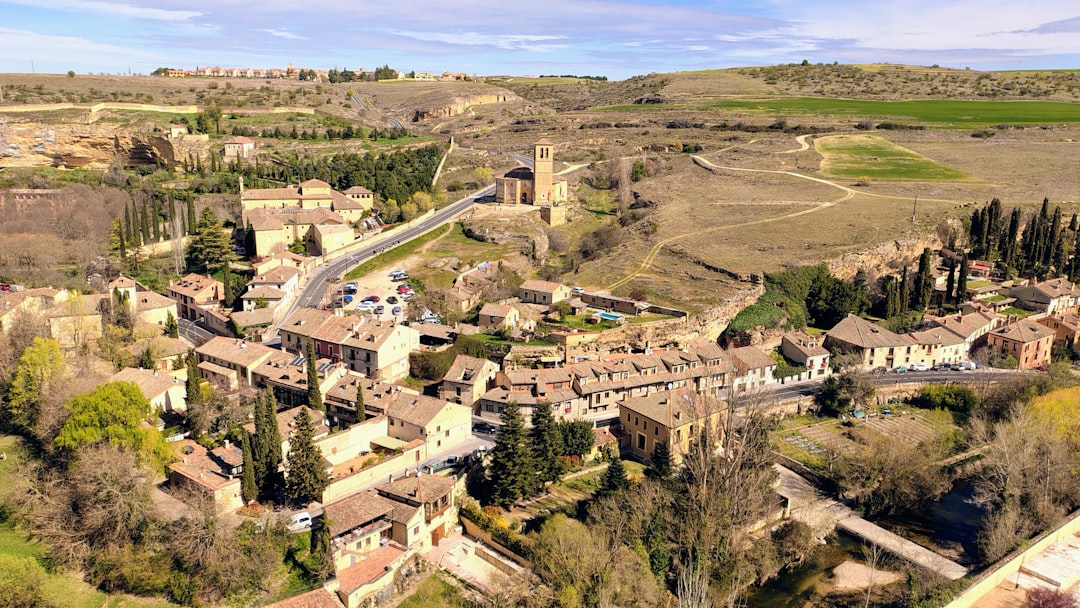
Segovia, perched at 1,002 metres above sea level on the Inner Castilian Plateau, is home to 52,375 residents and one of Spain’s most breathtaking Roman aqueducts — built around 50 AD and still standing without a drop of mortar. Just 91 km northwest of Madrid, this UNESCO World Heritage city packs a Roman engineering marvel, a fairy-tale Alcázar castle, and a medieval cathedral into a walkable hilltop core that most visitors scandalously rush through in half a day.
Top 3 Highlights at a Glance
- Roman Aqueduct of Segovia — Nearly 2,000 years old, 728 metres long, and built without mortar — one of the best-preserved Roman structures in the world.
- Alcázar de Segovia — The ship-prow castle that reputedly inspired Walt Disney’s Cinderella castle, with a tower offering panoramic views at 1,002m elevation.
- Cochinillo Asado at Mesón de Cándido — Segovia’s legendary suckling pig roasted in wood-fired ovens, served beneath the aqueduct since 1786 — a ritual, not just a meal.
Scroll down for our complete travel guide with tips on getting there, where to stay, costs and more.
Arrival & Airport
How do I get to Segovia?
The fastest option is the Avant high-speed train from Madrid Chamartín — it takes just 27 minutes and costs around €13 each way. I recommend this without hesitation over the bus. Trains depart roughly every hour and drop you at Segovia-Guiomar station, which is about 5 km from the old town — you’ll need a connecting bus (Line 11) or taxi. The bus from Madrid’s Moncloa terminal takes about 75 minutes and costs €8, but drops you far closer to the historic centre at the Paseo de Ezequiel González terminal. My tip: take the train in, bus out, and you get the best of both options.
Which airport is closest to Segovia?
Madrid Barajas (MAD) is your only realistic gateway, sitting 107 km from Segovia’s centre. No airport is closer. From MAD, take the Metro Line 8 to Nuevos Ministerios, then connect to Chamartín station for the Avant train to Segovia — total journey time around 90 minutes and roughly €20 all-in. What surprised me: many travellers waste money on taxis from the airport to Segovia directly, which costs €90–120. That’s simply not worth it when public transport works perfectly. Avoid Valladolid airport — it’s marketed as regional but has almost no international connections useful to tourists.
How long does the journey to Segovia take from Madrid?
By high-speed Avant train: 27 minutes from Madrid Chamartín — genuinely one of the most efficient city connections in Spain. By bus from Moncloa: 75 minutes. By car via the AP-61 toll road: approximately 80 minutes depending on traffic, with tolls around €7 each way. In my experience, the train wins on speed but loses on the final transfer to the old town. The honest trade-off: if you’re travelling with luggage or a family, the bus drops you within 10 minutes’ walk of the aqueduct, making it more practical despite the longer ride.
Do I need a car to explore Segovia?
No — and I’d actively discourage driving into the historic centre. The old town is entirely pedestrianised within the walled area, and parking outside the walls costs €1.50–2.50 per hour at the nearest surface lots. In my experience, a car creates more stress than freedom here. The city’s core — from the Aqueduct to the Alcázar — is walkable in under 25 minutes end to end. A car becomes useful only if you’re planning day trips into the Pedraza village (38 km east) or the Sierra de Guadarrama national park. For Segovia itself, your feet and the train are all you need.
City Transport
What are the best areas to stay in Segovia?
Stay inside or immediately adjacent to the walled old town — full stop. The neighbourhood around Plaza Mayor puts you within 5 minutes of every major sight. The Calle Real corridor (the main pedestrian spine) is ideal for first-timers. What most guides omit: rooms facing the aqueduct on Avenida del Padre Claret have spectacular views but significant street noise until midnight. If you want quiet, book on the Eresma river valley side near the Alcázar — calmer, slightly uphill, and worth every step. Avoid the modern Nueva Segovia district entirely; it’s residential and a 20-minute walk from everything interesting.
What does accommodation cost per night in Segovia?
Budget €60–85 per night for a clean, well-located double room in a mid-range hotel or guesthouse inside the walls. Boutique hotels like Hotel Infanta Isabel on Plaza Mayor run €95–140 depending on season. The honest caveat: Segovia has limited accommodation stock — roughly 30 hotels citywide — which means prices spike sharply during peak weekends and the Semana Santa festival. A hostel dorm at Segovia Backpackers costs around €22–28 per night. Luxury options at Hotel Palacio San Facundo reach €180+. My tip: mid-range guesthouses on Calle Juan Bravo offer the best value-to-location ratio I’ve found.
How far in advance should I book accommodation in Segovia during high season?
Book at least 6–8 weeks ahead for July and August weekends — Segovia fills up fast because the hotel stock is small. What surprised me: Friday and Saturday nights are dramatically harder to book than midweek stays, even in April and October. Madrid day-trippers rarely sleep here, but those who do tend to book well in advance. For Semana Santa (Holy Week) and the San Juan y San Pedro festival in late June, book 3–4 months out or expect to stay 15 km away in surrounding villages. I’ve found Booking.com has broader Segovia inventory than Expedia for this city specifically.
Are there special accommodation types worth trying in Segovia?
Yes — the converted stone palaces (casas rurales) inside the walled city are genuinely special and underused by international visitors. Properties like La Casa Mudéjar Hospedería are built into 15th-century Mudéjar architecture with exposed wooden beams and stone arches for €85–120 per night. These are not generic boutique hotels — you’re sleeping inside living history. The caveat: most lack elevators, and heavy bags plus steep medieval staircases are a real combination. If mobility is a concern, stick to the modern hotels near the Aqueduct end of the old town where terrain is flatter. In my experience, the palace stays are the defining Segovia accommodation memory.
Accommodation & Neighbourhoods
What are the must-see sights in Segovia?
Three non-negotiables: the Roman Aqueduct (free, always open, best at dusk when lit), the Alcázar castle (entry €9, or €6 for the tower alone), and the Segovia Cathedral (entry €3, Gothic interior completed in 1768). Beyond the famous trio, the Jewish Quarter (Judería) around Calle de la Judería is one of Castile’s best-preserved medieval Jewish neighbourhoods and almost entirely overlooked. Also don’t miss the Vera Cruz Church — a 13th-century Templar chapel with a 12-sided exterior, sitting alone in the valley below the Alcázar, entry just €2. In my experience it’s more atmospheric than the cathedral.
What can I experience for free in Segovia?
The Roman Aqueduct costs nothing and is spectacular day and night — 166 arches rising to 28.5 metres at the highest point. Walking the medieval city walls route along the exterior is free and gives views the interior can’t match. The Plaza Mayor with its street musicians and surrounding arcades costs nothing to enjoy. Every Sunday morning, the Segovia Cathedral offers free entry from 9:30–11:30am during Mass. The Eresma river valley walk beneath the Alcázar is one of the most scenic 2 km strolls in Castile and costs zero. My honest warning: the free Aqueduct view from Plaza del Azoguejo gets genuinely crowded after 11am on summer weekends.
Which day trips are possible from Segovia?
Pedraza (38 km east) is Castile’s best-preserved medieval village — entirely car-free, population just 430, and host to a famous candlelit concert festival each July. Reach it only by car or organised tour. Ávila is 67 km west, reachable by train in 45 minutes for €7, and offers the most complete medieval city walls in Spain. La Granja de San Ildefonso royal palace and gardens is just 11 km south — a baroque Versailles-style estate reachable by bus for €2. My tip: combine La Granja with a morning in Segovia as a single day from Madrid. Avoid trying to do Segovia, Ávila, and Toledo in one day — a common tourist mistake.
What are the local food specialities in Segovia?
Cochinillo asado (roast suckling pig) is the undisputed king — the dish Segovia is famous for across Spain. Traditionally, a ceramic plate is used to cut it, demonstrating how tender the meat is after roasting for 2–3 hours at 180°C. The classic venue is Mesón de Cándido beneath the aqueduct, though Restaurante José María on Calle Real is where locals actually argue produces the better pig. Also try judiones de La Granja — enormous butter beans stewed with chorizo and black pudding, a cold-weather staple. Ponche Segoviano (a marzipan-and-cream layered cake) from Confitería La Concepción on Plaza Mayor is the essential sweet finish.
Highlights & Must-Sees
What makes Segovia unique compared to other Spanish cities?
Segovia’s Roman Aqueduct is the only one in Europe still standing fully intact and in its original position after nearly 2,000 years — no reconstruction, no partial restoration. That alone separates it from every comparable city. But what genuinely surprised me is how Segovia manages to feel like a living city rather than a museum: 52,375 people actually live here, students fill the bars at night, and locals outnumber tourists on weekday mornings. The city sits at 1,002 metres elevation, which means the light and sky feel different — sharper, cleaner — compared to Madrid or Toledo. It’s compact enough to understand in 2 days but deep enough to reward a week.
How many days are worthwhile in Segovia?
2 full days is the honest answer for most travellers. Day 1: Aqueduct, cathedral, Alcázar, Jewish Quarter, cochinillo dinner. Day 2: Vera Cruz Church, the valley walk, La Granja palace day trip. Three days works well if you want to explore the Sierra de Guadarrama hiking trails or visit Pedraza. The mistake I see constantly: people do Segovia as a 4-hour Madrid day trip and leave frustrated they didn’t see enough. If you’re sleeping here, you get the aqueduct at golden hour, the old town after tour groups leave, and breakfast at a local bar — all experiences day-trippers entirely miss.
When is the best time to visit Segovia?
July and August offer the most reliable weather, but spring (late April–early June) is where I’d send a friend — wildflowers on the hillsides, temperatures around 18–22°C, and noticeably fewer crowds than summer. Segovia at 1,002 metres means even July rarely exceeds 30°C, which makes summer far more bearable here than in Seville or Madrid. October is genuinely underrated — golden light, empty streets, and cochinillo season at its best. Avoid the three major Madrid holiday weekends in August when the city triples in population for 48 hours. Winter (December–February) is cold and atmospheric but some smaller restaurants close midweek.
Are there local festivals in Segovia worth attending?
San Juan y San Pedro (June 24–29) is Segovia’s main city festival — 6 days of concerts, processions, and events across the old town, all centred on Plaza Mayor. The Titirimundi International Puppet Festival in May is genuinely world-class, drawing performers from 30+ countries for 5 days of free and ticketed shows (tickets from €8). Semana de Música Religiosa in Holy Week is atmospheric and crowded. The Pedraza candlelit concerts in July — technically a day trip at 38 km away — are worth planning an entire visit around. My warning: festival weekends mean accommodation prices jump 40–60% and booking a room last-minute becomes nearly impossible.
Food & Drink
How does the weather in Segovia affect activities?
At 1,002 metres, Segovia has genuine winters — January temperatures drop to around 2–5°C at night, and light snow falls 3–5 days per year. This actually makes the Alcázar and aqueduct dramatically photogenic, but outdoor café culture disappears. Summer afternoons can reach 28–30°C, but the altitude keeps evenings cool — always bring a layer for after 9pm even in August. The biggest practical impact: the Eresma valley walking trails become muddy and difficult November through February. The Sierra de Guadarrama ski station at Navacerrada (30 km south) operates December–March, making a Segovia plus skiing combination genuinely viable in winter.
How crowded does Segovia get in peak season?
Peak summer weekends are genuinely intense — the Plaza del Azoguejo below the aqueduct can hold 10 coach tour groups simultaneously. In my experience, arrive at the aqueduct before 9am or after 7pm to have it near yourself. The Alcázar queue can reach 45 minutes on Saturday afternoons in July and August without pre-booked tickets. The honest trade-off: even at peak, Segovia is smaller and less overwhelming than Toledo — crowds dissipate quickly once you’re 3 streets away from the main axis. Midweek visits in July are dramatically calmer. I’d estimate weekday visitor density is 60% lower than weekends during high season.
How safe is Segovia?
Segovia is extremely safe — one of Spain’s lower-crime provincial capitals with 52,375 residents and virtually no tourist-targeted crime beyond occasional pickpocketing near the aqueduct. In my experience walking the city at all hours, including late nights after dinner, I’ve never felt anything but comfortable. The Plaza Mayor area after midnight has students and locals out, not trouble. The one caveat worth mentioning: the steep, uneven medieval cobblestones cause more physical injuries to tourists than any human threat — proper footwear is genuinely important, not a cliché warning. Don’t walk the old town in flip-flops or smooth-soled shoes, especially after rain when stones become slick.
Is English widely spoken in Segovia?
At the major tourist sites — Alcázar, Cathedral, Mesón de Cándido — English is spoken competently. Beyond that, expect limited English fluency. Segovia is a working Spanish provincial city, not an international tourism hub like Barcelona, and locals genuinely appreciate any attempt at Spanish. In my experience, even basic phrases like “¿Tiene la carta en inglés?” (do you have an English menu?) are warmly received. The tourist office on Plaza Mayor has English-speaking staff daily. My practical tip: download Google Translate with offline Spanish before you arrive — you’ll use it 5–10 times per day in local bars and smaller shops where zero English is the norm.
Practical Tips
What is the daily budget for visiting Segovia?
Budget traveller: €55–70 per day (hostel dorm at €25, menú del día lunch at €12, self-catering breakfast, one paid sight). Mid-range: €110–150 per day (boutique hotel at €85, cochinillo dinner for two split is €25–35 per person, cathedral plus Alcázar entry). Comfortable: €180–220 per day with a hotel like Infanta Isabel, full restaurant meals, and guided tours. The unavoidable expense most budgets miss: Segovia’s restaurant culture means a proper cochinillo dinner for one with wine costs €35–45 — this isn’t optional if you’re here for the food. My tip: eat the menú del día (€11–13) at lunch for three courses and spend your dinner budget on one proper cochinillo experience.
How does public transport work within Segovia?
Within Segovia’s old town, you won’t need public transport — the walled city is walkable in every direction. The practical use case is connecting Segovia-Guiomar train station to the centre: Bus Line 11 runs every 15–20 minutes and costs €1.30, taking about 12 minutes. Taxis from the station cost €8–10. City buses serve the modern residential districts but tourists rarely need them. From Segovia to La Granja palace, Bus Line 11 continues from the city centre for €2 return — the single most useful public transport route for visitors. My honest warning: bus frequency drops significantly on Sundays and holidays, so check schedules if your train arrives on a weekend morning.
Which apps do you recommend for visiting Segovia?
Renfe app (essential — book your Madrid-Segovia Avant train, save tickets digitally, check live delays). Google Maps works reliably for walking navigation inside the walled city, though offline download is wise. Tripadvisor is useful specifically for checking current Alcázar and Cathedral opening hours, which shift seasonally. Google Translate with offline Spanish downloaded — I use this in every non-tourist restaurant in Segovia. Moovit handles the local bus connections including Line 11 from the train station. What surprised me: Segovia has no dedicated city tourism app worth downloading — the tourist office website (turismodesegovia.com) loaded on mobile is more reliable than any third-party alternative I’ve tested.
More Destinations in Europe
Explore our complete travel guides for more Europe destinations: Salamanca Travel Guide (2026), Cannes Travel Guide (2026), Auvergne Travel Guide (2026), Soria Travel Guide (2026), Amiens Travel Guide (2026).
Segovia at a Glance
| Population | 52,375 |
|---|---|
| Currency | EUR (€) |
| Official language | Spanish |
| Time zone | UTC+01:00 |
Source: Wikidata, retrieved October 2026.
Useful Resources for Planning Your Trip to Segovia
- Wikipedia: Segovia — history, geography and background
- Lonely Planet: Segovia — itineraries and travel inspiration
- TripAdvisor: Segovia — hotels, restaurants and traveller reviews
🎥 Segovia Travel Videos
7 Best Things to Do in Segovia: Spanish City Guide
Days We Spend

A Day in Segovia Spain Travel Guide What to See, Eat …
Julia Gonzales Travels
Segovia in 24 Hours: Best Sights, Food & Hidden Gems
Ana Gildersleeve
You are currently viewing a placeholder content from Vimeo. To access the actual content, click the button below. Please note that doing so will share data with third-party providers.
More InformationYou are currently viewing a placeholder content from YouTube. To access the actual content, click the button below. Please note that doing so will share data with third-party providers.
More InformationYou need to load content from reCAPTCHA to submit the form. Please note that doing so will share data with third-party providers.
More InformationYou are currently viewing a placeholder content from GetYourGuide. To access the actual content, click the button below. Please note that doing so will share data with third-party providers.
More Information