
Toledo: The Complete Travel Guide (2026)
Last reviewed: October 2026 · key facts checked against Wikidata
Toledo Travel Guide: Everything You Need to Know (2026)
Toledo, Spain, perches on a granite hill encircled by the Tagus River, founded as a Roman settlement around 192 BC and declared a UNESCO World Heritage City in 1986. Just 75 km south of Madrid, it packs a medieval skyline of cathedrals, synagogues, and mosques into barely 86 square kilometres. With roughly 85,000 residents, Toledo is intimate enough to walk in a day yet dense enough in history to justify far longer.
Top 3 Highlights at a Glance
- Toledo Cathedral — A Gothic masterpiece built over 267 years, housing El Greco’s ‘The Disrobing of Christ’ in its original altar setting.
- El Greco Museum (Casa y Museo del Greco) — A reconstructed 16th-century house displaying 20 original El Greco paintings, including his iconic ‘View and Plan of Toledo’.
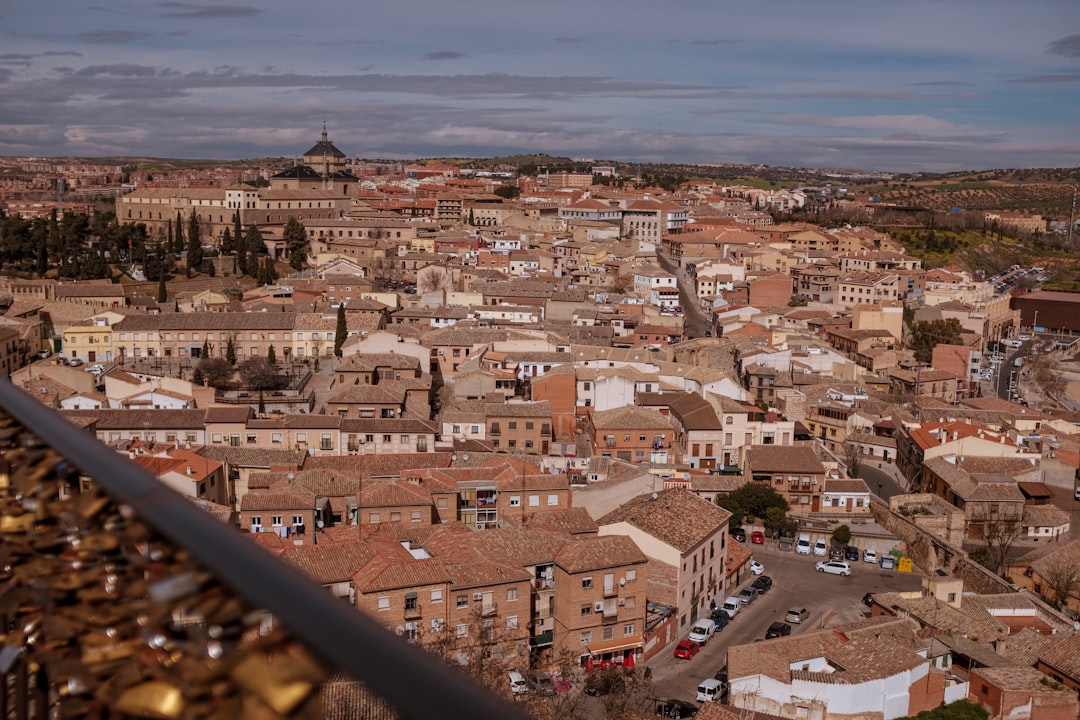
- Mirador del Valle — The panoramic viewpoint across the Tagus gorge delivers the exact cityscape El Greco painted in 1599.
Scroll down for our complete travel guide with tips on getting there, where to stay, costs and more.
Arrival & Airport
How do I get to Toledo — by train, bus, or car?
Take the AVE high-speed train from Madrid Atocha — it arrives in exactly 33 minutes and costs €14–€22 each way. In my experience, this beats driving entirely: parking inside Toledo’s old town is a nightmare and most streets are pedestrian-only. ALSA buses from Madrid’s Estación Sur take 1 hour 15 minutes and cost about €6, making them the budget option. What surprised me: the train station sits 1.5 km downhill from the historic centre, so factor in a €5 escalator ride or a steep 20-minute uphill walk to reach the old city. My tip: book AVE tickets on the Renfe app at least 3 days ahead — cheap fares sell out fast on weekends.
Which airport is closest to Toledo?
Madrid Barajas Airport (MAD) is the closest international gateway, located 75 km northeast of Toledo. In my experience, flying directly into Toledo is not possible — there is no local airport. From MAD, the fastest route is a 40-minute RENFE Cercanías train from Terminal 4 to Madrid Atocha (about €2.60), then the 33-minute AVE to Toledo. Total journey: roughly 1 hour 30 minutes door-to-door. The honest caveat most guides skip: Terminal 4 is a separate building requiring a free shuttle from T1–T3, which adds 20 minutes if you land in the wrong terminal. I recommend landing at T4 whenever your booking allows it.
How long does the journey to Toledo take from Madrid?
By AVE from Madrid Atocha, the journey takes exactly 33 minutes. By ALSA bus from Estación Sur, plan 1 hour 15 minutes. Driving takes roughly 55 minutes via the A-42 motorway, but I strongly advise against it unless you are staying in a hotel outside the old city walls — parking garages charge €18–€22 per day, and the historic centre’s streets are too narrow to navigate comfortably. What surprised me: Sunday trains fill up with Madrid day-trippers by 9 a.m., so the 07:45 or 08:20 departures are measurably less crowded. My tip: the first AVE of the day rewards you with Toledo’s streets nearly empty before the tour buses arrive at 10 a.m.
Do I need a rental car in Toledo?
No — a rental car in Toledo is a liability, not an asset. The UNESCO-listed old city is almost entirely pedestrianised, and the few streets that allow vehicles are barely 3 metres wide. Everything worth seeing is within a 1.5 km walking radius of the Plaza de Zocodover. The one exception: if you plan day trips to Consuegra’s windmills (65 km away) or Orgaz Castle (40 km), a car saves significant time. In that case, rent from Madrid and drive in, parking at the Parking Miradero garage just outside Bisagra Gate for €13 per day. My honest warning: GPS navigation inside the walls frequently routes you down pedestrian alleys — always cross-check with Google Maps in satellite view before entering.
City Transport
What are the best areas to stay in Toledo?
Stay inside the old city walls for maximum atmosphere — waking up at dawn before day-trippers arrive is the single best thing about overnighting in Toledo. The area around Calle del Comercio and Plaza de Zocodover puts you within 5 minutes of the Cathedral and Alcázar. For quieter nights with better value, the Judería (Jewish Quarter) near Santa María la Blanca offers charming medieval lanes without the main-street noise. Budget travellers do well in Casco Histórico hostels on Calle Santa Fe. What most guides omit: hotels on the south-facing hillside below Santo Tomé get oppressive heat in July and August — choose a north-facing room or a property with air conditioning explicitly confirmed in the listing.
What does accommodation cost per night in Toledo?
Budget hostels inside the walls run €20–€35 per bed in a dorm. A solid 3-star hotel like Hotel Pintor El Greco costs €75–€110 per night for a double in shoulder season. Boutique hotels in converted palaces — such as Parador de Toledo on the south hill — start at €180 and climb past €260 in peak summer. My tip: the Parador’s restaurant terrace at sunset is worth the splurge even if you sleep elsewhere. The honest caveat: Toledo has a limited stock of quality mid-range hotels, and the €80–€120 bracket fills first on Friday and Saturday nights year-round. Booking 6–8 weeks ahead for weekends is not excessive — it is necessary.
How far in advance should I book accommodation in Toledo during high season?
For weekend visits from April through October, book at least 6 weeks ahead. Toledo’s old city contains fewer than 40 licensed hotels, meaning the entire inventory can sell out for a single long weekend. Corpus Christi weekend — which falls in late May or June — is the most critical booking window: this is Toledo’s biggest festival, attracting 50,000+ visitors to a city of 85,000, and decent rooms disappear 3–4 months in advance. In my experience, midweek stays in November through February can be booked 1–2 weeks out with no problem. My tip: set a Booking.com price alert in January for your target dates — early-bird cancellation-free rates are consistently 20–30% cheaper than last-minute prices.
Are there special or unique accommodation types in Toledo?
Yes — Toledo excels at medieval palace conversions. The Parador de Toledo is a 1920s building on the south cliff with the most photographed view of the city, and it is a genuine experience rather than just a hotel. Several 15th-century Jewish houses in the Judería have been converted into boutique casas rurales with original stone arches and Mudéjar ceilings — Casa de Cisneros near the Cathedral is a standout. For something unusual, a handful of properties allow access to private rooftop terraces with direct views of the Cathedral spire — worth requesting explicitly when booking. The honest warning: many ‘historic’ Toledo hotels photograph better than they sleep — check recent reviews specifically for noise, mattress quality, and WiFi reliability before committing.
Accommodation & Neighbourhoods
What are the absolute must-sees in Toledo?
My non-negotiable list: Toledo Cathedral (entry €10, includes the sacristy with El Greco’s masterpiece), the Alcázar military museum (€5, free on Sunday), and the Church of Santo Tomé, which houses El Greco’s ‘The Burial of the Count of Orgaz’ (€3). The Sinagoga del Tránsito (€3) is one of the best-preserved 14th-century synagogues in Europe. What surprised me: most visitors skip the Monasterio de San Juan de los Reyes in the western old city — its Gothic cloister with chains of freed Christian prisoners still hanging from its walls is among the most atmospheric spots in Spain. I recommend buying a combined ticket for €12 covering 4 monuments to save both money and queuing time.
What can I experience for free in Toledo?
Quite a bit — the Cathedral exterior and plaza are free at all hours, and the Mirador del Valle viewpoint across the Tagus costs nothing and outperforms any paid attraction photographically. The Alcázar is free every Sunday. Walking the old city walls along Calle de las Armas and through the Puerta del Sol gate costs nothing. The Church of San Ildefonso (Iglesias Jesuitas) charges only €2.80 for rooftop access with arguably the best in-city panorama. In my experience: arriving at 6:30 a.m. and walking the deserted streets of the Judería costs nothing and delivers an atmosphere that no museum can replicate. My honest caveat: the best free experience — the Tagus gorge walk below the city — requires 40 minutes of steep descent and re-ascent.
Which day trips from Toledo are worthwhile?
Consuegra, 65 km south, has the most cinematically intact windmills in La Mancha — 12 white mills on a ridge above a crusader castle, easily reached in 50 minutes by car. There is no direct bus. Aranjuez, 48 km northeast, offers a Bourbon royal palace and UNESCO-listed landscape accessible by Renfe train in 45 minutes for €4.50. Madrid itself works as a reverse day trip — many travellers sleep in Toledo and commute to Madrid for a day, reversing the usual pattern. My honest caveat: Consuegra’s Saffron Festival in late October (exact date varies annually) is one of the most authentic rural festivals in Castile-La Mancha, but it requires a rental car and sells accommodation out months ahead.
What local specialities should I eat in Toledo?
Carcamusas is Toledo’s signature dish — a pork and vegetable stew unavailable elsewhere and served as a free tapa with drinks at Bar Ludeña on Plaza de la Magdalena. Mazapán (marzipan) is the city’s most famous product: the shop Santo Tomé Mazapán on Calle Santo Tomé has been making it since 1856 and sells individual figurines from €1.50. Perdiz estofada (stewed partridge) is the prestige dish — budget €14–€18 for a main course at a sit-down restaurant. My tip: buy mazapán at the Convento de San Clemente where nuns sell it through a revolving hatch for 20% less than tourist shops — a genuinely local experience most visitors completely miss.
Highlights & Must-Sees
What makes Toledo unique compared to other Spanish cities?
Toledo is the only city in Western Europe where a Gothic cathedral, a Moorish mosque, and a functioning synagogue stand within 400 metres of each other — a physical legacy of the ‘Three Cultures’ coexistence under medieval Castilian rule. It was Spain’s capital until Philip II moved the court to Madrid in 1561, and its entire old city has been frozen architecturally ever since. What surprised me: Toledo’s damascened steel craft — gold and silver inlaid into blued iron — is a direct inheritance from Moorish artisans and is still produced by hand in workshops on Calle Ciudad that are centuries old. No other city in Spain combines this density of Islamic, Jewish, and Christian heritage within a single walkable hill.
How many days should I spend in Toledo?
2 nights and 2 full days is the minimum to do it justice. Day 1: arrive on the early AVE, spend the day on the Cathedral, Alcázar, and Santo Tomé, and crucially stay the night to experience the old city after 8 p.m. when day-trippers vanish. Day 2: the Judería, San Juan de los Reyes, and the Tagus gorge walk. A third day allows a Consuegra day trip. My honest caveat: Toledo is marketed as a Madrid day trip, and technically the main sights fit in 6 hours — but arriving after 10 a.m. means sharing the Cathedral with up to 4,000 daily visitors in peak season, which is a qualitatively different experience. The magic of Toledo is proportional to how early you rise and how late you stay.
When is the best time to visit Toledo?
Mid-September through early November is my personal favourite: temperatures drop to a manageable 18–22°C, crowds thin by roughly 40% compared to August, and the light is extraordinary for photography. April and May are also excellent before summer heat peaks. The Corpus Christi procession in late May or June is the one event worth building a trip around — the entire old city fills with flowers, tapestries, and a procession through streets unchanged since the 15th century. My honest warning: July and August see Toledo regularly hit 38–40°C, which makes afternoon sightseeing physically unpleasant and the dark interiors of churches feel like salvation rather than culture. If you must visit in summer, start by 7:30 a.m. and retreat indoors between 1 p.m. and 6 p.m.
Are there local festivals in Toledo worth timing your visit around?
Corpus Christi is Toledo’s defining festival — declared of International Tourist Interest, it falls 60 days after Easter Sunday (typically late May or June) and transforms the old city for a full week. The streets are carpeted with thousands of cut flowers and aromatic herbs, and the Thursday procession of the consecrated host through the Cathedral is a medieval spectacle still taken with absolute seriousness by locals. Semana Santa (Holy Week) in March or April features solemn night processions through the narrow streets of the Judería that are genuinely moving. My honest caveat: both festivals cause hotel prices to double or triple, and Corpus Christi in particular brings coach tourism that clogs every monument from 9 a.m. to 7 p.m. — book accommodation facing a side street, not the Cathedral square.
Food & Drink
How does the weather affect activities in Toledo throughout the year?
Toledo sits on the Castilian Meseta at 529 metres altitude, giving it a continental climate with brutal extremes: July averages 36°C and January drops to 2–4°C at night. Rain is scarce — the city averages under 350 mm annually — so weather rarely cancels outdoor plans. The practical impact: in summer, the Tagus gorge walk and Mirador del Valle are best done before 9 a.m. or after 7 p.m. In winter, the Cathedral’s stone interior is genuinely cold — bring a layer even in October. What surprised me: Toledo gets occasional snowfall in January and February that turns the skyline spectacular and reduces visitor numbers to almost nothing — I have had the Cathedral to myself on a snowy January Tuesday, which is an experience worth chasing.
How crowded does Toledo get in peak season?
Peak congestion occurs July through August and every weekend from April through October. The Cathedral receives up to 4,000 visitors on a peak August day, and the 200-metre queue at Santo Tomé can mean a 45-minute wait for a 10-minute viewing of one painting. Day-tripper coaches from Madrid park at Parking Safont near Bisagra Gate and disgorge passengers between 10 a.m. and 5 p.m. — this is the precise window to avoid major monuments. In my experience, the city transforms after 7 p.m. on any day when day-trippers leave: the streets empty by 60%, restaurants seat you immediately, and the Cathedral’s exterior is bathed in golden light. My tip: book the Cathedral’s ‘after-hours’ evening access ticket for €14 to see it with fewer than 50 people.
How safe is Toledo for tourists?
Toledo is extremely safe — petty theft is the only realistic concern. Violent crime is negligible in a city of 85,000 with heavy tourist foot traffic and police presence year-round. The primary risk is pickpocketing in the crush around the Cathedral entrance and on the escalators from the river — keep valuables in a front pocket or zipped bag during these 5-minute windows. The Judería and western old city are quiet at night but entirely unthreatening — I have walked them at midnight without any concern. What surprised me: the steep staircases and uneven medieval cobblestones are a more practical danger than crime, especially in wet weather when stones become genuinely slippery. Wear shoes with grip, not sandals.
Is English widely spoken in Toledo?
In tourist-facing businesses — yes. In neighbourhood bars and shops — significantly less. Hotel staff at 3-star and above properties speak functional to fluent English. Staff at major monuments including the Cathedral ticket office and Alcázar have English speakers on duty. However, in local restaurants off the main tourist drag — particularly around Calle de la Plata and Plaza de la Magdalena — menus are Spanish-only and staff may speak no English at all. In my experience, this is not a barrier with a translation app like Google Translate’s camera function, which reads Spanish menus instantly. My tip: learning 5 Spanish phrases — ‘una mesa para dos’, ‘la cuenta’, ‘sin gluten’, ‘muy bueno’, and ‘dónde está’ — opens doors and earns genuine warmth from locals who see 2 million tourists annually and notice the effort.
Practical Tips
What is the daily budget for visiting Toledo?
Budget traveller: €55–€70 per day. Mid-range: €110–€150. Comfortable: €180–€250+. The budget figure covers a hostel dorm (€25), a combined monument ticket (€12), a menú del día lunch (€12–€14), a carcamusas tapa dinner with drinks (€10), and transport. Mid-range adds a private hotel room (€85–€110), a full restaurant dinner (€25–€35), and a guided tour (€15). The honest hidden cost: mazapán, damascene steel souvenirs, and the Parador terrace drinks are budget traps that can add €30–€50 to any day if you are not paying attention. My tip: the menú del día (3 courses with wine) at restaurants like Restaurante Adolfo on Calle de la Granada costs €14–€16 and represents extraordinary value for the quality.
How does public transport work within Toledo?
Inside the old city, public transport is irrelevant — everything is walkable within 20 minutes. The city operates a free escalator system (escaleras mecánicas) linking the lower town near Puerta del Sol up to the Alcázar level — a genuine quality-of-life feature for anyone arriving by train. Municipal bus Line 5 connects the train station to Plaza de Zocodover in 12 minutes for €1.40, saving the uphill walk. A tourist train (Tren Imperial, €7 per adult) circles the old city’s perimeter road and is more useful for orientation than actual transport. My honest caveat: the bus network serving Toledo’s modern residential districts beyond the walls is infrequent and requires the Toledo Bus app to navigate — but as a tourist, you will almost never need it.
Which apps do you recommend for visiting Toledo?
Renfe (essential for booking AVE tickets) is the first download — book directly to avoid third-party surcharges. Google Maps works reliably inside the old city for navigation, though I recommend downloading the offline map of Toledo before arrival since mobile signal drops in some thick-walled monuments. Civitatis lists Toledo’s best-value guided tours including a €15 Cathedral after-hours tour that is worth every euro. iOverlander helps identify free parking spots if you drive. For dining, TheFork (ElTenedor) offers 30% discounts at legitimate local restaurants on weekdays — I have used this to eat at Restaurante Adolfo for less than I expected. My honest caveat: avoid using TripAdvisor’s top-10 restaurant list in Toledo — it is dominated by tourist traps within 50 metres of the Cathedral charging €5 for a coffee.
More Destinations in Europe
Explore our complete travel guides for more Europe destinations: Barcelona Travel Guide (2026), Ajaccio Travel Guide (2026), Nîmes Travel Guide (2026), Copenhagen Travel Guide (2026), Lisbon Travel Guide (2026).
Toledo at a Glance
| Currency | EUR (€) |
|---|---|
| Official language | Spanish |
| Time zone | UTC+01:00 |
Source: Wikidata, retrieved October 2026.
Useful Resources for Planning Your Trip to Toledo
- Wikipedia: Toledo — history, geography and background
- Lonely Planet: Toledo — itineraries and travel inspiration
- TripAdvisor: Toledo — hotels, restaurants and traveller reviews
🎥 Toledo Travel Videos

TOLEDO Travel Guide – Spain
Martijn Around The World – Travel

10 Best Things to Do in Toledo, Spain
Jillu Travel

Toledo Spain Travel Guide | Things to Do + Hidden Gems …
Travel and Puerto Rico- Innovation by Johanna
You are currently viewing a placeholder content from Vimeo. To access the actual content, click the button below. Please note that doing so will share data with third-party providers.
More InformationYou are currently viewing a placeholder content from YouTube. To access the actual content, click the button below. Please note that doing so will share data with third-party providers.
More InformationYou need to load content from reCAPTCHA to submit the form. Please note that doing so will share data with third-party providers.
More InformationYou are currently viewing a placeholder content from GetYourGuide. To access the actual content, click the button below. Please note that doing so will share data with third-party providers.
More Information