
Amorgos: The Complete Travel Guide (2026)
Last reviewed: October 2026 · key facts checked against Wikidata
Amorgos Weather by Month: When to Go
| Month | Day | Night | Sea | Rain days | Rain mm | Wind km/h | Good for |
|---|---|---|---|---|---|---|---|
| Jan | 14° | 10° | 18° | 13 | 77 | 24 | – |
| Feb | 15° | 10° | 17° | 8 | 51 | 24 | – |
| Mar | 16° | 11° | 17° | 9 | 50 | 23 | Hike |
| Apr | 20° | 14° | 18° | 5 | 25 | 20 | Hike |
| May | 24° | 17° | 19° | 5 | 21 | 19 | Hike |
| Jun | 29° | 22° | 22° | 2 | 7 | 20 | Swim |
| Jul | 31° | 24° | 24° | 1 | 1 | 24 | Swim |
| Aug | 30° | 24° | 25° | 1 | 3 | 23 | Swim |
| Sep | 27° | 22° | 24° | 1 | 8 | 22 | Swim |
| Oct | 23° | 18° | 22° | 3 | 18 | 20 | SwimHike |
| Nov | 20° | 15° | 20° | 7 | 51 | 21 | Hike |
| Dec | 16° | 12° | 19° | 11 | 71 | 23 | – |
Sources: ERA5 reanalysis via Open-Meteo, 2016–2025 (10-year average) for air temperature, rain and wind (average daily maximum); Open-Meteo Marine API, 2023–2025 for sea surface temperature. A rain day has at least 1 mm. Area averages; individual years vary.
Amorgos Travel Guide: Everything You Need to Know (2026)
Amorgos is the easternmost island of the Cyclades, covering 126 square kilometres and sitting closer to the Dodecanese than to most of its Cycladic neighbours. The island’s municipality, which includes 16 smaller islets, recorded a population of around 1,900 at the 2021 census — making it one of the quieter inhabited islands in the group. Amorgos gained international recognition after Luc Besson filmed ‘The Big Blue’ here in 1988, drawing divers and cinephiles to its steep cliffs and cobalt waters ever since.
Three Things Not to Miss in Amorgos
- Chozoviotissa Monastery — A whitewashed monastery built into a sheer cliff face at 300 metres above sea level, dating to the 11th century.
- Agia Anna Beach (The Big Blue location) — The dramatic cove beneath Chozoviotissa where Luc Besson filmed key scenes of ‘The Big Blue’ in 1988.
- Nikouria Island kayak crossing — A short sea-kayak crossing to the largest uninhabited islet in the Amorgos municipality, reachable in under 20 minutes.
Scroll down for our complete travel guide with tips on getting there, where to stay, costs and more.
Ferries & Flights to Amorgos
How do I get to Amorgos — by flight or ferry?
Amorgos has no airport, so ferry is the only option. The island is served by routes from Piraeus (Athens) taking roughly 7–10 hours on conventional ferries, or around 5–6 hours on high-speed services depending on the route and stops. Fast ferries are operated by Seajets and Golden Star Ferries; check their timetables directly as schedules vary significantly by season. Tip: the island has two ports — Katapola in the west and Aegiali in the north — so confirm which port your ferry uses before booking onward transport on the island.
Which port is the best starting point for exploring Amorgos?
Katapola is generally the better starting port for first-time visitors. It is the main port and sits closest to Chora (the capital, about 4 km uphill), the Chozoviotissa Monastery, and the southern beaches. Aegiali in the north suits travellers who want immediate access to the northern beaches such as Aegiali Bay and the villages of Tholaria and Langada. Worth knowing: if you plan to explore the whole island, it matters little which port you arrive at — a car or scooter is needed to move between the two ends efficiently, as the island stretches roughly 33 km end to end.
How long does the ferry crossing to Amorgos take?
Journey time depends on your departure point and ferry type. From Piraeus, conventional ferries take approximately 8–10 hours; high-speed services (Seajets) can cut this to around 5–6 hours but cost more and are less frequent outside July–August. From Naxos, crossing time is roughly 2–3 hours, making it a useful intermediate stop. From Santorini, expect around 3–4 hours on standard routes. Caveat: Amorgos sits in an exposed position in the eastern Cyclades, and the Aegean can be choppy — crossings in strong meltemi winds (common July–August) may be delayed or uncomfortable on smaller vessels.
What does a ferry ticket to Amorgos cost?
A deck-class ticket from Piraeus to Katapola on a conventional ferry typically costs approximately €35–€50 per person; high-speed services on Seajets can reach €60–€90 depending on the season and how far in advance you book. Cabin berths on overnight ferries add roughly €20–€40 per person on top of the deck fare. Check current fares on Ferryhopper or the individual operator sites. Tip: booking 4–6 weeks ahead in July–August secures lower fares and guarantees a cabin berth, as popular sailings sell out on peak weekends.
Are overnight ferries to Amorgos worth it?
Yes, for most travellers the overnight ferry is worth it — it saves a night’s accommodation cost and you arrive in the morning ready to explore. The Piraeus–Amorgos conventional night ferry typically departs Piraeus in the evening and arrives at Katapola around 5–7 am. Booking a cabin with a bunk (available on Blue Star Ferries routes) costs approximately €20–€40 extra and makes the crossing comfortable. Caveat: arrival before sunrise means you may wait an hour or two before accommodation check-in, so confirm with your host in advance. Deck seats in peak summer are crowded and the meltemi wind can make open decks unpleasant.
Moving Around Amorgos
Do I need a rental car or scooter on Amorgos?
A rental vehicle is strongly recommended — Amorgos is approximately 33 km long and public bus connections between the two main settlements and remote beaches are infrequent. A scooter (approximately €25–€40 per day) is sufficient for solo travellers or couples exploring the main routes. A small car (approximately €40–€65 per day) is better for families or anyone planning to reach isolated tracks. Tip: book your vehicle before arrival in July–August, as the handful of rental agencies in Katapola and Aegiali sell out quickly. Several beaches such as Mouros and Kalotaritissa are only reachable by dirt road or boat.
Are there buses between towns on Amorgos?
Yes, but service is limited. KTEL buses connect Katapola, Chora, Aegiali, and a handful of villages on a schedule that runs several times daily in summer and reduces sharply outside June–September. A single ticket typically costs approximately €2–€3. The main tourist route — Katapola to Chora and up to the Chozoviotissa Monastery area — is covered, but the bus does not go all the way to the monastery car park. Worth knowing: buses do not connect the island’s more remote western beaches such as Kalotaritissa, so for those a rental vehicle or boat trip organised through a local agency is necessary.
What does a rental car cost on Amorgos — and where do I hire one?
Rental car prices on Amorgos run approximately €40–€65 per day for a small automatic in summer, rising to the higher end in July–August. Most agencies are based in Katapola and Aegiali — look for Mike’s Rent a Car and similar local operators (check Google Maps listings before travel, as small island agencies update contact details frequently). Worth knowing: many tracks to remote beaches are unpaved; check your rental agreement for off-road coverage, as standard contracts on Cycladic islands often exclude damage on dirt roads. International rental platforms like Discover Cars aggregate local suppliers and allow advance booking.
Which parts of Amorgos are accessible by public transport?
The Katapola–Chora–Aegiali corridor is the core of what KTEL buses cover. From Chora, the bus also serves the villages of Tholaria and Langada in the north on some departures. The area around Chozoviotissa Monastery is a short uphill walk from the nearest bus stop. Southern beaches like Agia Anna are reachable on foot (steep descent, roughly 20 minutes from the monastery area). Entirely inaccessible by bus: the far west (Kalotaritissa, Paradisia beach) and the east coast coves. Tip: for beach-hopping beyond the main corridor, join a boat trip operated from Katapola or Aegiali — operators advertise daily excursions for approximately €25–€40 per person.
Can I cycle around Amorgos?
Road cycling is possible but demanding — Amorgos is mountainous, with its highest point at 821 metres (Mount Krikellos), and the main road has significant climbs between Katapola and Aegiali. E-bikes are available for hire from local operators in Katapola at approximately €25–€40 per day and make the gradients manageable. Mountain biking on the extensive trail network is a growing activity; the path connecting Chora to Chozoviotissa and continuing to Agia Anna is a popular short ride. Caveat: road shoulders are narrow and summer heat regularly exceeds 30 °C by midday — plan rides for early morning and carry at least 1.5 litres of water per person.
Choosing a Base on Amorgos
Which town on Amorgos should I base myself in?
Chora (Amorgos Town) is the best base for most visitors — it sits centrally at about 400 metres altitude, is car-free within the old village, has the highest concentration of tavernas and cafes, and is roughly 4 km from Katapola port. It also gives easy access to Chozoviotissa Monastery. Choose Aegiali if you prioritise beach access (the bay is a 2-minute walk from accommodation), a livelier waterfront scene, and proximity to the northern hiking trails to Tholaria and Langada. Katapola suits travellers arriving on late-night ferries who want to roll directly from dock to bed, though it has fewer atmospheric streets than Chora.
What does accommodation on Amorgos cost per night?
In July–August, a double room in a mid-range guesthouse or small hotel in Chora or Aegiali typically costs €80–€150 per night. Budget studios (self-catering) run approximately €50–€80. Boutique hotels with sea views or pools can reach €180–€250. Outside peak season (May, June, September, October) prices drop by roughly 30–40% and availability is easier. Worth knowing: Amorgos has fewer large hotels than islands such as Santorini or Paros — accommodation is mostly family-run rooms, small hotels, and studios, which keeps the island’s character but also means limited availability during festival weekends and the Greek national holiday of 15 August.
Which area of Amorgos suits which travel style?
Chora suits travellers who value atmosphere, culture, and walking — the whitewashed Cycladic village with windmills and a Venetian kastro rewards slow exploration. Aegiali suits beach-focused travellers and social types; the bay has watersports rentals, beach bars, and an active nightlife by island standards. Katapola suits those who want easy ferry logistics and a quiet fishing-port feel with a handful of decent tavernas. Hikers base themselves anywhere but should note that the E4 European long-distance trail passes through the island — the stretch from Tholaria to Langada (about 1.5 km) is the most accessible section and takes roughly 45 minutes.
How far in advance should I book accommodation on Amorgos?
Book at least 2–3 months ahead for July–August. Amorgos has a small total accommodation stock — the island’s population is just under 1,900 permanent residents and there is no large resort development. The weekend of 15 August (Dormition of the Virgin, a major Greek holiday) is the single most pressured date; accommodation is effectively sold out island-wide from as early as March for that weekend. For May, June, September, and October, 3–4 weeks ahead is usually sufficient. Tip: book directly with guesthouses where possible — many Amorgos properties are not on major platforms, and owners often give better rates for direct reservations.
Are there good apartments or villas with sea views on Amorgos?
Yes, particularly in Aegiali and around Chora. Several small complexes of studios and apartments in Aegiali have direct views over the bay; platforms such as Airbnb and Booking.com list around 50–80 properties island-wide, though numbers fluctuate. For villa-style accommodation with pools and panoramic Aegean views, the hillside above Katapola has a cluster of self-catering options. Worth knowing: ‘sea view’ on Amorgos often means a partial glimpse from a terrace rather than a full unobstructed panorama — read reviews carefully and check photo orientation. Staying in Chora itself gives village views rather than sea views, since the capital sits inland at altitude.
When to Come to Amorgos
When is the best time to visit Amorgos?
June, September, and October offer the best balance of warm weather, calm seas, and manageable crowds. July and August are reliably hot and sunny but the meltemi (north wind) blows strongly, making some north-facing beaches choppy and ferry services occasionally delayed. The island’s own verified best travel months span June through October. May is increasingly popular for hikers — temperatures are mild (around 20–24 °C) and the landscape is green. Compared to Santorini (150 km to the west), Amorgos remains far less crowded even in peak season, which is part of its appeal for travellers seeking a quieter Cycladic experience.
What is the weather like on Amorgos throughout the year?
Amorgos has a classic Mediterranean climate with hot, dry summers and mild, wetter winters. Summer (June–August) brings average highs above 28–32 °C with almost no rain; the meltemi wind provides some relief but can be persistent in July. September and October remain warm (around 22–26 °C) with the sea at its warmest for swimming. November through March brings occasional rain and cooler temperatures (around 12–16 °C average highs), and most tourist facilities close by November. Caveat: the island’s exposed eastern position in the Cyclades means it catches stronger winds than more sheltered islands like Naxos — factor this into sailing or diving plans.
When does Amorgos get overcrowded?
The last two weeks of July and all of August are the busiest period, with the weekend of 15 August being the absolute peak. Greek domestic tourists combine with international visitors on this date, and Chora’s narrow lanes, the path to Chozoviotissa, and Agia Anna Beach become noticeably crowded. Even so, Amorgos does not approach the mass-tourism density of Mykonos or Santorini — queues at the monastery are measured in minutes rather than hours. Tip: visit Chozoviotissa Monastery before 10 am in August to avoid the midday rush, and explore beaches on the less accessible western coast (such as Paradisia) which see far fewer visitors.
Is there a worthwhile shoulder season on Amorgos?
Yes — May and October are excellent shoulder months. In May, wildflowers cover the hillsides, hiking conditions are ideal, and accommodation prices are roughly 30–40% lower than August peak rates. The sea is swimmable from mid-May (around 20 °C). In October, water temperatures remain above 22 °C, tavernas are still open, and the island is noticeably quieter. Worth knowing: some smaller accommodation providers and beach-side tavernas close by late October or early November, so verify opening dates before travelling then. June is also an excellent option — reliably warm, beaches uncrowded, and the full range of boat trips and watersports already operational.
When does the beach and watersports season begin on Amorgos?
The season effectively opens in late May. Sea temperature reaches around 20–21 °C by mid-May — comfortable for swimming for most visitors. Watersports operators in Aegiali (offering windsurfing, kayaking, and snorkelling equipment hire) generally open by late May or early June. Diving centres, notably Amorgos Diving Centre operating from Katapola, typically open in June and run through September. The meltemi wind that arrives in July makes Aegiali Bay excellent for windsurfing but less ideal for flat-water kayaking — the sheltered southern coves near Kalotaritissa remain calm for longer into the season. Equipment hire prices are roughly €15–€30 per hour depending on activity.
Costs on Amorgos
What does a daily budget cost on Amorgos?
A mid-range daily budget of €100–€140 per person covers a double room (split between two), taverna meals twice a day, a coffee, and a short boat trip or activity. Budget travellers staying in studios and eating at local cafes can manage on approximately €60–€80 per person per day. Couples sharing a rental scooter (€25–€35 split two ways) and self-catering breakfast keep costs down significantly. Compared to Mykonos, where a similar mid-range day can cost €180–€250, Amorgos is noticeably more affordable. Worth knowing: boat excursions (€25–€40 per person) and car hire are the largest discretionary costs and can push a day’s spend above €150 if combined.
Is Amorgos more expensive than the Greek mainland?
Yes, by roughly 15–25% for accommodation and transport. Island logistics (ferry freight, limited supply) push food and goods prices above Athens levels. A taverna main course in Amorgos runs approximately €12–€20, compared to €9–€14 in a typical Athens neighbourhood restaurant. Fuel for rental vehicles is also higher than mainland prices. However, Amorgos is meaningfully cheaper than Mykonos or Santorini for equivalent accommodation and dining. Tip: buying groceries from the small supermarkets in Katapola or Chora for breakfast and snacks significantly reduces daily spend — a full breakfast from a minimarket costs under €5 per person.
What expenses on Amorgos are unavoidable?
Ferry tickets and island transport are the two unavoidable major costs. A return ferry from Piraeus costs at minimum €70–€100 per person (deck class both ways). Without a rental vehicle (€40–€65 per day for a car), you are limited to the bus corridor and will miss a significant portion of the island’s beaches and landscapes. Entry to Chozoviotissa Monastery is free, though a modest donation is customary. There is no airport transfer cost since the island has no airport. Worth knowing: ATMs exist in Katapola and Chora but foreign card withdrawal fees apply — withdraw enough to cover a few days, as some smaller tavernas and rental operators are cash-only.
What does food cost on Amorgos — local vs tourist prices?
At a local taverna in Chora or Katapola, a grilled fish main course costs approximately €14–€22, a Greek salad €7–€10, and a carafe of house wine €8–€12. A full sit-down dinner for two with wine runs approximately €50–€70. Waterfront restaurants in Aegiali facing the beach typically charge 10–15% more for the same dishes. A coffee at a village kafeneion in Chora costs approximately €2–€3. Tip: Amorgos is known for its local thyme honey, almond-based sweets (amygdalota), and fresh fish — ordering the daily catch rather than imported seafood keeps quality high and price reasonable. Avoid pre-plated tourist menus displayed outside restaurants facing the ferry dock.
What are the best beaches on Amorgos?
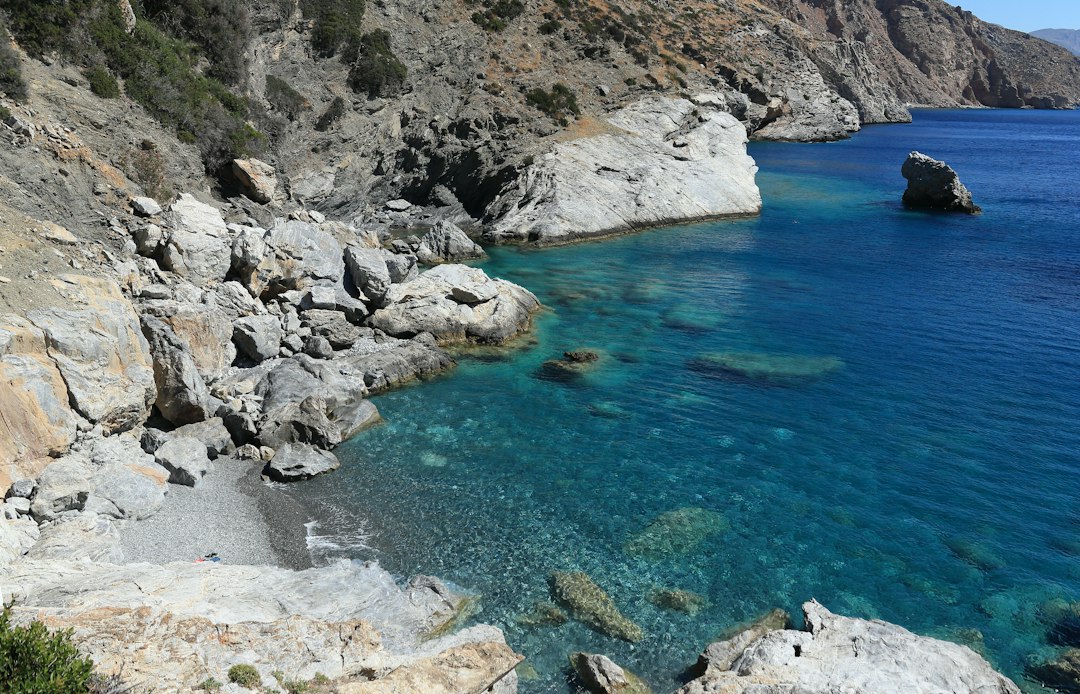
Agia Anna (below Chozoviotissa) is the most iconic — a small pebble cove with deep blue water, filmed in ‘The Big Blue’. Aegiali Bay is the largest sandy beach, about 500 metres long, with easy access and watersports. Mouros (near Katapola) is a quieter pebble beach reachable by a short dirt track. Kalotaritissa in the far west is a remote sandy cove accessible only by dirt road or boat — rewarding for the effort. Nikouria Island (a short water-taxi ride from Aegiali) offers completely undeveloped beaches. Caveat: most Amorgos beaches are pebble or mixed sand-pebble; travellers expecting fine sand should note that beaches like those on Naxos (80 km west) are more typical for fine-sand shores.
Beaches, Coves & Highlights of Amorgos
What are the top sights on Amorgos beyond the beaches?
Chozoviotissa Monastery (11th century, built into a 300-metre cliff face) is the undisputed landmark — entry is free, dress code required (long trousers/skirt provided). Chora (Amorgos Town) with its Venetian Kastro and windmills is one of the best-preserved Cycladic capitals, largely free of commercial signage. The Archaeological Museum of Amorgos in Chora displays finds from the Cycladic period including marble figurines (check opening hours locally, approximately €2–€4 entry). The villages of Tholaria and Langada above Aegiali are connected by a scenic footpath and reward visitors with views over the bay. All of these are within 40 km of each other, manageable in a single day with a vehicle.
What watersports activities are available on Amorgos?
Scuba diving is the signature activity — Amorgos’s clear waters with visibility often exceeding 30 metres and dramatic underwater walls attract divers from across Europe. Amorgos Diving Centre (based in Katapola) offers PADI courses and guided dives; a single fun dive costs approximately €45–€60. Snorkelling is excellent off most rocky coves without equipment rental. Aegiali Bay offers windsurfing and kayak hire through local operators (approximately €15–€25 per hour). Sea kayaking to Nikouria Island (about 1 km crossing) is a popular half-day outing. ‘The Big Blue’ film’s legacy draws freedivers specifically — local clubs organise freediving courses in summer.
What is the culinary highlight of Amorgos?
Local thyme honey is the island’s most distinctive product — Amorgos’s wild thyme-covered hillsides produce a honey that is darker and more intensely flavoured than most commercial Greek varieties, sold in small jars at shops in Chora for approximately €6–€10. Amygdalota (soft almond cakes) are the traditional sweet, made by local producers and sold in Chora’s narrow lanes. Fresh fish — particularly lavraki (sea bass) and tsipoura (sea bream) grilled whole — is the centrepiece of taverna dining. Chlorotyri, a soft local cheese, appears on many taverna mezes plates. Tip: tavernas in Katapola near the fishing boats tend to serve fresher fish at slightly lower prices than those in Chora’s tourist lanes.
Which parts of Amorgos are still off the beaten track?
The western tip around Kalotaritissa and Cape Kaspakas sees a fraction of the visitors that Chozoviotissa and Aegiali attract. The village of Arkesini in the south has ancient ruins (a Hellenistic tower and cemetery) that most visitors skip entirely. The E4 trail sections between Arkesini and Chora pass through terraced farmland and are rarely walked outside organised hiking groups. Nikouria Island remains undeveloped — the water-taxi from Aegiali (approximately €5–€8 return) lands you on beaches with no infrastructure whatsoever. Compared to the well-worn Chozoviotissa–Agia Anna route, these western and southern areas offer solitude even in August.
How many days do I need on Amorgos?
A minimum of 4 nights gives a satisfying visit; 6–7 nights allows genuine relaxation and exploration. In 4 nights you can cover: Chozoviotissa Monastery and Agia Anna (half day), Chora on foot (half day), Aegiali and northern villages (full day), and a boat trip or diving day. Seven nights adds remote beach exploration to the west, the Arkesini ruins, and the kind of slow taverna evenings the island is known for. Worth knowing: Amorgos pairs naturally with Naxos (2–3 hours by ferry) as part of a Cyclades loop — Naxos offers sandy beaches, a larger town, and ancient marble ruins that contrast well with Amorgos’s wilder, more remote character.
Amorgos at a Glance
| Currency | EUR (€) |
|---|---|
| Official language | Greek |
| Time zone | UTC+02:00 |
Source: Wikidata, retrieved October 2026.
Greece › Amorgos
More Destinations in South Aegean Region
More Destinations in Greece
Essential Resources for Planning Your Trip to Amorgos
- Travel Tips for Visiting Amorgos Island, Greece — official visitor information
- Wikivoyage: Amorgos — community travel guide & practical tips
- Wikipedia: Amorgos — history, geography & background
- Amorgos – Have Bag, Will Travel – WordPress.com — how to get there and around
- Kalotaritisas Bay | Greece | Attractions — itineraries & inspiration
Data Sources
Key facts on this page (population, currency, language, time zone) come from Wikidata, climate figures from Open-Meteo. The retrieval date is shown next to the facts table.