
Naxos: The Complete Travel Guide (2026)
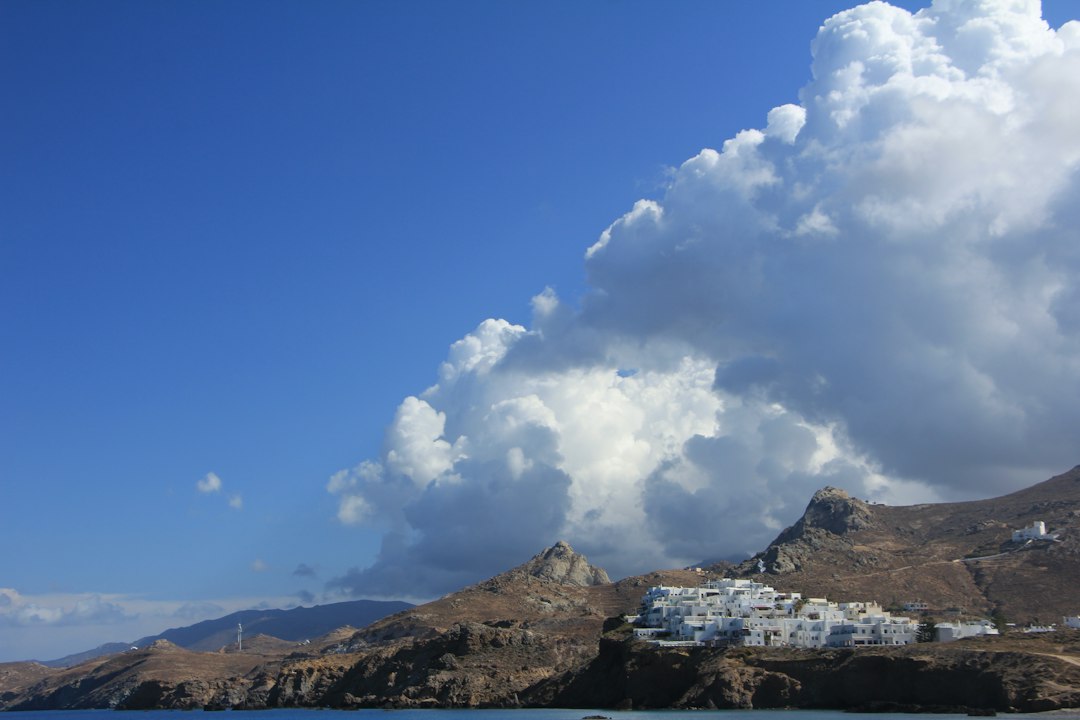
Last reviewed: October 2026 · key facts checked against Wikidata
Naxos Weather by Month: When to Go
| Month | Day | Night | Sea | Rain days | Rain mm | Wind km/h | Good for |
|---|---|---|---|---|---|---|---|
| Jan | 11° | 7° | 17° | 12 | 79 | 25 | – |
| Feb | 12° | 7° | 16° | 8 | 50 | 24 | – |
| Mar | 13° | 8° | 17° | 7 | 49 | 23 | – |
| Apr | 17° | 10° | 17° | 5 | 26 | 20 | Hike |
| May | 21° | 14° | 19° | 3 | 17 | 19 | Hike |
| Jun | 26° | 18° | 22° | 2 | 7 | 20 | Swim |
| Jul | 28° | 21° | 24° | 0 | 2 | 25 | Swim |
| Aug | 28° | 21° | 26° | 0 | 2 | 23 | Swim |
| Sep | 25° | 18° | 25° | 1 | 6 | 22 | SwimHike |
| Oct | 20° | 15° | 23° | 3 | 18 | 20 | Hike |
| Nov | 17° | 12° | 20° | 7 | 57 | 22 | Hike |
| Dec | 13° | 9° | 18° | 11 | 80 | 23 | – |
Sources: ERA5 reanalysis via Open-Meteo, 2016–2025 (10-year average) for air temperature, rain and wind (average daily maximum); Open-Meteo Marine API, 2023–2025 for sea surface temperature. A rain day has at least 1 mm. Area averages; individual years vary.
Naxos Travel Guide: Everything You Need to Know (2026)
Naxos is the largest island in the Cyclades, covering approximately 429 km² and sitting at elevations reaching over 1,000 m at Mount Zas, the highest peak in the entire Cyclades archipelago. With a registered population of 17,930, it is significantly larger and more self-sufficient than its neighbours Paros (about 45 minutes by ferry) and Mykonos. Its Venetian-era Kastro quarter, ancient marble quarries, and fertile interior valleys set it apart from the more touristic Cycladic islands.
Three Things Not to Miss in Naxos
- Portara of Apollo — A massive 6th-century BC marble gateway standing alone on the islet of Palatia, visible from across Naxos harbour.
- Apiranthos Village — A marble-paved mountain village at 600 m altitude, with five small museums and distinctly Cretan-influenced architecture.
- Plaka Beach — A 5 km stretch of fine white sand backed by dunes, consistently ranked among the least developed beaches in the Cyclades.
Scroll down for our complete travel guide with tips on getting there, where to stay, costs and more.
Reaching Naxos
How do I get to Naxos — by flight or ferry?
Both are viable; your choice depends on budget and flexibility. Naxos National Airport (JNX) receives direct flights from Athens (about 45 minutes) and seasonal charters from select European cities. Ferry connections from Piraeus port in Athens take roughly 5–6 hours on conventional ferries or about 3.5 hours on high-speed catamarans. Ferries also link Naxos directly to Paros (45 min), Mykonos (1.5 hrs), and Santorini (3 hrs). Worth knowing: JNX has a short runway, so flight cancellations due to wind are not uncommon — always have a ferry backup plan.
Which airport or port is the best starting point for Naxos?
Naxos National Airport (JNX) sits just 1.5 km from Naxos Town (Chora), making it the most convenient entry point if flying. The Naxos ferry port is located directly in Chora town centre, within walking distance of most accommodation. For travellers coming from Athens, the ferry from Piraeus is often the most practical option, with multiple daily departures operated by Blue Star Ferries and SeaJets — check their official websites for current timetables. Tip: arriving by ferry gives you an iconic first view of the Portara silhouetted against the sky.
How long does the ferry crossing to Naxos take?
Crossing times vary significantly by vessel type. From Piraeus (Athens), standard Blue Star ferries take approximately 5–6 hours, while SeaJets high-speed catamarans cover the route in about 3.5 hours. From Paros, the crossing is just 45 minutes; from Mykonos, roughly 1.5 hours; from Santorini, about 3 hours by high-speed. Caveat: high-speed ferries are more expensive and more susceptible to cancellation in choppy Aegean conditions, particularly outside the June–September window. Always book via the operator’s official site or ferryscanner.com for live availability.
What does a flight or ferry to Naxos cost?
A one-way Olympic Air or Sky Express flight from Athens to JNX typically ranges from about €40–€120 depending on how far in advance you book — check directly on olympicair.com. A conventional Blue Star ferry from Piraeus costs roughly €35–€45 per person in deck class; a cabin berth adds significantly more. High-speed SeaJets catamarans run about €60–€80 one way from Piraeus. Short inter-island hops, such as Paros to Naxos, cost approximately €15–€25. All prices are approximate; confirm on the operator’s site as seasonal surcharges apply in July and August.
Are overnight ferries to Naxos worth it?
Overnight ferries to Naxos are worth considering primarily for budget travellers who want to save a night’s accommodation cost. Blue Star Ferries operates overnight sailings from Piraeus with cabin options; a four-berth cabin typically costs around €30–€50 extra per person above the base ticket. Arriving in Naxos Town at dawn is genuinely pleasant — the Portara lights up early. However, the crossing is only 5–6 hours, so departure times from Piraeus often fall around midnight, meaning disrupted sleep. For families or travellers with luggage, a daytime high-speed crossing may offer better value overall.
Transport on Naxos
Do I need a rental car or scooter to explore Naxos?
A rental car is strongly recommended for exploring Naxos beyond the beaches near Chora. The island is the largest in the Cyclades at roughly 429 km², and interior villages like Apiranthos and Koronos are poorly served by public buses. A small car rents for approximately €35–€60 per day in shoulder season; July–August prices rise sharply — book ahead. Scooters suit beach-hopping along the west coast but are impractical on mountain roads. Tip: several reputable hire agencies operate directly at the ferry port in Chora, so you can pick up a vehicle immediately on arrival without pre-booking a transfer.
Are there bus connections between towns on Naxos?
Yes, but coverage is limited. KTEL Naxos operates public buses connecting Naxos Town (Chora) with major west-coast beach destinations including Agios Prokopios, Agia Anna, and Plaka, as well as main inland villages like Filoti and Apiranthos. A single ticket costs about €1.80–€3 depending on distance — check ktel-naxos.gr for current fares and timetables. Services run roughly 8–10 times daily in peak season but drop to 2–3 times daily in winter. Worth knowing: buses do not reach most smaller villages or the northern part of the island, so a rental vehicle remains necessary for thorough exploration.
What does a rental car cost on Naxos — and where do I hire one?
Economy car rental on Naxos runs approximately €35–€55 per day in May–June and September–October; peak July–August rates climb to €60–€90 per day. Local agencies at the Chora ferry port — including Naxos Car Rental and Despina Rental — often offer lower rates than international chains. Booking 4–6 weeks in advance for summer is advisable as supply is limited on a relatively small island. Fuel is a separate cost; petrol stations are found in Chora, Filoti, and Apiranthos. Caveat: read the insurance excess carefully — gravel-road damage to tyres and undercarriage is sometimes excluded from standard policies.
Which parts of Naxos are accessible by public transport?
The western coastal strip — from Chora south through Agios Prokopios, Agia Anna, and Plaka Beach — is reliably served by KTEL buses in season. The main inland route to Filoti and Apiranthos also has regular connections. However, the northern coast around Apollonas and its famous unfinished kouros statue, the Koronos valley, and most smaller hamlets require a private vehicle. Naxos Town itself is very walkable; the Kastro quarter, market street, and port are all within a 10-minute walk of each other. Tip: if you rely solely on buses, budget at least one taxi day (€30–€50) for destinations off the main routes.
Can I cycle around Naxos?
Cycling is realistic along the western coastal road connecting Chora to Plaka Beach (about 8 km), which is relatively flat. The island interior, however, climbs to over 1,000 m at Mount Zas, making road cycling demanding outside of fit touring cyclists. Mountain biking on dedicated trails around the Tragaea plateau (the fertile central valley) is feasible and increasingly popular. Bike hire is available in Chora for approximately €15–€25 per day for standard bikes; e-bikes are becoming available too. Worth knowing: main roads have minimal dedicated cycling infrastructure and summer traffic is heavy, so early morning rides before 9:00 are strongly preferable.
Accommodation on Naxos
Which town should I base myself in on Naxos?
Naxos Town (Chora) is the best all-round base, combining the ferry port, airport proximity, the Kastro neighbourhood, markets, restaurants, and nightlife in a single walkable centre. For beach-focused stays, Agios Prokopios (about 6 km south of Chora) offers calmer surroundings with excellent sand. Families often prefer Agia Anna for its shallow waters and amenity-rich beachfront. Compared to Paros (about 45 min away by ferry), Chora feels more authentically Greek and less bar-centric than Naoussa. We recommend Chora as a base for first-time visitors — its central position means no beach or village is more than 45 minutes away by car.
What does accommodation cost per night on Naxos?
Based on Numbeo data, an economy hotel averages around €75 per night (approximately $75 USD). Budget guesthouses in Chora’s old town start from about €50 in shoulder season. Mid-range hotels or studios near Agios Prokopios beach typically run €90–€150 in July–August. A private villa or upscale boutique property peaks at €200–€350+ in high season. Naxos is notably cheaper than neighbouring Mykonos, where comparable rooms cost 2–3 times more, and slightly more affordable than Santorini. Worth knowing: most small family-run studios require a minimum 3-night stay in August, and rates quoted online often exclude the Greek tourism tax (€0.50–€4 per night depending on property category).
Which area of Naxos suits which travel style?
Naxos Town (Chora) suits culture and history lovers — the Venetian Kastro, Archaeological Museum, and evening volta (promenade) along the port are all here. Agios Prokopios and Agia Anna (6–8 km south) appeal to beach holidaymakers wanting amenities, watersports, and easy restaurant access. Plaka Beach (12 km south) draws surfers and those seeking space, as its 5 km stretch remains less built-up. The Tragaea plateau and villages like Apiranthos attract hikers and travellers wanting authentic rural Greece. Couples seeking quiet tend to head for the northern village of Apollonas. Backpackers and budget travellers cluster around Chora’s port area where cheap tavernas and hostels are concentrated.
How far in advance should I book accommodation on Naxos?
Book at least 2–3 months ahead for any July or August travel; popular studios near Agios Prokopios and seafront hotels in Chora sell out by April for peak weeks. For May, June, September, and October — all excellent months to visit — booking 4–6 weeks ahead is generally sufficient. Naxos attracts more independent Greek and European travellers than package-tour groups, meaning last-minute deals in shoulder season occasionally appear, but availability is unpredictable. Tip: family-run guesthouses in Chora’s old town rarely list on major OTAs — check Google Maps directly or email them for potentially better rates without platform commission.
Are there good apartments or villas with sea views on Naxos?
Yes — self-catering apartments and villas are abundant on Naxos and represent excellent value compared to Cycladic neighbours. Sea-view studios along the Agios Prokopios and Agia Anna coastline are plentiful, typically renting for €80–€140 per night in a two-person studio in July. Private villas with pools are concentrated around Stelida hill (between Chora and Agios Prokopios) and the elevated road behind Plaka Beach, where Aegean views are dramatic. Platforms like Airbnb and Booking.com list many options, though local agencies in Chora sometimes offer unlisted properties. Caveat: villas advertised with sea views vary widely — confirm the exact distance to water before booking.
Naxos Season by Season
When is the best time to visit Naxos?
Climate analysis confirms May, June, August, September, and October as the best travel months. May and June offer warm temperatures (around 22–28°C), calm seas, and uncrowded beaches — we recommend June as the overall sweet spot. August is peak season: crowds are significant and accommodation scarce, but beach and watersports conditions are optimal. September and October bring quieter conditions, warm swimming temperatures still above 22°C, and better accommodation rates. July brings the notorious meltemi wind, which can make northern beaches choppy and ferry sailings irregular. Winter (November–March) sees many businesses close and limited transport.
What is the weather like on Naxos throughout the year?
Naxos has a classic Mediterranean climate with hot, dry summers and mild, wetter winters. Summer highs (July–August) typically reach 28–32°C at sea level, though the meltemi northerly wind provides natural cooling — and occasionally disruption. Spring (April–May) sees temperatures of 18–24°C with green interior landscapes ideal for hiking. Autumn (September–October) remains warm enough for swimming, with sea temperatures hovering around 22–24°C. Winter months (December–February) bring temperatures of 10–15°C and occasional rain; the fertile Tragaea plateau interior receives more rainfall than the coasts. Altitude matters: Apiranthos at 600 m is noticeably cooler than Chora on hot days.
When does Naxos get overcrowded, and how bad is it?
July and August are peak season; Naxos Town, Agios Prokopios, and Agia Anna become significantly busy, with ferry queues, full beaches, and prices surging 30–50% above shoulder rates. That said, Naxos handles crowds better than Mykonos or Santorini — its 429 km² spread means popular beaches are not the only option. Inland villages like Apiranthos remain relatively uncrowded even in August. The last two weeks of July and the first two of August represent the absolute peak, driven largely by Greek domestic tourism. If visiting in August, arrive at Plaka Beach before 10:00 to secure space on the best sections.
Is there a worthwhile shoulder season on Naxos?
Absolutely — May, June, and September offer arguably the best overall experience on Naxos. In these months, most restaurants, hire agencies, and boat tour operators are fully open, water temperatures are ideal for swimming (above 21°C in June, above 23°C in September), and accommodation costs are 20–40% lower than August peaks. The Portara and Kastro sites are accessible without crowds. October is a good option for hikers — the interior trails are cooler and the landscape greener after early autumn rains. Caveat: some smaller studios and beach bars in outlying areas do not open until mid-June or close after late September; call ahead to confirm.
When does the beach and watersports season begin on Naxos?
The main watersports season on Naxos runs late May through early October. Naxos Surf Lessons and Flisvos Sport Club on Agios Georgios Beach (the town beach, just 1 km from Chora port) typically open in late May and operate through September. Windsurfing and kitesurfing schools at Plaka and Mikri Vigla Beach are active from June to September — Mikri Vigla is particularly regarded for its consistent meltemi-driven wind conditions in July–August, attracting intermediate and advanced windsurfers. Water temperatures become comfortable for swimming by late May (around 20°C). In October, facilities start winding down but the sea remains warm enough for casual swimming.
Budgeting for Naxos
What does a daily budget cost on Naxos?
A realistic daily budget for Naxos breaks down as follows. A cheap sit-down meal costs approximately €12 (~$13 USD) per person; a mid-range dinner for two runs around €22 (~$23.4 USD). A bus ride is about €1.50 (~$1.5 USD). Combining an economy hotel (~€75/night), two meals, local transport, and one activity (beach entry is free; site admissions average €4–€8), a solo traveller can manage on roughly €80–€100 per day in shoulder season. In August, the same budget stretches to around €110–€130 due to accommodation inflation. A couple sharing a mid-range hotel and renting a car can expect €150–€200 per day combined.
Is Naxos more expensive than the Greek mainland?
Naxos is modestly more expensive than the Greek mainland for accommodation and some groceries due to island logistics — ferry transport of goods adds cost. However, it is significantly cheaper than Mykonos (where a mid-range dinner for two can exceed €80) and somewhat cheaper than Santorini. A local taverna meal in Chora’s back streets costs roughly €10–€14 per person, comparable to Athens neighbourhood restaurants. Supermarkets in Chora (including a Lidl on the outskirts) keep self-catering costs reasonable. The island’s productive agricultural interior means local produce — potatoes, cheese, citrus, olive oil — is genuinely inexpensive compared to more import-dependent Cycladic islands.
What expenses on Naxos are unavoidable?
Ferry or flight costs to reach Naxos are the primary unavoidable expense — budget at least €35–€80 per person each way depending on route and vessel. If you plan to explore beyond Chora and the immediate coast, car rental (€35–€60/day) is a near-unavoidable practical cost unless you limit yourself to KTEL bus routes. The Greek overnight tourism tax applies to all accommodation: €0.50–€4 per room per night depending on hotel category. Beach sunbed and umbrella hire at organised beaches (typically €8–€12 for a pair) adds up quickly — Plaka’s northern end is free of sunbed operations if you prefer to bring your own mat.
What does food cost on Naxos — local taverna versus tourist restaurant?
A meal at a local Chora back-street taverna — think grilled meat, Greek salad, house wine — costs approximately €10–€14 per person. Beachfront restaurants at Agios Prokopios or Agia Anna charge roughly €15–€25 per person for similar dishes, reflecting their location premium. A mid-range dinner for two with wine runs about €22–$23.4 per Numbeo data, though seafood restaurants push higher. Naxian specialities — including graviera cheese, loukoumades (honey doughnuts), and the local kitron liqueur — are available at producers and delis in Chora at retail prices well below restaurant markups. Tip: the Naxos Town market street (Papavasiliou) has bakeries where a fresh spanakopita costs under €2.
What are the best beaches on Naxos?
Plaka Beach (12 km south of Chora) is a 5 km arc of fine white sand backed by dunes — the longest undeveloped stretch in the Cyclades by most measures. Agios Prokopios (6 km south) consistently earns Blue Flag certification and suits families with its calm, shallow waters. Mikri Vigla (18 km south) is the go-to for windsurfers and kitesurfers due to its reliable meltemi channel wind. Alyko Beach, within a protected cedar forest near Kastraki, offers dramatic scenery and is largely free of sunbed operations. The northern Apollonas Beach is quieter and rockier, suited to those exploring the island’s interior. Caveat: west-facing beaches get afternoon wind from July onwards.
What to Do on Naxos
What are the top sights on Naxos beyond the beaches?
The Portara — a towering 6th-century BC marble gate on the islet of Palatia, reached by a causeway from Chora port — is the island’s defining landmark. The Venetian Kastro in Naxos Town dates to the 13th century and houses the Archaeological Museum of Naxos, with an exceptional collection of Cycladic figurines (admission approximately €6). Apiranthos village at 600 m altitude has five small museums including a geological collection and a Cycladic art gallery. The unfinished kouros statue at Apollonas (about 37 km from Chora) is an ancient marble figure abandoned in a hillside quarry, free to visit. The Tragaea plateau — an olive grove–filled inland valley — is ideal for a scenic 1-hour drive.
What watersports are available on Naxos?
Naxos is one of the best windsurfing and kitesurfing destinations in Greece, with the meltemi wind creating ideal conditions at Mikri Vigla and Plaka Beach from June through September. Flisvos Sport Club on Agios Georgios Beach (1 km from Chora) offers windsurfing, kitesurfing, kayaking, and paddleboarding with lessons and equipment rental — a beginner windsurfing course typically costs about €50–€70 for a half-day session. Scuba diving is offered by operators including Naxos Diving Centre near Agia Anna. Boat tours to nearby uninhabited islands (Koufonisia, approximately 1.5 hours away) are bookable from Chora port. Caveat: meltemi winds that enhance surfing conditions can make swimming rough at exposed beaches.
What is the culinary highlight of Naxos?
Graviera Naxou — a hard, slightly sweet cow’s milk cheese produced in the island’s interior — is Naxos’s most celebrated food product and holds a PDO (Protected Designation of Origin) status. It is best sampled at the cooperative dairy in Chora or bought directly from village producers in Filoti. Kitron liqueur, distilled from the leaves of the citron tree (unique to Naxos), is a must-try and sold at the Valindras distillery in Chalki village — tours and tastings are available, approximately 3 km from Filoti. Naxian potatoes are famous across Greece for their quality; you’ll find them in virtually every taverna in straightforward preparations. The local loukoumades (fried honey doughnuts) at Chora’s old market are a classic street snack for under €4.
Which parts of Naxos are still off the beaten track?
The northern coastline — from Koronos village down to the rocky coves near Lionas — sees minimal tourist traffic despite dramatic scenery. The Koronos valley itself, an emery-mining area with terraced hillside paths, is largely overlooked by visitors focused on western beaches. The village of Komiaki (780 m altitude), reportedly the highest permanently inhabited village in the Cyclades, has only a handful of kafeneions but extraordinary panoramic views. The eastern coast around Moutsouna has a small harbour with almost no tourist infrastructure. Compared to the western strip between Chora and Plaka, these areas require a rental car and willingness to navigate narrow roads, but offer genuine encounters with rural Naxian life.
How many days do I need to properly see Naxos?
Five to seven days gives enough time to cover beaches, villages, and inland sights without rushing. A 3-day minimum covers Chora (half day), the western coast beaches, and one inland village. Adding days 4–5 allows for the Apollonas kouros round trip (74 km return), a Tragaea plateau drive through Chalki and Filoti, and the windsurfing beaches at Mikri Vigla. Days 6–7 suit a day trip to nearby Koufonisia or Paros (both about 45–90 minutes by fast ferry). Naxos pairs naturally with Paros as a twin-island stay — many travellers split a 10-day Cyclades trip between the two, using the frequent 45-minute ferry connection.
Naxos at a Glance
| Population | 17,930 |
|---|---|
| Currency | EUR (€) |
| Official language | Greek |
| Time zone | UTC+02:00 |
Source: Wikidata, retrieved October 2026.
Greece › Naxos
More Destinations in South Aegean Region
More Destinations in Greece
Essential Resources for Planning Your Trip to Naxos
- Wikivoyage: Naxos — community travel guide & practical tips
- Wikipedia: Naxos — history, geography & background
- The Best Ways To Get In & Around Naxos — how to get there and around
Data Sources
Key facts on this page (population, currency, language, time zone) come from Wikidata, climate figures from Open-Meteo. The retrieval date is shown next to the facts table.