
Perpignan: The Complete Travel Guide (2026)

Perpignan Travel Guide: Everything You Need to Know (2026)
Perpignan, with a population of 120,959, sits just 41 metres above sea level at the foot of the Pyrenees, only 15 km from the Mediterranean coast and 30 km from the Spanish border. Founded as a Catalan city and capital of the Pyrénées-Orientales department, it carries a distinct identity — more Catalan than French in spirit, with a medieval palace that once housed kings. Salvador Dalí famously declared Perpignan’s train station the centre of the universe, which tells you everything about the city’s outsized personality.
Top 3 Highlights at a Glance
- Palais des Rois de Majorque — A 13th-century royal palace rising above the city, offering panoramic Pyrenees views from its Gothic twin towers.
- Le Castillet — Perpignan’s iconic 14th-century red-brick gate and tower, now housing the Casa Pairal Catalan folk museum.
- Place de la Loge — The beating heart of the old town, ringed by Gothic merchant buildings and the best terrace café culture in Roussillon.
Scroll down for our complete travel guide with tips on getting there, where to stay, costs and more.
Arrival & Airport
How do I get to Perpignan?
Fly into Perpignan–Rivesaltes Airport (PGF), just 5 km from the city centre, or take the TGV to Perpignan train station — direct high-speed trains run from Paris in under 5 hours. From Barcelona, a direct train takes approximately 1 hour. In my experience, the train is often the smarter choice: the station is central, fares from Barcelona can be under €20, and you skip the car-hire hassle entirely. The honest caveat: budget airlines at PGF are seasonal and mostly UK-focused, so European travellers often connect through Barcelona or Marseille.
Which airport is closest to Perpignan?
Perpignan–Rivesaltes Airport (PGF) is the closest, sitting just 5 km north of the city centre. It handles mainly low-cost carriers including Ryanair from London Stansted and a handful of seasonal UK regional routes. My tip: if PGF has no direct flight from your departure city, Barcelona El Prat (BCN), roughly 150 km south, is a far better-connected alternative. The bus from BCN to Perpignan via FlixBus or Eurolines costs around €15–€25 and takes about 2 hours. The trade-off: BCN adds ground transfer time, but it unlocks far cheaper fares.
How long does the journey to Perpignan take from Paris or Barcelona?
From Paris Gare de Lyon, the direct TGV takes 4 hours 50 minutes — comfortable and scenic through the Languedoc. From Barcelona Sants, the high-speed Ouigo or RENFE/SNCF service covers the distance in 1 hour. What surprised me: the cross-border train is extraordinary value, often cheaper than a city bus in Paris. By car from Paris, expect roughly 9 hours via the A9 autoroute — that’s a full driving day. Flying from Paris takes about 1 hour 20 minutes of air time, but factoring airport transfers, the TGV is almost always faster door-to-door.
Do I need a rental car in Perpignan?
For the city itself, no — the historic centre is compact and walkable within 20 minutes end to end. However, if you want to explore Collioure, the Cathar castles, the Camargue fringes, or the Pyrenees foothills, a car is essential. I recommend renting from Perpignan train station rather than the airport — better rates, no shuttle wait. The honest caveat: parking in central Perpignan is genuinely frustrating, especially around Quai Vauban on market days. Budget roughly €35–€50 per day for a compact car. If you stick to beaches via train, you can skip the car entirely.
City Transport
What are the best areas to stay in Perpignan?
Stay in the Vieux Quartier (old town) for maximum atmosphere — you’re within walking distance of Le Castillet, Place de la Loge, and the covered market. The area around Quai Vauban and the canal offers quieter streets with good local restaurants. For budget travellers, the neighbourhood just north of the train station works well but lacks charm. I avoid the sprawling western periphery entirely — it’s suburban and needs a car. My tip: the compact zone between Rue de la Loge and Place Arago is the sweet spot for first-time visitors wanting walkability and authenticity in equal measure.
What does accommodation cost per night in Perpignan?
An economy hotel in Perpignan runs around €65 per night based on verified Numbeo data. A solid mid-range option — think a three-star with air conditioning, essential in summer — costs €80–€110. Boutique hotels in the old town push to €130–€160. In my experience, the best-value properties cluster near Place de Catalogne, where you get central location without the tourist premium of the immediate Place de la Loge zone. The caveat: Perpignan accommodation quality varies wildly — always check recent reviews for air conditioning specifically, because July temperatures regularly hit 35°C and older buildings retain heat badly.
How far in advance should I book accommodation in Perpignan during high season?
Book at least 6–8 weeks ahead for July and August stays. Perpignan empties from cities like Toulouse and Paris every summer, and quality rooms in the Vieux Quartier disappear fast. The Fête de la Saint-Jean in late June and the Visa pour l’Image photojournalism festival in early September both create sharp demand spikes — book 3 months ahead for those dates. What surprised me: the cheaper end of the market books out first, not the luxury tier. My tip: mid-week arrivals (Tuesday or Wednesday) consistently find better availability than Friday arrivals in peak weeks.
Are there special or unique accommodation types in Perpignan?
Perpignan’s most distinctive option is a mas — a traditional Roussillon farmhouse — available via gîte networks in the surrounding plain, typically 10–20 km from the centre. These offer pools, vineyards, and silence that no city hotel can match, and nightly rates sometimes undercut city hotels at €70–€90. In town, a handful of chambres d’hôtes inside 18th-century merchant townhouses near Rue des Marchands offer genuine character. The honest trade-off: staying in a mas is magical but commits you to driving, which rules out evening wine at the terrace bars around Place de la Loge.
Accommodation & Neighbourhoods
What are the must-sees in Perpignan?
The Palais des Rois de Majorque is non-negotiable — a 13th-century royal palace with two Gothic chapels and Pyrenees views that genuinely stop you in your tracks. Le Castillet and its rooftop terrace give the best overview of the city’s red-rooftop skyline. The Musée Hyacinthe Rigaud showcases one of France’s finest regional art collections, including works by Picasso and Dufy, and costs only €6. Don’t skip the Marché République on Sunday mornings — the largest weekly market in southern France, where Catalan, French, and North African food culture collide spectacularly on a single square.
What can I experience for free in Perpignan?
Quite a lot. Walking the Vieux Quartier costs nothing, and the street architecture — Gothic arches, Catalan iron balconies, terracotta facades — is genuinely impressive. The Promenade des Platanes, a grand avenue of plane trees, is perfect for an evening stroll. Entrance to Le Castillet’s exterior courtyard and the surrounding Remparts du Vieux Perpignan is free. The Cathédrale Saint-Jean-Baptiste, with its unusual single-nave Gothic design, is free and typically uncrowded before 10am. My tip: the view from the Palais des Rois de Majorque outer walls costs nothing — it’s the interior entry that charges €4.
Which day trips are possible from Perpignan?
Collioure, 27 km south, is the unmissable day trip — a fortified Catalan fishing village where Matisse and Derain invented Fauvism in 1905, reachable by train in 25 minutes for around €5. The Cathar castle of Peyrepertuse perches at 800 metres altitude and takes 1 hour by car. Canet-en-Roussillon beach, just 12 km east, is reachable by free summer shuttle bus. Font Romeu in the Pyrenees is 87 km and a world away climatically. The honest caveat: Collioure is extremely crowded in July and August — go early or visit in September when the light is arguably better anyway.
What local specialities should I eat in Perpignan?
Perpignan is ground zero for Catalan cuisine on the French side of the border. Boles de picoulat — beef and pork meatballs in tomato and olive sauce — are the signature dish, found in traditional brasseries around Place de la Loge. Anchoïade (anchovy paste on toast) from Collioure anchovies is non-negotiable as an apéritif snack. The Banyuls fortified wine from 35 km south pairs perfectly with aged cheese. For dessert, rousquilles — anise-glazed ring biscuits — are sold in every bakery. I recommend La Passerelle near the covered market for an honest Catalan lunch at around €15–€18 per person.
Highlights & Must-Sees
What makes Perpignan unique compared to other French cities?
Perpignan’s identity is genuinely Catalan, not French — Catalan flags hang from balconies, street signs are bilingual, and the city’s cuisine, architecture, and festivals align more with Barcelona than Paris. It was the capital of the Kingdom of Majorca from 1276 to 1344, giving it a royal palace most French cities can’t rival. Dalí’s declaration that Perpignan station is the centre of the universe has become a real cultural point of pride. What surprised me most: the city’s proximity to both Spain and the Mediterranean creates a pace and atmosphere unlike anywhere else in metropolitan France — closer to a Catalan market town than a conventional French préfecture.
How many days should I spend in Perpignan?
2 full days covers the city’s highlights comfortably — the Palais, Le Castillet, the old town, and the market. Add a third day for a day trip to Collioure or the Cathar castles. I would not allocate more than 4 days unless you plan extensive Roussillon road trips or the Visa pour l’Image festival fills your schedule. The honest truth: Perpignan is a highly enjoyable medium-sized city but not an endlessly deep destination. It works brilliantly as an anchor point for the wider region — 4 nights lets you do the city justice and still tick off Collioure, Canet beach, and one Pyrenean excursion.
When is the best time to visit Perpignan?
Based on climate analysis, June through October are the best months. My personal preference is late September to mid-October — temperatures sit around 22–25°C, the summer crowds have thinned dramatically, Collioure is actually enjoyable, and the Visa pour l’Image festival runs through early September. July and August bring reliable sun but also 35°C+ heat and packed streets. June is lovely but can surprise with late spring rain. The caveat most guides omit: Perpignan is in the Tramontane wind corridor — this cold, powerful northwesterly can blow hard even in summer and makes outdoor terraces genuinely unpleasant for 2–3 days at a stretch.
What are the local festivals worth attending in Perpignan?
Visa pour l’Image, held in early September, is the world’s most important photojournalism festival and runs entirely for free across 10+ venues including the Palais des Congrès and medieval cloisters. It draws 200,000 visitors over 10 days — book accommodation 4 months ahead. The Procession de la Sanch on Good Friday is a visceral Catalan religious tradition dating to 1416, with hooded penitents in red carrying the cross through the old town at dusk. The summer Estivales de Perpignan brings free outdoor concerts to Place de la Loge every Wednesday evening in July and August.
Food & Drink
How does the weather in Perpignan affect activities?
Perpignan receives over 300 days of sunshine annually — one of the highest figures in France — which makes outdoor sightseeing reliably possible. The summer heat above 33°C pushes the best walking hours to before 10am and after 6pm; midday is genuinely uncomfortable in July. The Tramontane wind is the biggest weather wildcard — it can turn a sunny beach day into a sandblasting experience at Canet with zero warning. Winter is mild at roughly 10–14°C and dry, making January and February a surprisingly pleasant time for city sightseeing without crowds. Rain, when it falls, tends to arrive in intense Mediterranean autumn storms in October and November.
How crowded does Perpignan get in peak season?
The city itself handles summer crowds reasonably well — it’s not Carcassonne or Mont-Saint-Michel. However, Collioure (the most popular day trip) becomes genuinely oppressive in August, with parking queues of 45 minutes and beach towel-to-towel conditions. The Marché République on Sunday swells massively from June onward. The Palais des Rois de Majorque stays manageable because it’s less internationally famous than it deserves. My honest assessment: Perpignan’s peak season problem isn’t the city so much as the surrounding coastal destinations — visiting the beaches on weekdays in June or September makes an enormous practical difference.
How safe is Perpignan?
Perpignan is safe for tourists exercising standard urban awareness. The Vieux Quartier and central streets around Place de la Loge are well-lit and busy until late. However, certain peripheral neighbourhoods — particularly Saint-Jacques and parts of the Bas-Vernet — have reputations for petty crime and drug-related activity, and I wouldn’t wander there aimlessly after dark. Pickpocketing around the Marché République on busy Sunday mornings is real — keep bags zipped. The honest caveat most guides skip: Perpignan has one of the higher crime rates statistically among French cities of its size, but tourist-targeted crime remains low if you stay within the central districts.
Is English widely spoken in Perpignan?
Functional English is available in hotels, major restaurants, and at the Palais des Rois de Majorque (which offers English audio guides for €3). However, Perpignan is a working French-Catalan city, not a tourist-polished destination, and in local markets, bakeries, and neighbourhood cafés, French is essential and Catalan is common. In my experience, even a basic attempt at French — bonjour, merci, s’il vous plaît — opens doors immediately. Spanish is actually more widely understood than English in many contexts here, given the proximity to the border. My tip: download Google Translate’s French offline pack before arriving — it earns its keep daily.
Practical Tips
What is the daily budget for visiting Perpignan?
A realistic daily budget breaks down as follows: economy hotel €65, cheap meal ~€11 (verified Numbeo figure), mid-range dinner for two ~€20 total per person, local transport ~€1.80 per ride, and one paid attraction €4–€6. That puts a genuine shoestring day at around €85–€95 per person. A comfortable mid-range day — decent hotel, two restaurant meals, one day trip — runs €130–€160. The hidden cost most guides ignore: Perpignan’s markets are dangerously tempting — local wine, charcuterie, anchovies, and ceramics add €20–€40 to daily spend faster than you expect. Budget accordingly or accept it happily.
How does public transport work in Perpignan?
The urban bus network Sankéo covers the city and costs €1.80 per ride (verified). A day pass costs €4. In my experience, the city centre is compact enough that buses are rarely necessary for tourist sightseeing — everything between Le Castillet and the Palais des Rois de Majorque is walkable in 15 minutes. The free summer Navette Plage shuttle runs to Canet-en-Roussillon beach between June and September, which is genuinely useful. Regional trains from Perpignan station connect to Collioure (€5, 25 min) and the Spanish border at Cerbère. The honest caveat: bus frequency drops sharply outside peak hours and on Sundays.
Which apps do you recommend for visiting Perpignan?
SNCF Connect is essential for booking trains to Collioure, Barcelona, or anywhere regional — book on the app at least 3 days ahead for the cheapest fares. Sankéo (the local bus operator’s app) shows real-time departures. Google Maps works reliably for walking navigation in the old town. Waze is genuinely better than Google Maps for driving around the Roussillon plain, especially for finding parking near the Palais des Rois de Majorque. For food, TheFork (La Fourchette in French) lists Perpignan restaurants with real reviews and occasional 20–50% discounts on weeknight bookings — I’ve used it to eat very well for very little in secondary French cities.
More Destinations in Europe
Explore our complete travel guides for more Europe destinations: León Travel Guide (2026), Lisbon Travel Guide (2026), Toledo Travel Guide (2026), Rouen Travel Guide (2026), Menorca Travel Guide (2026).
Perpignan at a Glance
| Population | 121,616 |
|---|---|
| Currency | EUR (€) |
| Official language | Catalan |
| Time zone | UTC+01:00 |
Source: Wikidata, retrieved August 2026.
Useful Resources for Planning Your Trip to Perpignan
- Wikipedia: Perpignan — history, geography and background
- Lonely Planet: Perpignan — itineraries and travel inspiration
- TripAdvisor: Perpignan — hotels, restaurants and traveller reviews
🎥 Perpignan Travel Videos
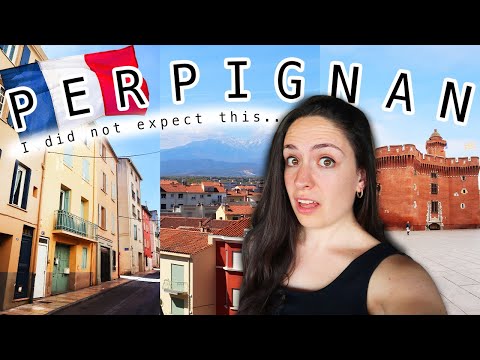
THINGS TO DO IN PERPIGNAN, FRANCE (occitanie day trip …
Claire Hawkins

Perpignan France 4K Drone Travel Vlog – TOP 10 Things to …
Nimbusphere
You are currently viewing a placeholder content from Vimeo. To access the actual content, click the button below. Please note that doing so will share data with third-party providers.
More InformationYou are currently viewing a placeholder content from YouTube. To access the actual content, click the button below. Please note that doing so will share data with third-party providers.
More InformationYou need to load content from reCAPTCHA to submit the form. Please note that doing so will share data with third-party providers.
More InformationYou are currently viewing a placeholder content from GetYourGuide. To access the actual content, click the button below. Please note that doing so will share data with third-party providers.
More Information