
Lyon: The Complete Travel Guide (2026)

Last reviewed: September 2026 · key facts checked against Wikidata
Lyon Travel Guide: Everything You Need to Know (2026)
Lyon, France’s third-largest city with a population of 519,127, sits at the confluence of the Rhône and Saône rivers at 173m elevation, just 391 km southeast of Paris. Founded by the Romans in 43 BC as Lugdunum, it served as the capital of Roman Gaul and today holds UNESCO World Heritage status for its historic Vieux-Lyon district. Lyon is consistently ranked the gastronomic capital of France — a bold claim in a country that takes food more seriously than almost anywhere else on earth.
Top 3 Highlights at a Glance
- Vieux-Lyon (Old Town) — Europe’s largest Renaissance urban district, with over 300 traboules — secret passageways — hidden behind unmarked doors.
- Musée des Confluences — A striking titanium-and-glass science museum at the literal meeting point of the Rhône and Saône, opened in 2014.
- Fête des Lumières — Every December, Lyon’s 8 December light festival draws up to 3 million visitors in just 4 nights.
Scroll down for our complete travel guide with tips on getting there, where to stay, costs and more.
Arrival & Airport
How do I get to Lyon?
Fly into Lyon-Saint Exupéry Airport (LYS), take the TGV from Paris Gare de Lyon in 1h55, or arrive by Eurolines/FlixBus if budget-conscious. In my experience, the TGV is the single best option for most travellers — €25–80 one-way depending on advance booking, and it drops you at Part-Dieu station in the heart of the city. Driving from Paris takes around 4.5 hours via the A6 autoroute, but Lyon’s narrow streets and expensive parking make a car more burden than benefit once you arrive. What surprised me: Eurostar travellers coming via London can connect through Paris in under 5 hours total.
Which airport is closest to Lyon?
Lyon-Saint Exupéry (LYS) is the only relevant airport, located 27 km east of the city centre. In my experience, it handles all major European carriers including Air France, easyJet, and Vueling, plus long-haul routes via hubs. The airport is efficient and modern, but My tip: avoid renting a car here — the Rhônexpress tram runs directly to Part-Dieu station in 30 minutes for €16.90 one-way. The honest caveat: there are no truly cheap last-minute shuttle alternatives; taxis cost €50–65 to the centre, so budget the Rhônexpress into your travel plan from day one.
How long does the journey to Lyon take from major hubs?
From Paris Gare de Lyon, the TGV takes exactly 1h55 — the fastest and most comfortable option at €25–80. From Geneva, it’s a 2-hour train via SNCF for around €20–40. From Marseille, high-speed rail covers the 278 km in 1h40. What surprised me: driving from Paris seems comparable on paper, but the A6 Autoroute du Soleil is notoriously congested on Friday afternoons and during French school holiday periods. My tip: always book TGV tickets at least 3 weeks ahead via the SNCF Connect app for the cheapest fares — prices spike sharply in the final 10 days before departure.
Do I need a car in Lyon?
No — a car in Lyon is genuinely unnecessary and actively inconvenient. Vieux-Lyon, Presqu’île, and Croix-Rousse — the three areas you’ll spend 80% of your time — are best explored on foot or by TCL metro and tram. A single TCL ticket costs €2.10 and the network covers every major sight. My honest warning: parking in central Lyon costs €25–35 per day in garages, and the narrow traboule-laced streets of Vieux-Lyon are effectively inaccessible by car. I recommend renting a car only if you plan to day-trip to Beaujolais vineyards or the Ardèche gorges, neither of which is well-served by public transport.
City Transport
What are the best areas to stay in Lyon?
Presqu’île — the peninsula between the two rivers — is my top recommendation for first-timers: central, walkable, and packed with restaurants and bars around Place Bellecour and Rue Mercière. Vieux-Lyon (5th arrondissement) is atmospheric and beautiful but can feel touristy after dark. Croix-Rousse (4th) is the neighbourhood I return to every visit — it has the best local market, genuine neighbourhood energy, and noticeably cheaper restaurants than the tourist zones. For business travellers, Part-Dieu (3rd) offers convenience but zero charm. My caveat: avoid booking anything marketed as ‘near Perrache station’ — the area south of the station feels isolated and underwhelming.
What does accommodation cost per night in Lyon?
Budget clearly: economy hotels run around €90/night based on Numbeo data, while decent mid-range options in Presqu’île or Vieux-Lyon land at €110–160/night. Design boutique hotels like Collège Hôtel in Vieux-Lyon charge €180–220/night but are genuinely worth it for location and character. Apartments via Airbnb in Croix-Rousse average €70–100/night for a one-bedroom and are my preferred option for stays over 3 nights. My honest warning: Lyon’s accommodation fills quickly during trade fairs at Eurexpo and the Fête des Lumières in December — during those windows, expect prices to double and availability to collapse entirely.
How far in advance should I book accommodation in Lyon during high season?
Book at least 6–8 weeks ahead for July and August, which are the best travel months based on climate data. For the Fête des Lumières (December 5–8, 2026), I cannot stress this enough: book 6 months in advance minimum — I’ve seen decent options disappear within 24 hours of dates being confirmed. Eurexpo trade fairs (especially Sirha in January and Pollutec) cause identical blackouts. In my experience, the Presqu’île and Vieux-Lyon sell out first; Croix-Rousse and Guillotière hold availability longer and offer better value. My tip: use Booking.com with free cancellation while you plan, then lock in your preferred option early.
Are there special or unique accommodation types in Lyon?
Yes — and they’re genuinely worth seeking out. Traboule apartments are flats set inside Lyon’s famous Renaissance-era passageways in Vieux-Lyon, offering a living connection to the city’s 16th-century past. Several guesthouses on Rue Saint-Jean operate within classified heritage buildings. Collège Hôtel in Vieux-Lyon is designed around a school theme — unusual but charmingly executed. For a splurge, Cour des Loges (€280–350/night) occupies four interconnected Renaissance mansions with a stunning internal courtyard. What surprised me: Lyon has a strong chambre d’hôtes (B&B) culture in Croix-Rousse, where locals rent out rooms with breakfast for €75–95/night — far more characterful than chain hotels.
Accommodation & Neighbourhoods
What are the must-sees in Lyon?
Vieux-Lyon is non-negotiable — spend at least half a day exploring its traboules and the Cathédrale Saint-Jean (built over 300 years between 1180 and 1476). The Musée des Beaux-Arts on Place des Terreaux holds one of France’s largest fine arts collections and costs €8 entry. Fourvière Hill offers the best panoramic view of the city from the Basilique Notre-Dame de Fourvière, reachable by funicular from Vieux-Lyon for €2.10. The Roman Amphitheatre of Fourvière, dating to 15 BC, still hosts live performances in summer. My honest warning: don’t skip Les Halles de Lyon Paul Bocuse — skipping it is the most common and most regrettable mistake first-time visitors make.
What can I experience for free in Lyon?
Genuinely free and genuinely excellent: the Croix-Rousse morning market (Tuesday–Sunday, 6am–1pm) on Boulevard de la Croix-Rousse is one of the best food markets in France and costs nothing to wander. The Parc de la Tête d’Or — Lyon’s central park with a free zoo and botanical garden — spans 117 hectares and is completely free. Fourvière Hill walk via the Montée des Chazeaux staircase costs nothing and rewards you with the same view as the funicular. The Confluence district is free to walk and architecturally stunning. In my experience, the fresque des Lyonnais mural on Rue de la Martinière — a trompe-l’oeil wall painting featuring 30 famous Lyonnais — is overlooked by most tourists despite being 5 minutes from Presqu’île.
Which day trips from Lyon are worth it?
Beaujolais wine country is my top pick — Villefranche-sur-Saône is 30 minutes by train and acts as a gateway to the vineyards. Vienne (Roman ruins including an intact 1st-century temple) is 23 minutes south by train and criminally undervisited. Pérouges — a perfectly preserved medieval walled village — is 35 km east and best reached by car or organised tour. Geneva is 2 hours by train and makes for an ambitious but doable day trip. My honest warning: the Gorges de l’Ardèche are stunning but require a rental car and at least 1h45 of driving each way — make it an overnight rather than a day trip or you’ll spend more time in the car than at the gorges.
What are Lyon’s local specialities I must try?
Lyon’s food identity is built on bouchon cuisine — hearty, offal-forward cooking you either embrace or cautiously admire. The non-negotiable dishes: quenelle de brochet (a delicate pike dumpling in Nantua cream sauce), salade lyonnaise (frisée, lardons, poached egg, croutons — every bouchon does it, none does it badly), and tablier de sapeur (breaded tripe — polarising but authentic). Cervelle de canut is the local fresh cheese spread with herbs and is addictive. At Les Halles Paul Bocuse, try Saint-Marcellin cheese from Mère Richard’s stall — she has been selling it for decades and it remains the best version I’ve eaten anywhere. My tip: order Beaujolais or Côtes du Rhône by the pot lyonnais (46cl carafe) rather than a bottle — it’s the local way and noticeably cheaper.
Highlights & Must-Sees
What makes Lyon unique compared to other French cities?
Three things set Lyon apart from every other French city. First, the traboule network — over 300 covered passageways threading through Renaissance buildings — exists nowhere else at this scale; silk workers used them to transport fabric dry in rainy weather. Second, Lyon’s bouchon restaurant culture produces a dining style so specific and so defended that a official label (‘Bouchon Lyonnais Authentique’) exists to distinguish real bouchons from imitations — there are only ~20 certified ones. Third, Lyon pioneered urban light art: the Fête des Lumières grew from a simple candle-in-window tradition on August 15, 1852 into the world’s largest light festival. What surprised me: Lyon also invented cinema — the Lumière brothers filmed the world’s first motion picture here on December 28, 1895.
How many days do I need to see Lyon properly?
3 full days is the minimum to cover the essentials without rushing. Day 1: Vieux-Lyon and Fourvière. Day 2: Presqu’île, Les Halles, and the Musée des Beaux-Arts. Day 3: Croix-Rousse market, Confluence district, and a bouchon dinner. Add a 4th day if you want a day trip to Vienne or Beaujolais. My honest caveat: Lyon rewards slow travel more than most cities — the best experiences (discovering a traboule, lingering over a 3-course bouchon lunch, watching the Saône from Quai de Bondy at dusk) can’t be rushed or scheduled. I’ve spent 6 days in Lyon and still had a list of things I hadn’t done. For a first visit, 4 nights/5 days is the sweet spot.
When is the best time to visit Lyon?
July and August are the best months based on climate data — warm, long days, and the city’s outdoor terraces are in full swing. The Nuits de Fourvière festival (June–July) fills the Roman amphitheatre with concerts and theatre for 6 weeks. September is my personal preference: crowds thin, prices drop, and the Beaujolais harvest begins. The Fête des Lumières in December is extraordinary but operationally brutal — 3 million people in 4 nights means booked-out hotels, triple accommodation prices, and shoulder-to-shoulder streets. My honest warning: February and November are Lyon’s grey, rainy months — the city loses much of its outdoor appeal and the bouchons feel like the only reason to stay, which, to be fair, is a decent reason.
Are there local festivals in Lyon worth attending?
Fête des Lumières (December 5–8, 2026) is unmissable if you can secure accommodation — buildings across the city are transformed by light projections and installations, all free to attend. Nuits de Fourvière (June–August) hosts world-class concerts in a 1st-century BC Roman amphitheatre seating 10,000 — tickets from €15–60 and worth every cent. Les Biennales de Lyon — alternating between a contemporary dance and contemporary art biennale — draws international attention in odd years (dance in 2025, art in 2026). The Beaujolais Nouveau night (third Thursday of November) turns every bar in Lyon into a celebration. My tip: the Foire de Lyon in March and Sirha food trade fair in January are fascinating for food lovers even if not purely tourist events.
Food & Drink
How does Lyon’s weather affect activities throughout the year?
Lyon sits in a continental-influenced climate at 173m elevation, which means hot summers (25–32°C in July–August), cold winters (2–7°C in January), and unpredictable shoulder seasons. Summer heat makes Parc de la Tête d’Or and riverside quais essential escapes — the Saône and Rhône banks are pedestrianised and genuinely pleasant on warm evenings. Winter concentrates activity indoors in bouchons and covered markets. My honest warning: Lyon sits in a meteorological bowl between the Alps and Massif Central that can trap fog (la brume) for days in November and December — Fourvière views disappear entirely and the city feels genuinely oppressive. April and May bring pleasant temperatures but expect 10–12 rainy days per month — pack a compact umbrella regardless of season.
How crowded does Lyon get in peak season?
Lyon never reaches the overwhelming tourist density of Paris or Nice in August, but peak pressure is real. July–August brings significant visitor numbers to Vieux-Lyon and Fourvière — expect 20–30 minute waits for funicular rides on weekend mornings. The Fête des Lumières is in a category of its own: 3 million visitors in 4 nights turns Presqu’île into controlled crowd management with one-way pedestrian corridors. Les Halles Paul Bocuse on Saturday mornings year-round can be genuinely difficult to navigate. In my experience, arriving at Vieux-Lyon before 9:30am in summer puts you ahead of every tour group. The honest advantage over Paris: Lyon’s traboule network genuinely disperses foot traffic — there is no single ‘must-stand-in-queue-for-3-hours’ attraction.
How safe is Lyon for travellers?
Lyon is safe for the overwhelming majority of travellers. The city centre, Presqu’île, Vieux-Lyon, Croix-Rousse, and Confluence are all low-risk areas where standard urban awareness is sufficient. My honest caveat: the Guillotière neighbourhood (7th arrondissement) around Place Gabriel-Péri has visible drug activity after dark and I wouldn’t recommend walking through it alone at midnight. Perrache station area after 10pm requires the same alertness you’d apply in any major European transport hub. Pickpocketing is the primary concern — Vieux-Lyon traboules and crowded festival events are the highest-risk settings. In my experience, Lyon is meaningfully safer and less tourist-scam-heavy than Paris or Marseille. Keep documents in a hotel safe and use a zipped bag in crowded markets.
Is English widely spoken in Lyon?
English is spoken at a functional level in most tourist-facing contexts — hotels, museums, and restaurants in Presqu’île and Vieux-Lyon. However, Lyon is noticeably more French than Paris: staff in authentic bouchons, local markets like Croix-Rousse, and neighbourhood cafes will often only speak French, and appreciate the effort if you try. My tip: learn 10 key French phrases — ‘Je voudrais…’, ‘L’addition, s’il vous plaît’, ‘Une carafe d’eau, s’il vous plaît’ — and your experience in local restaurants will be materially better. What surprised me: younger Lyonnais under 35 typically have solid English, while older shopkeepers and market vendors rarely do. The Google Translate camera function is genuinely useful for menus in neighbourhood bouchons that don’t offer English versions.
Practical Tips
What is the daily budget for Lyon?
Budget clearly by tier. Budget traveller: €70–90/day — hostel dorm (~€30), market lunch (€8–12), one bouchon dinner (€20–25), metro day pass (€6). Mid-range: €150–200/day — economy hotel (~€90/night), sit-down lunch at a bouchon (€18–25), dinner with wine (€35–45 per person based on Numbeo mid-range data of ~€32.50 for two at lower end). Comfortable: €250–350/day — boutique hotel, Halles lunch, fine dining. My honest warning: wine adds up faster than food in Lyon — a pot lyonnais (46cl) costs €5–8 in a local bouchon but €12–18 at a tourist terrace on Place Bellecour. The single biggest budget variable is accommodation — book early and save €40–60/night versus last-minute rates.
How does public transport work in Lyon?
TCL (Transports en Commun Lyonnais) operates 4 metro lines, 5 tram lines, 2 funiculars, and an extensive bus network — it’s one of the best urban transport systems in France outside Paris. A single ticket costs €2.10 and is valid for 1 hour across all modes including transfers. A day pass (Ticket Liberté) costs €6 and makes sense if you’re making more than 3 journeys. The Rhônexpress tram to LYS airport operates separately and costs €16.90 one-way. My tip: buy a 10-trip carnet if you’re staying more than 4 days — it reduces the per-trip cost meaningfully. The honest caveat: Metro Line D (connecting Vieux-Lyon to Part-Dieu) is the busiest and most crowded during morning rush hour — avoid it with luggage between 8–9am.
Which apps do you recommend for visiting Lyon?
TCL Official App — buy tickets, plan routes, and check real-time tram and metro arrivals; non-negotiable for getting around. SNCF Connect — book TGV trains; prices are live and cheapest fares disappear fast, so check it daily in the weeks before travel. Google Maps works well in Lyon but CityMapper handles TCL connections more elegantly for multi-modal journeys. TheFork (LaFourchette) — essential for booking Lyon bouchons; many certified ones only take reservations 2–3 days ahead, and showing up without a booking at Café Comptoir Abel or Daniel et Denise will get you turned away. Nuits de Fourvière app if visiting June–August — festival schedules and ticket links in one place. My tip: download offline Google Maps for Lyon before arriving — airport WiFi is reliable but hotel WiFi varies.
More Destinations in Europe
Explore our complete travel guides for more Europe destinations: Île Cézembre Travel Guide (2026), Île de Kerners Travel Guide (2026), Amsterdam Travel Guide (2026), Ibiza Travel Guide (2026), Lisbon Travel Guide (2026).
Lyon at a Glance
| Population | 519,127 |
|---|---|
| Currency | EUR (€) |
| Official language | French |
| Time zone | UTC+01:00 |
Source: Wikidata, retrieved September 2026.
Useful Resources for Planning Your Trip to Lyon
- Wikipedia: Lyon — history, geography and background
- Lonely Planet: Lyon — itineraries and travel inspiration
- TripAdvisor: Lyon — hotels, restaurants and traveller reviews
🎥 Lyon Travel Videos
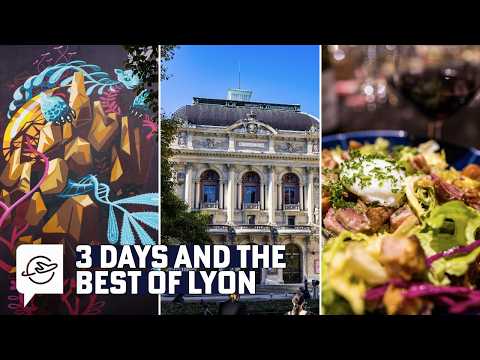
Lyon, France travel guide | What to see and do in the city of …
W. Andrew Powell

Skip Paris! Travel to Lyon | France’s Most Underrated City
Alexander Ayling

Top 10 Things To Do In Lyon | France Travel Guide
Finding Gina Marie – Travel the World
You are currently viewing a placeholder content from Vimeo. To access the actual content, click the button below. Please note that doing so will share data with third-party providers.
More InformationYou are currently viewing a placeholder content from YouTube. To access the actual content, click the button below. Please note that doing so will share data with third-party providers.
More InformationYou need to load content from reCAPTCHA to submit the form. Please note that doing so will share data with third-party providers.
More InformationYou are currently viewing a placeholder content from GetYourGuide. To access the actual content, click the button below. Please note that doing so will share data with third-party providers.
More Information